

Block Blast! review
 Analysis by Appsdrops
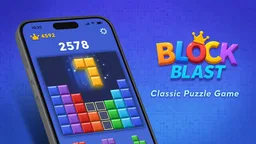
I like puzzle games that let me understand the goal quickly but still make me think a few moves ahead. Block Blast! has that easy-to-grasp appeal: I place blocks, watch the board change, and try to keep room for what comes next. It is a straightforward idea with a satisfying rhythm, suited to a quick break as well as a longer stretch of play. The game is free, and its central attraction is clear from the start: make careful placements, enjoy the immediate feedback, and see how long I can keep the board manageable.
Getting started with a simple move
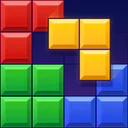
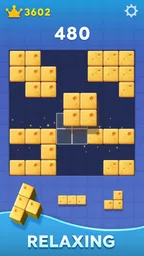
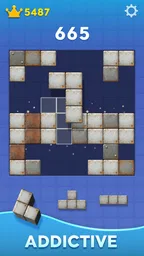
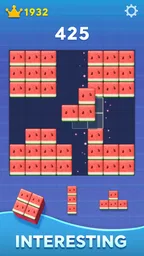
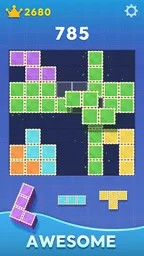
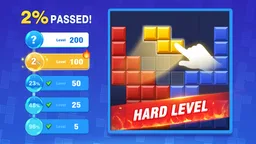
The first action is refreshingly direct. I look at the available shapes and choose where to place one on the board. There is no complicated premise to memorize before I can begin; the puzzle comes from judging how each shape fits with the space I have. That clarity makes Block Blast! approachable even if I only have a few minutes to spare.
What gives the opening move its weight is the need to think beyond the empty spaces in front of me. A placement can look tidy on its own but leave awkward gaps for later. I find myself scanning the board, comparing the shapes I can use, and asking which move will preserve the most options. It is a small decision, but the best choice often depends on what I expect to need next.
That balance between simplicity and planning is a good fit for a puzzle game. The controls and objective are easy to pick up, while the board gradually becomes a more demanding problem as pieces occupy space. I do not need to study a long tutorial to understand why a move matters. I can learn through play, notice the consequences, and adjust my approach on the next turn.
Why each placement feels meaningful
Every shape asks me to consider both its immediate fit and its effect on the board as a whole. I can choose a spot that seems convenient, or pause to make room for a better sequence. That little moment of hesitation is where the game’s thinking lives. The challenge is not hidden behind complicated rules; it comes from managing limited space with the pieces at hand.
I also appreciate how quickly the game invites another decision. There is little friction between one placement and the next, so I stay focused on the puzzle rather than on navigating menus. The pace feels light, but the choices still have consequences. When I leave a narrow pocket or split the open area into awkward sections, I can see how my earlier move has shaped the problem I face now.
A satisfying rhythm of feedback and reward
The most enjoyable part of the loop is the quick connection between action and feedback. I place a block, then immediately see how it changes the board. A good fit can make the layout feel cleaner and open up possibilities; a careless one can make the remaining space harder to use. That instant response helps me understand the puzzle without needing a score explanation after every move.
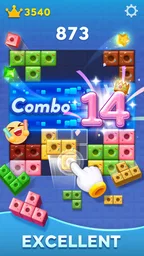
When placements line up well, the reward is both visual and strategic. I get the pleasure of seeing progress, along with the practical benefit of having a board that is easier to work with. This gives successful moves a nice double effect: they feel satisfying in the moment and can make the next decision more manageable. I enjoy that the game encourages me to notice these small wins rather than relying on a complicated story or elaborate presentation.
The feedback also makes mistakes instructive. If I create a cramped corner, the board shows the problem plainly. I can look back at the choice that caused it and try to be more deliberate when a similar situation appears. That makes each round feel like a compact lesson in spatial planning. I am not just dropping pieces at random; I am learning to preserve useful space and avoid placements that limit my future options.
Small wins that keep the puzzle moving
A good puzzle session does not need every move to be dramatic. Here, the satisfaction often comes from making a sensible placement, keeping the board flexible, and finding a way through a layout that initially looks awkward. That modest scale suits the game’s pick-up-and-play character. I can enjoy a quick run without needing to commit to a long sequence of objectives.
The loop has a natural cadence: inspect the board, choose a position, see the result, and plan again. Because the next action arrives so quickly, a successful move often nudges me toward another. I want to use the space I have created well, and I want to see whether I can improve on a previous run. The game turns that simple curiosity into a steady reason to continue.
Its store summary also emphasizes relaxing puzzle play and the ability to play offline without Wi-Fi. That makes the game easy to consider for moments when I want a self-contained activity rather than a session that depends on being connected. The appeal is less about a complicated setup and more about having a familiar, thoughtful loop ready whenever I feel like solving a few placements.
How a session builds, ends, and starts again
As the board fills, the puzzle changes character. Early placements can feel forgiving because there is room to experiment, but each decision gradually matters more as open areas become less convenient. I start paying closer attention to the shape of the remaining spaces and to whether a move will preserve enough flexibility. This escalation gives a round its shape without asking me to learn a different set of rules halfway through.
There is a pleasing tension in trying to keep the board usable. I may see a placement that works right now, yet wonder whether it will make the next shape difficult to position. That question keeps my attention on the whole layout rather than a single empty patch. It also gives the game a gentle strategic edge: I am balancing immediate progress against the chance of creating a more difficult board later.
Eventually, a run reaches a point where the available space no longer supports the choices I need. That is the reset moment, and it gives the game a clean stopping point. A round can end without turning the experience into a major commitment. I can put the game down, or begin again with a fresh board and a chance to make more thoughtful decisions from the start.
The appeal of one more attempt
Starting over works because the rules remain easy to remember while the challenge comes from how I handle each new arrangement. I can return with a simple goal: keep more space open, avoid awkward pockets, or think further ahead before committing to a placement. A reset does not require me to relearn the game. It gives me another opportunity to test the same basic skill under a new sequence of choices.
This is where the action-feedback-reward-reset cycle comes together. I place a piece, see how the board responds, enjoy a successful fit, and eventually face the limits of the space I have managed. Then the possibility of another run appears. The loop is familiar, but it does not feel empty to me because each round gives me room to make different choices and learn from the last one.
The game’s large audience reflects its broad, easy-to-understand appeal: it has over a billion installs, with a 4.8 average from around 5.8 million ratings. Those figures are impressive, but what matters during play is how quickly the core idea communicates itself. I can open the game, understand the immediate task, and get into the puzzle without a complicated introduction.
Presentation, access, and everyday fit
As a casual game, Block Blast! is built around an accessible premise rather than a demanding setup. It is rated for everyone, and the store information describes it as free to play, with optional in-app purchases listed from $4.99 to $49.99 per item. The game was released on September 23, 2022, and its current version is 10.8.9. These details give a useful snapshot of the app, while the lasting appeal still comes down to whether its puzzle rhythm suits your taste.
Compatibility is listed for operating system version 7.1 and above. The developer is HungryStudio, and the game has accumulated around 78,000 written reviews alongside its extensive rating total. I mention these details as context rather than as a substitute for the experience itself: a high profile can make a game easy to discover, but the simple act of fitting shapes into a board is what determines whether I want to keep playing.
The strongest fit is for someone who enjoys quick mental challenges and clear feedback. If I want a puzzle that asks me to plan but does not require a lengthy explanation, this one gets to the point. The offline play angle is especially convenient for a casual game, since it supports the idea of picking it up wherever a short break happens. I can focus on the board and let each round provide its own beginning and endpoint.
My verdict on the puzzle loop
What I enjoy most is how naturally the game turns one placement into the next. I make a move, read the board’s response, and decide whether I have helped or complicated my future options. Small rewards come from keeping the layout workable, while the eventual reset gives me a reason to try again with a slightly better plan. That is a clean, effective loop for a casual puzzle.
It is not the kind of game I would approach for a sprawling narrative or a complex set of systems. Its pleasure is more immediate: inspect, place, react, and repeat. For me, that focus is a strength. The rules are accessible, but the need to manage space gives each decision enough weight to keep the experience engaging. A short session can feel complete, while another attempt remains tempting because I can always make a more careful choice next time.
If you are looking for a relaxing block puzzle that is easy to start and rewarding to think through, this is an appealing option. Its strongest moments come from a good fit, a board that stays open, and the satisfaction of seeing a plan work. The reset then turns a finished run into an invitation rather than a dead end. I find that combination simple, approachable, and well suited to quick play whenever I want a little puzzle-solving in my day.
What we like
- Quick rounds make it easy to play during short breaks.
- The simple controls are easy for new players to learn.
- Offline play is available for gaming without a connection.
- Daily challenges offer goals beyond the main mode.
- The block placement puzzles reward careful planning.
What could be better
- A single poor placement can leave the board difficult to recover.
- Gameplay can feel repetitive after many rounds.
- Ads may interrupt play between sessions.
- There is no direct way to undo a placement.
- Progress may not transfer easily between devices.







