



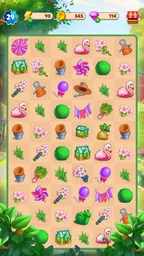




Travel Town - Merge Adventure review
 Analysis by Appsdrops
I reach for Travel Town - Merge Adventure when I want a puzzle that gives a small break a sense of direction. The central idea is easy to grasp: combine matching items, make room for new ones, and use those discoveries to move the town’s story along. That familiar merge loop is the game’s main appeal, but it also determines whether it will suit you. If you enjoy tidying a busy board and working toward visible goals, it can be an inviting daily game. If you want intricate logic puzzles, fast action, or a session with a definite finish, I’d look elsewhere.
What to consider before you start
This is a free puzzle game from Magmatic Games LTD, with a general-audience age rating. Its premise asks for patience more than puzzle expertise: progress comes from making useful combinations and managing the objects occupying your board. I find that distinction important. The challenge is not usually solving one difficult riddle; it is deciding what to combine, what to keep, and when to spend a limited turn of attention on a particular objective.
The game has a 4.5 average from around 392,000 ratings, and it has passed 50 million installs. Those figures suggest that its style has broad appeal, but they don’t tell you whether you’ll like the cadence. The most useful question is whether you enjoy gradual collection and organization. I’d recommend trying it if you naturally find satisfaction in turning a scattered set of pieces into a more useful result.
In practical terms, it works best when you’re comfortable making progress in short visits rather than expecting a long, uninterrupted puzzle session. A few minutes can be enough to inspect the board, make a handful of merges, and decide what to pursue next. The trade-off is that your attention can be pulled between several possible combinations. If you prefer every move to have one clearly optimal answer, that open-ended feeling may come across as clutter rather than freedom.
The pleasure is in managing the board
What keeps the loop engaging for me is the way a small decision can change what seems possible. A pair of matching objects may be worth combining right away, but leaving items separate can sometimes make it easier to work toward another useful match. That creates a modest planning layer: I’m not only asking what can merge now, but also whether using the space immediately will make the next few moves easier.
My practical tip is to pause before merging simply because a match is available. First, check what the current goal seems to call for and whether combining will free useful room. This is especially helpful when the board feels crowded. Treating space as a resource—not just a place to put the next item—makes the game feel more deliberate and can spare you from making moves you soon wish you could undo.
There’s also a useful distinction between playing for immediate satisfaction and playing for steady progress. If you only want to clear whatever is easiest, the board can feel active without giving you much sense of direction. I get more from choosing one priority for a visit, then letting other tempting matches wait. That simple habit keeps me from scattering attention across too many possibilities.
Where this merge puzzle stands out
Compared with the usual alternatives in the puzzle category, Travel Town is better suited to players who like building a chain of small accomplishments than to people seeking a self-contained brainteaser. A conventional matching puzzle often presents a defined board and asks you to solve it before moving on. Here, the pleasure is more about ongoing organization and discovery. That makes it easier to return to, especially if you like having a continuing project rather than a sequence of unrelated rounds.
The setting gives those combinations a reason to matter beyond the board itself. I find that helpful when a basic merge loop might otherwise become repetitive: the sense of developing a town provides a broader thread to follow. It is not a substitute for a deep narrative, though. If your main reason for playing is a carefully layered story or character-driven writing, I would choose a game built around that first.
The best everyday use case is a short pause between tasks. For example, I can open it while waiting for a meal or taking a break, make a few considered moves, and leave with a clear next step. It suits that pattern better than a competitive game that demands continuous concentration. On the other hand, if you want a quick puzzle with a clean endpoint before returning to work, a standalone logic challenge is likely the more satisfying option.
One less obvious strength is that the game rewards a light routine without requiring every visit to become a major session. I can check the board, identify which items are worth preserving, and stop before I start making careless merges just to keep moving. That is a useful way to avoid turning a relaxing game into a chore. The exception is when you dislike open-ended progress: a continuing board can make it harder to feel that you have truly finished for the day.
When another kind of game may fit better
I would skip this one if your ideal puzzle has strict rules, a single answer, and a strong emphasis on deduction. Travel Town’s satisfaction comes from combining and managing, not from proving a solution through a sequence of logic clues. Likewise, players who want immediate action or a strong sense of competition may find its measured pace too quiet. A faster arcade-style game or a focused head-to-head puzzle would be a better match for those moods.
It may also frustrate anyone who dislikes juggling several objectives. A merge board naturally invites you to consider what to keep and what to combine, and that can create a mild feeling of pressure when space is tight. I don’t see that as a flaw for the intended audience, but it is a real point of difference from a simple match game where each round clears the slate. If you value a fresh start every time, the persistent sense of accumulated work may feel less relaxing.
There’s a trade-off between convenience and depth, too. The core interaction is easy to understand, so you don’t need to study a complicated rulebook before starting. But people who want a steep learning curve or increasingly demanding tactical puzzles may find the basic pleasure more about steady accumulation than mastery. I’d choose a strategy-heavy puzzle instead if I wanted each session to test a new skill rather than continue a familiar routine.
What the free start means for your decision
The game is free to download, with optional in-app purchases ranging from $0.29 to $99.99 per item. I’d treat those as a reason to decide on your own spending boundary before playing, rather than as a reason to buy anything automatically. The basic appeal is the merge-and-progress loop, so I would first see whether the board-management style holds my interest without paying. If you are uncomfortable with games that present optional purchases, it may be better to avoid this kind of free-to-play puzzle altogether.
A sensible way to test it is to play at your natural pace instead of trying to rush progress. Notice whether you enjoy choosing which items to combine, whether a crowded board makes you curious or annoyed, and whether the town’s gradual development gives your moves enough purpose. Those answers are more useful than deciding from the first few merges alone. If the routine feels like busywork after a handful of visits, a more self-contained puzzle is probably a better use of your time.
For readers who already enjoy merge games, the switching cost is low in terms of learning: the basic idea is immediately approachable. The more meaningful cost is attention. You may find yourself wanting to remember what you were saving or which goal you meant to pursue next. I recommend ending a session with one simple intention in mind, such as leaving a particular useful combination available. It makes returning feel smoother without turning the game into homework.
Who I’d recommend it to
I’d recommend Travel Town to casual puzzle players who like collecting, combining, and making incremental progress in short sessions. It is a particularly good fit if you enjoy the feeling of bringing order to a busy board and want a continuing project rather than a succession of isolated levels. The game’s 2.12.1832 version supports devices running Android 7.0 or later, which is useful to know if you are checking compatibility before installing.
I would be more cautious if you have little patience for waiting on gradual progress, dislike purchase options in free games, or want puzzles that can be completed cleanly in a single sitting. The same features that make the game easy to revisit—its ongoing board and steady stream of small decisions—can make it feel less crisp than a traditional level-based puzzle. That is not something I’d ask every puzzle fan to overlook; it is the core trade-off.
My overall recommendation is to give it a try if you want a relaxed merge puzzle with a town-building thread and you’re happy to set your own pace. Start by playing for a few minutes at a time, keep board space in mind, and avoid merging on impulse when a goal might call for a different plan. If you leave those visits feeling pleased with what you organized, it has found its audience in you. If you mainly wish the game would present a single hard puzzle and let you finish it, choose a more focused alternative instead.
What we like
- The merge mechanic is easy to understand from the start.
- Short tasks make it convenient to play in spare moments.
- New areas add a steady sense of progression.
- The colorful artwork gives the game a cheerful look.
- It can be played without competing against other players.
What could be better
- Energy limits how many actions you can take at once.
- Waiting for energy to refill can interrupt longer sessions.
- Board space can become tight as items accumulate.
- Some upgrades require repeated merges of lower-level items.
- Progress may feel slow without optional purchases.







