
Bulldozer Master: Crush & Mine review
 Analysis by Appsdrops
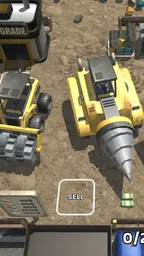
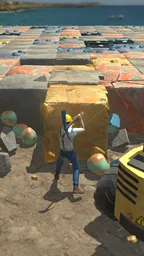
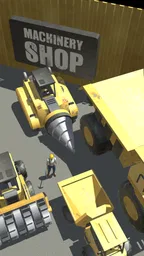
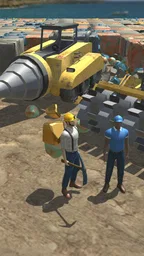
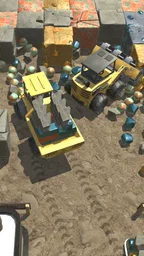
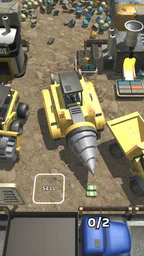
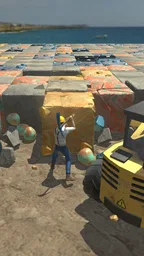
I like Bulldozer Master: Crush & Mine most when I treat it as a small, low-pressure demolition toy rather than a deep management game. Its central appeal is easy to grasp: use a bulldozer to break things down, gather value from the work, and gradually build up a gold-mining business. The idle element means progress is not limited to the moments when I’m actively playing, which makes the game easier to fit around a busy day. That combination of destruction and gradual growth gives the arcade format a clear purpose: each short session feels like another step toward a more established operation.
Demolition gives the idle loop a hands-on feel
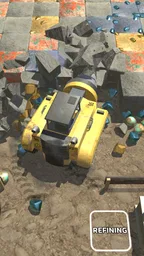
Many idle games ask me to tap through menus, collect rewards, and watch numbers grow. Here, the bulldozer gives that familiar progression a more physical theme. The satisfaction comes from seeing obstacles get crushed and imagining the work feeding into a larger mining enterprise. I find that framing more engaging than a purely abstract upgrade screen, especially when I only have a few minutes to spare.
The game is published by Supercent, Inc., and sits in the arcade category. Its pitch is not about mastering a complex simulation; it is about making demolition and business growth feel approachable. That distinction matters. I would not choose it for realistic construction controls or detailed economic planning, but I would pick it up when I want a simple activity with a visible sense of forward motion.
The idle structure is the capability that most shapes my experience. It lets the game remain relevant between sessions, while the bulldozer provides an active focus when I return. In practical terms, I can play briefly, leave, and come back to continue building rather than feeling that I need to commit to a long run. I appreciate that flexibility, though players who want every gain to come from deliberate skill may find the passive side less compelling.
What the bulldozer changes about ordinary idle play
The machinery theme gives progression a helpful mental picture. Instead of thinking only about abstract currency, I can connect the idea of clearing material with the idea of developing a mine. That makes the loop easier to follow, even if I am not studying every upgrade. For casual play, this is a real strength: the basic fantasy explains why I am doing the next task without demanding a tutorial-heavy approach.
There is also a trade-off in that simplicity. Demolition can feel satisfying, but repetition is part of the deal in an idle arcade game. If I expect a series of elaborate missions, intricate vehicle handling, or a story that keeps changing direction, the straightforward loop may wear thin. I see the game as something to dip into, not as a substitute for a full-scale strategy or driving game.
How I would fit it into a normal day
A realistic use case is a short break between errands or during a quiet moment after work. I can open the game, spend a little time on the bulldozer-driven activity, and then put it away without needing to remember a complicated objective. Later, the idle premise gives me a reason to return and check on the business side. That rhythm suits someone who likes small bursts of play better than long sessions that require uninterrupted attention.
My practical tip is to approach each visit with one simple intention: make a little progress, then stop when the loop starts feeling repetitive. The game’s appeal is its easy entry, so there is no need to turn every session into a grind. This also helps set expectations: the passive progression is a convenience, not a promise that every return will feel dramatically different from the last one.
That makes it a reasonable option for a commute break, a waiting room, or a few minutes at home when I do not want to start a demanding game. It is less suitable when I need something that rewards precision or sustained concentration. A puzzle game may be a better choice for a focused mental challenge, while a deeper tycoon title may suit someone who enjoys planning and balancing a complex set of systems.
What to expect from its pace and progression
The best way to judge the pacing is to ask whether I enjoy gradual accumulation. The idle setup is designed around the idea that growth can continue beyond a single active session, so its satisfaction is more about returning to a developing operation than conquering a difficult level. I find that relaxing, but it also means the sense of achievement can be softer than in an arcade game built around high scores, timed challenges, or increasingly demanding stages.
It is worth deciding early whether that pace matches what I want. If I mainly enjoy the act of crushing and the theme of a working mine, the repeated actions can be part of the charm. If I need every session to introduce a fresh mechanic, the routine may feel too familiar. I would try it with a casual mindset rather than expecting a constantly evolving campaign.
Where it differs from other arcade and tycoon choices
Compared with a conventional arcade game, this one places more emphasis on ongoing development than on a single score or a final run. Compared with a traditional tycoon simulator, its bulldozer theme makes the work feel more immediate and less like managing a spreadsheet. That middle ground is its clearest identity: there is an action-oriented surface, but the longer-term hook is gradual business growth.
That blend is useful if I like the idea of management but do not want to begin with a dense system of budgets and decisions. It is not the best alternative for someone who wants precise control over production chains or detailed resource optimization. Nor would I choose it over a skill-focused arcade title if my main goal were demanding reflex play. The right comparison depends on whether I value an approachable loop or depth in one particular genre.
The game is free to download, with in-app purchases ranging from $0.49 to $99.99 per item. I would keep that range in mind before spending and decide what, if anything, I am comfortable buying. The idle premise can make optional spending tempting if I want progress to feel quicker, so I prefer to treat purchases as a personal choice rather than a requirement for enjoying the basic concept.
Small decisions that make the experience easier
One useful way to keep the game enjoyable is to separate curiosity from urgency. I can explore the demolition loop and see whether the mining theme holds my attention before deciding whether I want to invest more time. Since the appeal is built around steady progress, there is little reason to rush through every visit. Taking short sessions also makes it easier to notice whether I am enjoying the active bulldozer play or merely checking in out of habit.
I would also choose it for the right mood. When I want something calm and simple, the idle structure is a plus. When I want a strong challenge, a more tactical tycoon, or a game where every action has a high-stakes consequence, another title will probably serve me better. Being clear about that difference prevents the game from feeling disappointing for reasons that are really about mismatched expectations.
There is no need to be an experienced simulator player to understand the central idea. The Everyone age rating makes the game broadly accessible, and its simple arcade framing is less intimidating than a business sim packed with menus. Still, accessibility does not mean every player will enjoy the repetition. Younger casual players may like the bulldozer theme, while adults looking for long-term strategic complexity should be cautious about expecting that from this particular format.
Who gets the most from it
I would recommend Bulldozer Master: Crush & Mine to someone who likes watching a small operation grow and wants demolition to give that progress a tangible theme. It is particularly suitable for players who prefer brief sessions, appreciate idle progression, and do not need a demanding skill ceiling. Its arcade classification and free entry make it easy to try, while the mining-tycoon angle gives the action a reason to continue beyond a single round.
It may be a poor fit for players who dislike repeating actions, want a realistic bulldozer simulator, or expect a deep management game. The same goes for anyone who prefers progression to depend entirely on active play: the idle component is central, not a side detail. I would also skip it if I were trying to avoid games with optional purchases altogether, since in-app items are available even though the initial download costs nothing.
Its audience is sizeable: the game has more than 5 million installs, an average rating of 4.4 from around 152,000 ratings, and 804 written reviews. Those figures suggest it has attracted plenty of casual players, but they do not change the more useful question for me: do I enjoy the particular mix of crushing, waiting, and gradually expanding a mine? If yes, its simple structure is a strength; if not, broad popularity will not make the loop feel deeper.
A straightforward recommendation, with the right expectations
Bulldozer Master: Crush & Mine is a compact arcade diversion built around one clear idea: let demolition anchor an idle gold-mining business. I like that it gives ordinary incremental progress a more hands-on theme and works well in short, casual visits. Its main limitation is the same simplicity that makes it approachable: the routine may not satisfy someone seeking constant novelty, intricate strategy, or demanding controls.
It was released on April 6, 2025, and the current version is 11.2.0, with Android 6.0 as the minimum operating system requirement. For a free game rated Everyone, that makes it an easy candidate to sample if its theme appeals to you. My recommendation is to try it when you want a low-pressure bulldozer-and-tycoon loop, keep spending decisions deliberate, and move on if you find yourself wanting more variety or depth than its central capability is designed to provide.
What we like
- Simple controls make it easy to start playing.
- Bulldozers give the mining theme a distinctive twist.
- Short levels suit quick play sessions.
- Crushing obstacles creates satisfying bursts of action.
- Unlockable equipment adds a sense of progression.
What could be better
- Gameplay may feel repetitive after extended play.
- Progress can slow as upgrade costs increase.
- Ads may interrupt the flow between levels.
- Vehicle handling can feel imprecise in tight spaces.
- The mining stages offer limited strategic depth.







