






Tile Club - Match Puzzle Games review
 Analysis by Appsdrops
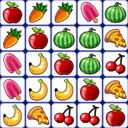
I can see why a tile-matching game is easy to try and harder to judge after the first few sessions. Tile Club - Match Puzzle Games is built around a familiar puzzle idea, but its real test is whether it stays welcome in the small gaps of an ordinary day. My view is that it works best as a low-pressure, pick-up-and-play diversion: satisfying when I want to focus on a compact puzzle, less compelling if I need a deep strategy game or a fixed sense of long-term progress.
Why the first sessions click
As a puzzle game from GamoVation, Tile Club asks players to match tiles and work through puzzles. That clear premise makes it approachable without a long learning curve. I don’t need to set aside a full evening or remember a complicated control scheme; it is the kind of game I can open when I have a few minutes and decide quickly whether I want another round.
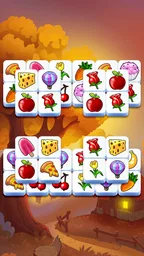
The appeal is partly the steady mental sorting. I look across the available tiles, identify a useful match, and try to keep the puzzle moving rather than tapping at random. Even a simple matching idea can feel engaging when I’m paying attention to what is on screen and thinking one or two moves ahead. That small demand for focus is a good fit for a short break between errands or while waiting for an appointment.
It is also easy to understand what kind of experience I am choosing. This is a tile-matching puzzle, not a story-led adventure or a competitive action game. If I want something that gets going quickly, that is a strength. If I expect elaborate narrative, a strong social competition, or complex strategic systems, I would look elsewhere rather than expect this format to provide them.
The game is free to download, rated Everyone, and has a 4.8 average from around 878,000 ratings. Those figures suggest that its accessible puzzle format has reached a large audience, but they do not settle whether it suits my habits. I would treat the strong rating as a reason to give it a try, not a promise that every session will feel fresh.
A practical way to try it
In the first few days, I would play in short sessions and pay attention to the moments when I choose to stop. If a puzzle leaves me wanting one more attempt, the format is doing its job. If I keep opening it automatically without enjoying the decisions, that is a useful sign that the routine is becoming more habit than entertainment.
A small but useful tip is to treat each move as a choice rather than trying to clear the screen as quickly as possible. Matching games can tempt me to tap any pair that looks convenient; slowing down helps me notice whether a move is actually helping the puzzle. That approach makes a brief session feel more deliberate and gives me a fairer sense of whether the game’s central activity is enjoyable to me.
What keeps it useful after the novelty
Tile Club’s lasting value depends less on a dramatic first impression than on whether I want this particular kind of mental pause in my routine. For a person who likes small visual puzzles, it can fill an awkward ten-minute gap without requiring a major commitment. I can use it as a break from scrolling or as a gentle transition between tasks, rather than expecting it to become the main game I play every day.
That distinction matters. A puzzle can be perfectly pleasant and still not earn permanent space on a phone. I would keep it installed if I found myself returning because I wanted the matching challenge, not because I felt obliged to maintain a streak or complete an arbitrary daily quota. The best recurring value here is the quick access to a focused activity; the trade-off is that a familiar puzzle loop may feel repetitive once the basic pleasure of matching wears off.
Compared with word puzzles, Tile Club asks for visual scanning rather than vocabulary recall. Compared with number-placement puzzles, it is less about filling a structured grid through deduction and more about spotting useful tile combinations. That makes it a better choice when I want a lighter visual task, while a word or logic puzzle may be more satisfying if I want a stronger sense of solving a complex problem.
For an everyday example, I might open it while waiting for a takeaway order or sitting in a waiting room. I would play one short stretch, then put the phone away when my turn arrives. The format suits that interrupted rhythm better than a game that expects continuous attention. It is not ideal, though, if I am trying to avoid screen use during downtime or need an activity that can be paused without losing concentration in the middle of a demanding task.
Keeping the game without letting it take over
The maintenance burden is modest in the sense that the core activity is easy to pick up again: I do not need to study a manual or rebuild a complicated plan after a break. That makes it forgiving for occasional play. I can step away for a while and return when I actually feel like solving a puzzle, rather than treating the game like a project that needs regular upkeep.
There is still a practical consideration around spending. The game is free, but it offers in-app purchases ranging from $0.99 to $99.99 per item. I would decide before playing whether I want to keep it entirely free, and avoid treating a purchase as necessary just because I am impatient or have hit a frustrating moment. If I prefer games with no purchase prompts or spending decisions, this may not be the most comfortable choice.
Another useful habit is to set a natural stopping point before opening it: one brief session while waiting, for instance, rather than an open-ended “I’ll play for a moment.” That keeps the game in the role of a small break. It also helps me notice whether the puzzles are genuinely holding my attention or whether I am simply continuing because the next round is available.
The game is rated for Everyone, which makes its basic presentation suitable for a broad audience. Still, I would make the same spending boundary clear if a child uses the device, since optional purchases can be part of the experience. A free download does not mean every possible in-game item is free, so checking purchase settings is sensible for families who share a phone or tablet.
Where repetition and friction can set in
The most likely source of fatigue is the core loop itself. Tile matching is immediately readable, but that simplicity can become a limitation for players who want every session to introduce a new kind of challenge. If I am looking for a puzzle game with a lot of varied mechanics or a strong narrative reason to keep progressing, I would compare it with alternatives before committing to a long-term routine.
There is also a difference between a quick puzzle and a reliably relaxing one. On a busy day, I may want a game that asks almost nothing of me; on another day, I may want a demanding problem that rewards careful planning. Tile Club sits closer to the casual end of that spectrum. Its lightness is the point, but it also means it may not scratch the itch for players who enjoy long, intricate sessions.
Because the game has optional purchases, I would watch for my own reaction to any moment that encourages spending. If I find that I am considering a purchase mainly to remove irritation or keep playing when I would otherwise stop, I would close the game and come back later. That is not a judgment about every player’s choices; it is simply a useful boundary for keeping a free-to-start pastime from becoming an unplanned expense.
Its scale is impressive: Tile Club has over 100 million installs and around 5,800 reviews, alongside its large rating count. I see that as evidence that the format is broadly approachable, not proof that the game will remain interesting for me for months. Personal fit still comes down to whether I enjoy visual matching enough to return without needing a new hook every time.
Who should make room for it
I would recommend giving it a try if you enjoy casual visual puzzles, want something that can fit into short breaks, and are comfortable with a simple central activity. It is particularly suited to players who prefer a clear goal over a steep learning curve. The current version is 3.7.1, and the game supports Android 7.0 or later, making it an option for a range of Android devices that meet that requirement.
I would skip it if you need a game with a strong story, deep strategic layers, or a constantly changing set of activities. I would also choose a different puzzle style if matching tiles feels repetitive to you after a handful of sessions. A word game is a better fit for language-based challenges; a more intricate logic puzzle is better when I want to sit down and reason through a longer problem.
For players who are unsure, my practical recommendation is to install it, play casually for a few days, and then ask one question: would I still open this if I had no progress to protect and no purchase to consider? If the answer is yes, it has earned a place as a useful little break. If not, there is no need to force the habit just because the game is popular.
My long-term verdict
Tile Club earns its space most convincingly as a convenient, approachable puzzle for spare moments, not as an all-purpose game that must command daily attention. GamoVation has made a format that is easy to understand and easy to revisit, and its free entry makes trying it straightforward. The real limitation is also clear: the same simple matching activity that makes it accessible may lose its pull for anyone who needs frequent novelty or deeper progression.
I would keep it installed if short tile puzzles reliably help me unwind or occupy a wait without taking over the day. I would remove it if sessions started to feel automatic, repetitive, or tied to spending decisions. That is a fair test for any casual game, and here it is especially useful: the lasting value comes from choosing a puzzle when I want one, not from turning every spare minute into another round.
What we like
- Simple matching rules make it easy to start playing.
- Short levels fit well into quick breaks.
- A wide range of layouts helps keep puzzles varied.
- Offline play is available for many levels.
- Gradually harder puzzles provide a steady challenge.
What could be better
- Some levels can feel difficult without careful planning.
- Hints and extra moves may be limited without purchases.
- Ads can interrupt the flow of play.
- Progress may depend on an internet connection for some features.
- The tile-matching format may feel repetitive over time.







