Royal Kingdom review
 Analysis by Appsdrops
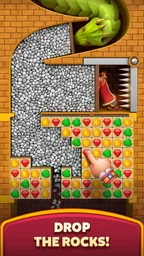
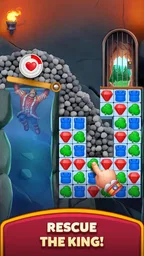
I enjoy match-three games most when they offer a little more to think about than swapping the first pair of tiles that looks promising. Royal Kingdom has that familiar puzzle appeal, framed as an adventure with King Richard, and it is free to start. My overall take is that it suits players who want an easy game to dip into between other parts of the day, provided they are comfortable with optional in-app purchases and the stop-start rhythm common to this kind of puzzle game.
What free access means here
The game is free to download, so you can try its puzzle format without paying upfront. In-app purchases are available, priced from $0.99 to $99.99 per item. That range makes it worth deciding early whether you want to keep spending entirely optional: a free starting point is not the same as a promise that every later stage will feel equally comfortable without purchases.
I would treat any purchase as a convenience, not as an essential part of the decision to install. If you are browsing the app store because you want a no-cost game to test during a short break, this is an accessible choice. If you need a game with no paid options at all, the presence of in-app purchases may make it a poor fit, even though downloading it costs nothing.
Dream Games, Ltd. is the developer. The game is rated Everyone, and its current version is 34771, with Android 7.0 listed as the minimum operating-system requirement. It was released on November 20, 2024. Those details help set expectations for compatibility and audience, but the practical question for most players is simpler: do you enjoy working through match-three puzzles enough to return to them regularly?
What the puzzles are good for
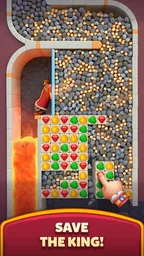
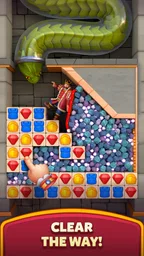
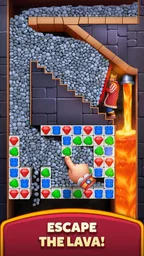
Royal Kingdom belongs to the puzzle genre, and its strongest everyday use is as a compact activity that asks for attention without requiring a long session. I can see it working while waiting for a meal, winding down at home, or filling a quiet stretch between errands. The board-based format is easy to understand, so there is little barrier to getting started if you already know the basic conventions of match-three games.
The useful habit is to pause before each move rather than treating every turn as a quick tap. Look for matches that create room or help clear the board’s immediate obstacles, then consider whether a move also sets up another useful match. That small shift makes familiar puzzles feel more deliberate. It is also a good way to avoid burning through attempts simply because a bright match catches your eye.
One practical trade-off is that the game’s appeal depends on how much you like repeating a puzzle loop. If you enjoy spotting combinations and adjusting when a board does not go your way, that repetition can be relaxing. If you want a story-heavy adventure, direct control over a character, or puzzles that change their basic rules from one session to the next, a match-three game may feel narrow regardless of its presentation.
How it compares with other match-three choices
Compared with the usual match-three alternatives, Royal Kingdom is best approached as a familiar genre game with its own King Richard adventure framing, rather than as a completely different kind of puzzle. That familiarity is a benefit when you want to begin quickly. It is also the main limitation: players who have grown tired of matching tiles may not find the setting alone enough to renew their interest.
Before choosing it over another puzzle game, think about what you want from your sessions. For short, low-pressure bursts, the straightforward format is a natural fit. For a game built around open-ended brainteasers, wordplay, or a more varied set of activities, another category will probably offer more variety. I would not choose this one expecting it to replace every kind of casual game; its appeal is more focused.
The game has an average rating of 4.8 from around 2.8 million ratings, alongside roughly 29,000 written reviews and over 100 million installs. That broad audience suggests the format has reached many players, but popularity cannot tell you whether you will enjoy replaying match-three boards. I would use those figures as context, not as a substitute for trying the free version yourself.
Where the value comes from—and where it can fall short
For me, the value of free access is the chance to find out whether the core puzzle loop fits my habits before spending anything. A game can be worth keeping even if I only open it for brief breaks, but that depends on whether those short sessions feel satisfying rather than like unfinished chores. Give it a few sessions at different times of day and notice whether you return because you enjoy the puzzles or because you feel pushed to keep progress moving.
The clearest friction is the purchase range. Items run from $0.99 to $99.99, so the upper end is substantial enough that I would avoid making quick decisions in the middle of a frustrating moment. If you tend to spend impulsively when a game gets difficult, set a personal limit before playing or keep purchases off the table. That is a more reliable way to judge value than assuming that a free download will remain a free experience in every sense.
There is also a genre-specific patience cost. Match-three games ask you to accept that progress is made through repeated board decisions, and a particular puzzle may take more attention than you have available right then. My tip is to stop when you are tired or rushing. Coming back later is usually a better test of whether the game is enjoyable than tapping through turns without thinking.
Who is likely to get the most from it?
I would recommend trying it if you already like tile-matching puzzles, want an approachable game for spare moments, and are happy to keep optional spending under your control. The Everyone age rating makes it broadly suitable in audience terms, while the simple premise is easy to explain to someone who has never played a match-three game. It is also a reasonable option for a player who wants a free starting point rather than a paid purchase before they know whether the style suits them.
It is less suitable if you are actively trying to avoid games with in-app purchases, dislike repeating familiar puzzle mechanics, or want a long, uninterrupted narrative experience. It may also be a weak choice for someone seeking a game that rewards extended strategic planning more than quick board-by-board decisions. In those cases, I would look for a puzzle title whose central mechanic matches that preference instead of hoping the adventure framing will change the underlying rhythm.
For a practical test, install it when you have time for a handful of short sessions rather than judging it during a rushed minute. Notice whether you naturally start planning moves, whether the pacing feels comfortable, and whether the purchase prompts affect your enjoyment. Those answers will tell you more about personal value than a high rating or a large install count can.
My verdict on installing or skipping
I see Royal Kingdom as a sensible free-to-try pick for casual match-three fans, not an automatic recommendation for every puzzle player. Its appeal is clearest when you want a familiar board challenge that fits into spare time and you are content to leave purchases optional. The paid items create a real budget consideration, so I would keep a firm boundary rather than treating spending as the default solution to a difficult moment.
If that balance sounds right, I would give it a try and judge it by how the puzzles feel after the novelty of starting wears off. If you want a completely purchase-free experience or are bored with match-three games, skip it and choose a different kind of puzzle. For everyone else, the free entry point makes testing the fit straightforward, while a little restraint around purchases keeps the decision in your hands.
What we like
- Colorful visuals make the kingdoms pleasant to explore.
- Match-3 puzzles offer a satisfying break between story scenes.
- New areas add a sense of progression as you play.
- Short levels work well for quick play sessions.
- The controls are easy to learn for new players.
What could be better
- Lives can limit how long you play in one sitting.
- Some levels may require repeated attempts to beat.
- Power-ups can become important on tougher stages.
- Progress may feel slow without frequent play.
- The game requires an internet connection for some features.







