Weather Forecast & Live Radar review
 Analysis by Appsdrops
Weather apps often make a strong first impression with a polished screen and a quick forecast, but the real test comes later: do they remain useful enough to become part of your everyday routine? Weather Forecast & Live Radar aims to earn that spot with daily and hourly weather forecasts, local and national air-quality information, and a straightforward focus on helping you plan ahead. I find that practical mix more valuable than novelty alone, especially when checking the weather becomes a small habit before a commute, a walk, or a change in plans.
A promising first week, built around everyday checks
My first impression is that this is an app with a clear job. It is a weather forecast app for people who want to see what conditions may be like today and how they could change over the next few hours. That sounds simple, but it matches the way most people actually use a weather tool: a quick glance in the morning, another check before heading outside, and perhaps one more when the sky looks different from what was expected.
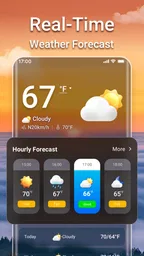
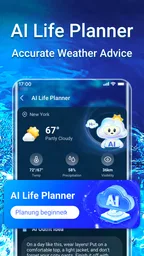
The daily forecast gives the experience an easy entry point. You do not need to approach weather as a hobby or spend time interpreting complicated information to understand the app’s core purpose. A daily outlook helps answer the basic question of what the day may bring, while an hourly forecast is more useful when timing matters. If I am deciding whether to leave now or wait, a broad daily summary is only part of the picture; an hour-by-hour view can make the decision feel more grounded.
That pairing is the strongest part of the app’s opening appeal. It serves both the person who wants a fast answer and the person who wants to think a little further ahead. The first user can check the day and move on. The second can use the hourly forecast as a planning aid, especially when arranging outdoor activities or trying to fit errands around changing conditions. The app does not need to turn either task into a big project.
Air quality adds another useful angle to the usual weather check. Local information can make a forecast more relevant to the immediate surroundings, while national air-quality coverage offers a broader view. I appreciate that this information sits naturally alongside weather rather than making the app feel like it has abandoned its main purpose. For users who consider air conditions as well as temperature and rain, that wider scope gives a reason to open the app beyond checking whether they need a jacket.
The app has a welcoming scale for new users, too. It is free, rated for everyone, and has reached more than a million installs. Its average rating is 4.7 from around 48,000 ratings, with roughly 4,100 written reviews. Those figures suggest that plenty of people have made it part of their weather-checking routine, though the more meaningful question for an individual user is still whether its daily and hourly information fits their own needs.
From curiosity to a useful habit
During the first week, the appeal of a weather app usually comes from convenience. I want to open it, find the forecast I need, and close it without having to think about where the useful information lives. Weather Forecast & Live Radar has a clear value proposition because its central promise is easy to understand: weather forecasts by day and by hour, paired with local and national air-quality information.
That clarity matters more than a flashy first impression in this category. Weather is not something most people want to explore for its own sake every time they open an app. It is a practical check before making a decision. A tool that supports that quick moment can feel more helpful than one that demands attention or encourages constant browsing. For me, the ideal use is brief and repeatable: open, check the outlook, decide what to do, and get on with the day.
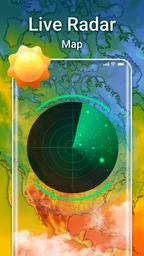
The title also points to live radar, which will catch the eye of anyone looking for a visual way to follow weather. Still, the app’s clearest stated strengths are its daily and hourly forecasts and air-quality coverage. That makes it sensible to judge the experience primarily on those recurring needs rather than assuming that a particular radar control or display will transform the routine. The best reason to keep a weather app is that its information proves useful again and again, not simply that its name sounds comprehensive.
Why the value can last beyond the novelty
Weather has a built-in advantage over many app categories: the question changes every day. A forecast that was useful yesterday is not a substitute for checking today’s conditions, and a plan for the afternoon may benefit from looking at the hours ahead. This gives a weather app a natural opportunity to become a habit. The challenge is not finding a reason to return; it is making each return worthwhile and easy.
The daily forecast supports that repeated use because it connects directly to routine decisions. I might check it while getting ready, before deciding how long to stay outside, or when working out whether an outdoor plan feels sensible. The hourly outlook extends the usefulness beyond a single morning glance. Instead of treating weather as a fixed label for the whole day, it invites a more practical question: when might conditions suit what I need to do?
Air-quality information can also add lasting value, provided it is relevant to the way a person makes choices. It broadens the app’s role from “Will it rain?” to a more complete check of outdoor conditions. That is a helpful distinction because weather decisions are not always only about rain or temperature. Someone who regularly checks local air quality may find a recurring reason to open the app, while someone who rarely uses that information may treat it as a welcome extra rather than a daily feature.
In that sense, the app’s long-term value is likely to depend on fit more than novelty. People who want a quick weather overview and air-quality context may find a reason to keep it in regular rotation. Those who only check weather occasionally can still use it when plans call for it, but may not develop the same everyday habit. Neither pattern is a failure; a useful app should support the frequency its audience actually needs.
Weather Forecast & Live Radar is currently at version 1.8.0, and it works on Android 6.0 or later. It was released on September 23, 2022, and is developed by Weather 365 Days. Those details give the product a clear identity in the app catalog without changing the basic judgment: its lasting appeal comes from the practical repeatability of weather and air-quality checks.
A manageable role in the routine
One reason I would consider keeping this kind of app is that its purpose does not require a complicated commitment. A weather check can be useful in seconds, and the information remains relevant as plans change. The app is not asking to become an all-day destination. Its best role is as a small utility that earns a place in the routine by answering a question at the right moment.
That low-friction role is especially important over time. A tool can be impressive when new and still feel like clutter if it makes ordinary tasks harder. A forecast app should be easy to return to, but it should also be easy to leave once the answer is clear. The appeal of daily and hourly forecasts is that they support both habits: a quick glance for general planning and a closer check when timing is important.
Air quality makes the experience more useful for people who want environmental context, though it is not automatically a reason for everyone to check in more often. The strongest long-term setup is personal: use the information that helps you make decisions and ignore what does not affect your day. Weather Forecast & Live Radar has a broad enough purpose to suit more than one type of user, while still centering the familiar need to know what conditions may be like.
Where routine can turn into fatigue
The same everyday nature that helps a weather app become a habit can also make it feel repetitive. A forecast check is often brief and functional, so there may be little reason to linger once the answer is clear. That is not necessarily a weakness. In fact, a weather app that helps me make a decision and then gets out of the way can be doing exactly what I want. The potential fatigue comes when I expect every visit to feel fresh, rather than simply useful.
Another possible source of fatigue is checking too often. Weather can change, and plans can shift, but opening an app repeatedly without a specific decision in mind may turn a helpful habit into background distraction. I get the most value from checking when I have a reason: before leaving, while planning an outdoor activity, or when I need a better sense of how the day may unfold. Used that way, the app stays connected to real choices instead of becoming another screen to refresh automatically.
There is also a difference between broad coverage and personal relevance. National air-quality information may provide helpful context, while local information is more immediately tied to a person’s surroundings. The feature that matters most will vary from one user to another. If I mainly need the daily forecast, I may not use every part of the app equally. That is normal; long-term satisfaction depends on whether its central information is useful, not on how many times I explore every available topic.
As with any forecast, the information is best treated as a planning aid rather than a promise that conditions will unfold exactly as expected. I would use the daily and hourly outlook to guide decisions, then stay flexible when plans or conditions change. This practical mindset helps keep expectations realistic and prevents a useful tool from being judged as though weather itself were perfectly predictable.
Maintenance without making weather a chore
For this category, maintenance is less about managing a complex system and more about keeping the app useful as part of normal life. I would want to open it when needed, understand the forecast, and return later without having to rebuild my routine. The straightforward focus on forecasts and air quality gives the app a clear job to maintain: provide information that supports everyday planning.
There is no need to turn regular use into a strict schedule. A morning check may be enough on an ordinary day; an hourly forecast can matter more when plans are time-sensitive. This flexible pattern is one of the healthiest ways to keep a utility app around. It avoids the pressure to use every feature simply because it is available and lets the app earn attention when it can genuinely help.
The product is free, which removes a purchase decision from the question of whether to try it. The more important ongoing consideration is whether it earns a convenient place on the phone. I would keep it if its forecasts and air-quality information regularly help me prepare or make plans. If I found myself opening it out of habit without learning anything useful, its presence would be harder to justify. That is a fair test for any everyday utility.
Who is most likely to keep it?
I can see Weather Forecast & Live Radar suiting people who want a practical weather app for daily planning rather than a reason to spend time inside a weather interface. Its daily and hourly forecasts cover two common ways of checking conditions, while local and national air-quality information adds context for users who care about more than the basic outlook.
It may be a particularly comfortable fit for someone who already has a simple weather-checking habit and wants one app to consult as plans develop. The daily view helps with broad decisions, and the hourly forecast is useful when the timing of an outing matters. For those who rarely need air-quality information, that part can remain secondary without undermining the app’s central purpose.
People who expect a weather app to provide constant entertainment may find the experience naturally restrained. Weather tools are at their best when they solve a practical problem, and their success is often measured in time saved rather than minutes spent. I would not judge the app by whether it keeps me browsing; I would judge it by whether I can get a useful forecast and move on confidently.
My long-term verdict
Weather Forecast & Live Radar has the ingredients for a lasting place on a phone, but its strongest case is quiet consistency rather than novelty. Daily and hourly forecasts address a need that comes back regularly, and local and national air-quality information gives the experience extra relevance for users who include air conditions in their plans. The app’s purpose is easy to understand, which helps it fit into a routine without asking for much attention.
Its lasting value will depend on how closely those features match the way someone checks the weather. If I want a convenient forecast for the day, a closer look at the coming hours, and access to air-quality context, I can see a practical reason to keep it. If I only check weather now and then, it can still serve that occasional need, even if it never becomes a daily habit. The app does not need to be opened constantly to be useful.
My overall take is that this is a sensible choice for people looking for a free weather app with daily and hourly forecasting and air-quality coverage. It has a clear everyday role, a 4.7 average rating, and an audience of over a million installs. More importantly, the basic features connect to decisions people make repeatedly, which is what gives a utility app a chance to outlast its first-week appeal.
When the novelty fades, the best reason to keep a weather app is simple: it makes planning a little easier whenever conditions matter. Weather Forecast & Live Radar offers that kind of recurring usefulness without needing to become the center of your day. If its forecast and air-quality information fit your habits, it can earn its space through routine value, not hype.
What we like
- Live radar helps track approaching rain in near real time.
- Hourly forecasts make it easier to plan activities throughout the day.
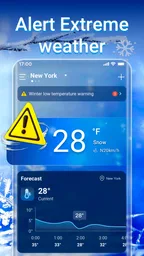
- Severe weather alerts can provide useful advance warnings.
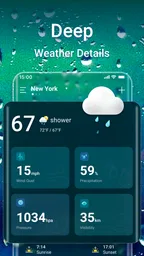
- Multiple weather details are available in one place.
- A clean layout makes current conditions quick to check.
What could be better
- Radar accuracy may vary by location and data coverage.
- Frequent alerts can become distracting without careful settings.
- Some advanced features may require a paid upgrade.
- Weather data can take time to refresh on a weak connection.
- Ongoing location access may affect battery life.




