

GoodRx: Prescription Coupons review
 Analysis by Appsdrops
Prescription costs can turn a routine errand into a frustrating bit of research. GoodRx is designed to make that search easier by helping people find affordable prescription medications for themselves and their families. Its appeal is straightforward: when a medicine needs refilling, the app gives you a place to look for potential savings before you head to the pharmacy. The more useful question is whether that convenience keeps earning a spot on your phone after the first search.
Useful from the first search
My first impression is that GoodRx has a clear, practical purpose. It is a medical app focused on prescription affordability, not a general wellness tool trying to cover everything. That focus helps set expectations: you open it because medication costs matter, and you want a more manageable way to look for options.
That kind of usefulness does not depend on novelty. A prescription is often an ongoing need, so a service that helps with the cost can be relevant again when it is time to refill. I like that the central idea is easy to understand without a long explanation. For someone who has been putting off comparing medication costs, having a dedicated app to check is a sensible starting point.
The first-week appeal is mostly about reducing friction. Rather than treating a prescription as a one-time purchase, GoodRx frames affordability as something worth checking. That can be a helpful change in habit: before paying, pause and see whether there is a better option available for your situation. It is a modest action, but recurring expenses are exactly where small checks can feel worthwhile.
GoodRx is free to download and is rated for everyone. It has been available since December 12, 2012, and its current version is 9.22.0. That long presence gives it an established place among medication-savings apps, while the core promise remains easy to grasp: find affordable prescription medications for you and your family.
A focused role in healthcare spending
I see the app’s strongest quality as its narrow, everyday relevance. It is not asking me to build a complicated routine or spend time exploring unrelated content. Its purpose connects to a real household concern: prescriptions can be a recurring expense, and knowing where to look for affordability help can make the process feel less opaque.
Still, an app can support a decision without replacing the judgment of a healthcare professional or a pharmacist. Medication choices and prescription instructions deserve care. I would treat GoodRx as a place to look for affordability information, not as a reason to change how a medicine is used. That boundary matters, especially when the app sits in the medical category and its subject affects personal health.
Value that can return each month
The long-term case for a prescription-savings app depends on whether it is useful when a real need comes up, not on how exciting it feels the first time. GoodRx has a natural repeat-use pattern: prescriptions may need to be filled again, and each new purchase can be another opportunity to check costs. For people managing medicines for themselves or family members, that recurring context is more compelling than a feature that is fun once and then forgotten.
There is no need to open it every day for it to justify its place. In fact, I think it makes more sense as a practical tool to return to when a prescription is due. This kind of low-frequency utility can be easy to underestimate. An app does not have to become part of a daily screen-time habit if it is available when a specific task comes around.
The app’s broad adoption suggests that many people find the idea relevant. It has more than 10 million installs, an average rating of 4.8, and around 336,000 ratings. Those figures are encouraging context, but they are not a promise that every person will find the same value. Medication needs, local circumstances, and individual expectations differ, so I would judge it by whether it helps with the prescriptions I actually need to manage.
For a household with several ongoing prescriptions, the potential value is easier to understand: a single place to revisit can be more convenient than starting from scratch each time. For someone who rarely fills prescriptions, it may be more of an occasional utility than a regular companion. Neither pattern is a flaw. The important point is that its usefulness is tied to a concrete event rather than an artificial reason to keep checking in.
Building a small, sensible habit
The best routine here is simple: when a prescription needs attention, remember to check affordability before completing the purchase. That habit does not need elaborate tracking or daily reminders to make sense. I would keep it lightweight, because a process that feels like another chore can quickly be abandoned.
It also helps to think of the app as one part of a broader decision. Price matters, but so do the prescription itself and the guidance from the people involved in your care. A careful user can make a cost check part of the refill routine without allowing the search for savings to become a substitute for professional advice.
That balance is what gives the app a chance at lasting value. If the process is easy enough to repeat when needed, it can stay useful without demanding constant attention. If someone expects an app to proactively manage every part of healthcare spending, however, this focused purpose may feel limited. GoodRx is most convincing when used for the job it sets out to do: looking for affordable prescription medications.
Maintenance, repetition, and fatigue
GoodRx does not need to become a hobby, and I consider that a positive. Some apps stay visible by asking for frequent engagement; a prescription-affordability tool can be valuable even if it is opened only around refills. The maintenance burden is therefore less about daily upkeep and more about remembering that the app exists when a relevant expense comes up.
That memory can be the weak point. People often settle into familiar pharmacy routines, and once a process feels automatic, an extra comparison step may slip away. If that happens, the app can sit unused despite having a practical purpose. I would make the check part of the moment when a prescription is being arranged, rather than expecting myself to remember it at an unrelated time.
Another source of fatigue is repetition. Searching for savings can feel worthwhile when the stakes are clear, but even a useful task becomes tiring if it seems to add steps without an obvious benefit. The app’s lasting appeal will depend on whether users feel the effort matches the value they find. That is a personal calculation, and it may differ from one prescription or household to another.
There is also a risk of expecting too much from a single tool. The name and purpose make affordability the focus, but healthcare decisions can involve more than cost. I would not use a savings search as a reason to alter a treatment plan or make assumptions about what is appropriate. Keeping the app in its lane helps prevent disappointment and supports a more responsible routine.
When it earns its place
For me, GoodRx earns a lasting place when it becomes a quick checkpoint rather than a constant companion. I would open it when a prescription is due, consider the available affordability information, and then make decisions with the appropriate professional guidance. That approach keeps the app relevant while avoiding the feeling that every health-related task needs another digital system.
Its longevity is another reassuring point. The app has been around since 2012 and continues to serve a clear need. Its current version is 9.22.0, and it has received around 162,000 written reviews. A substantial audience does not guarantee a perfect experience, but it does show that prescription affordability is a continuing concern for many people, rather than a passing app trend.
There is little reason to keep checking an app when no prescription decision is on the horizon. That is not a failure of the product; it is simply the nature of a task-based tool. The challenge is to remember it at the right time and to evaluate its usefulness based on real needs, not on how often it appears in a daily routine.
My long-term verdict
GoodRx makes the strongest case for itself through repeatable, practical value. Its first-week appeal comes from an uncomplicated promise, while its month-to-month relevance comes from the possibility of returning whenever a prescription needs to be filled. It does not have to become a daily habit to be worth keeping; it has to be useful at the moment medication costs are being considered.
I would recommend giving it a place in a household’s toolkit if prescription affordability is a recurring concern. The app is free, focused, and aimed at helping people find affordable medications for themselves and their families. Its medical context also calls for common sense: use it to explore cost options, while relying on qualified healthcare professionals for medical guidance.
The main reason it might fade from someone’s routine is not that its purpose is hard to understand, but that savings checks can be forgotten or feel repetitive. A small reminder tied to refill time may be enough to make the app easier to revisit. If the habit stays simple and the results are useful to you, it can continue earning space without demanding much attention.
Overall, I see GoodRx as a practical utility rather than an app that needs to entertain or engage you every day. Its value is tied to real-world prescription needs, and that gives it a better chance of remaining relevant after the initial download. For people looking for a convenient starting point when checking medication affordability, it is a sensible app to keep available and consult when the next prescription comes around.
What we like
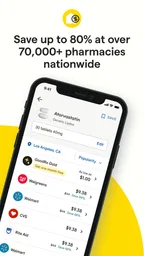
- Compare prescription prices at nearby pharmacies.
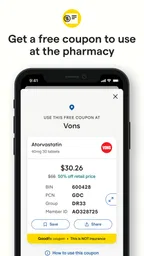
- Coupons are free to use and require no membership.
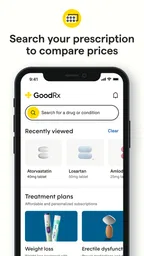
- Search by medication name or scan a prescription label.
- Set medication reminders to support a consistent routine.
- The app can help locate pharmacies that stock a medication.
What could be better
- Coupon prices may differ from the amount shown at checkout.
- Coupons cannot usually be combined with insurance for one purchase.
- Not every medication or pharmacy is covered by a coupon.
- Using a coupon may not count toward insurance deductibles.
- Some features require sharing location or personal health details.




