






Sydney Health review
 Analysis by Appsdrops
Sydney Health is most useful when your health insurance is part of your everyday planning, not just a card you remember when you arrive at a clinic. I see its central appeal as convenience: it gives members of Anthem, Wellpoint and other supported plans a mobile place to handle insurance-related tasks. That can make routine care feel less scattered, though it does not turn an insurer’s app into a replacement for a clinician, a pharmacy, or every other health service you use.
Insurance tasks, brought closer to daily life
There is a practical difference between an app that offers medical advice and one that helps you work with your health plan. Sydney Health belongs to the second group. It is a free medical app from Elevance Health, Inc., and its value depends on whether your insurance is among the plans it supports. If it is, the app can serve as a convenient starting point for managing the relationship with your insurer on a phone.
I would judge it less like a general wellness tracker and more like a digital front desk for health coverage. That distinction matters. Someone looking for exercise coaching, symptom diagnosis, or a complete record of care across unrelated providers may find the wrong tool here. Someone who regularly needs to check in with an insurer, keep plan details accessible, or prepare for a healthcare errand has a clearer reason to install it.
The app’s broad reach suggests that many people have found it worth trying: it has more than five million installs, a 4.7 average from around 100,000 ratings, and about 7,600 written reviews. Those numbers are reassuring as a sign of adoption, but they are not a promise that every plan or personal situation will fit equally well. Insurance apps are especially sensitive to plan eligibility and account setup, so the first useful question is not whether the app is popular; it is whether your coverage works with it.
Where the convenience can make a real difference
The strongest case for Sydney Health is the small amount of friction it may remove around ordinary insurance chores. A phone is easier to reach than a folder of paperwork, particularly when you are away from home or trying to get ready for an appointment. Keeping plan-related tasks in one place can also make it easier to deal with them when they arise, rather than postponing them until you are back at a computer.
A realistic example is a member preparing for a routine visit during a busy workday. Instead of relying on memory or searching through old messages, they can open the insurer’s app to orient themselves around their coverage and the administrative side of care. The useful insight is to check the app before the appointment, not while standing at the reception desk: that leaves time to resolve a login or plan-access issue without adding stress to the visit.
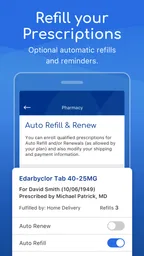
Another sensible workflow is to treat the app as a companion to, rather than a replacement for, your existing records. If you keep appointment notes or medication information elsewhere, continue doing so unless you have confirmed that the particular information you need is available and current in Sydney Health. An insurer’s view of your care can be helpful for plan tasks, but it should not automatically be treated as a complete personal health record.
This separation is one of the less obvious points worth keeping in mind. Insurance information and clinical information overlap, but they are not interchangeable. I would use Sydney Health to make insurance interactions more manageable, then use the relevant provider, pharmacy, or care service for details that need to come directly from them. That habit helps avoid the common mistake of assuming one app has the final word on every part of a healthcare decision.
Useful when it fits; less helpful when it does not
The most meaningful limitation is that an insurer’s app is only as useful as its relationship to your plan. Sydney Health is aimed at Anthem, Wellpoint, and other health insurance plans, so a person with unrelated coverage should not expect it to become a universal healthcare dashboard. Even for someone who recognizes one of those names, the sensible move is to verify that their own plan and account are supported before depending on the app for an important task.
Account access is another real-world hurdle. A mobile service can save effort after you are set up, but it may not save time at the moment you need it if you have forgotten your sign-in details or cannot complete the setup. I recommend installing and testing it when you are not under pressure, then confirming that you can reach the parts relevant to your plan. That small bit of preparation is more useful than discovering an access problem on the way to care.
There is also a trade-off in concentrating insurance tasks in a phone app. It can be convenient to have them close at hand, but a mobile interface is not always the best place to compare complicated coverage details or read lengthy information carefully. For a decision with financial or medical consequences, I would slow down, review the relevant plan documents, and contact the insurer or provider if anything is unclear. The app can help you get organized; it should not be mistaken for an explanation of every fine point in your benefits.
Compared with the usual alternatives, Sydney Health occupies a middle ground. A physical insurance card is straightforward and does not require an app session, but it cannot provide the same mobile convenience for plan-related errands. A provider’s own app may be better for appointment-specific communication or records held by that practice, while a general health tracker is a better fit for lifestyle logging. Sydney Health makes most sense alongside those tools, not as an attempt to replace all of them.
Who is likely to get the most from it?
I would recommend trying it if you are covered by a supported plan and often need to deal with your insurance away from a desk. It is particularly suited to people who prefer handling routine admin on a phone, want a readily available place to start when a plan question comes up, or are helping a family member stay organized around covered care. The value is less about novelty and more about reducing the number of separate places you have to check.
It may be less appealing if you rarely interact with your insurer, strongly prefer paper or a desktop, or already rely on a provider system that covers the specific tasks you need. It is also not the right choice for someone expecting a stand-alone medical reference or a cross-insurer organizer. In those cases, the app may add another login without solving the problem that prompted the search.
For a household with more than one person managing healthcare, I would also be careful not to assume that one person’s access automatically covers everyone’s needs. Check how the relevant plan account handles the people you are trying to assist, and keep necessary information available through the appropriate channel. That is a practical safeguard rather than a criticism: healthcare access can depend on individual account arrangements, and a quick test is better than an assumption.
The app is listed for Everyone and is free, which lowers the barrier to giving it a try, but neither point removes the need to check plan compatibility. It was released on August 30, 2019, and its current version is 10.8.1. Those details are useful context, not a guarantee that every phone, account, or plan will behave identically. It supports a minimum operating system version of 12, so checking your device before installation can prevent an avoidable dead end.
A practical verdict for plan members
My verdict is positive, with a clear condition: Sydney Health is worth considering when your insurer is part of its supported group and you want a mobile route into plan-related tasks. Its best quality is that it can make insurance administration feel closer and more manageable during ordinary life. The main caution is equally simple: do not treat it as a universal health app, and do not wait until an appointment or urgent errand to find out whether your account is ready.
If I were recommending it to a friend, I would say to install it ahead of time, confirm that your plan works with it, and use it as one tool in a broader routine. Keep clinical questions with qualified care providers, use provider-specific services where they are more direct, and turn to plan documents or insurer support when a coverage detail needs careful interpretation. With those expectations, Sydney Health can be a useful convenience for the people it is built to serve rather than an unnecessary app trying to do everything.
What we like
- Health plan details and claims are easy to find in one place.
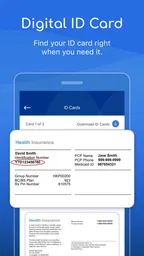
- Digital ID cards can be handy during appointments.
- The app offers tools to track health goals and activity.
- Eligible members can access virtual care options.
- Personalized health resources can help guide next steps.
What could be better
- Features and services vary by health plan and location.
- Some tools may require extra setup or personal information.
- Health and activity data can take time to sync.
- Virtual care may not be available for every concern.
- App access depends on having an eligible plan.





