




Zen Word® - Relax Puzzle Game review
 Analysis by Appsdrops
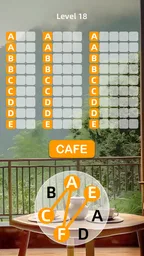
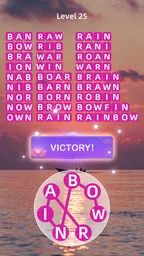
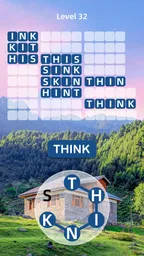
When I want a word game that feels more like a quiet pause than a test, Zen Word is the sort of title I reach for. Its central appeal is straightforward: look for words among available letters, solve a puzzle, and give your attention a small, satisfying job. That makes it easy to fit into a break without needing to learn a complicated rule set first.
I like that the game’s promise is about both relaxing and exercising your mind, rather than turning every round into a race. It sits in the word-puzzle corner of mobile gaming, but its appeal is less about elaborate story or competition and more about the simple rhythm of noticing letter combinations. If you enjoy that kind of focused, low-pressure play, it is an inviting place to start.
Finding words is the whole point
The useful thing to understand before downloading is that word puzzles are the main event here. The pleasure comes from scanning letters, testing possibilities, and spotting a word that was hiding in plain sight. The loop is immediately understandable, which matters when you are opening a game for a few minutes rather than settling in for a long session.
In my experience, this kind of puzzle is at its best when I stop trying to force an answer and instead look at the letters from a different angle. I might begin with a familiar short word, then notice that changing the order of the same letters reveals another possibility. That little shift in attention is the game’s real mental exercise: it asks me to be observant and flexible, not to memorize a long list of rules.
That simplicity also gives the game a clear identity. It is not the right choice if you want a sprawling adventure, a deep competitive ladder, or a narrative that unfolds between puzzles. It is better understood as a compact word-game companion for moments when you want something purposeful to do with your attention.
A puzzle that suits short breaks
The format works naturally in small pockets of time. I can imagine opening it while waiting for a kettle to boil, during a quiet commute, or while taking a short break from reading. A word puzzle gives that spare moment a beginning and an endpoint: focus on the letters, find what you can, and put the phone away when you are done.
One practical tip is to approach a difficult board in passes instead of staring at it continuously. First, look for obvious combinations. Then pause and revisit the remaining letters as if they were new. That reset can make a familiar jumble easier to read, and it keeps the experience from turning into a frustrating hunt for one elusive answer.
It can also be a useful alternative to scrolling when you want a brief activity that still engages your mind. The distinction is modest but meaningful: rather than consuming an endless feed, you are working toward solving a defined word challenge. I would not call that a substitute for every kind of downtime, but it is a pleasant option when you want a little focus without a large commitment.
Where the familiar word-game format helps—and where it doesn’t
Compared with a crossword, this style of play puts less emphasis on interpreting clues or drawing on outside knowledge. That makes it easier to jump into when I do not feel like reading a set of definitions or decoding a theme. Compared with a word-search puzzle, it asks me to generate and recognize words from letters rather than simply scan a grid for already-known answers.
The tradeoff is that players who love rich clues, broad vocabulary challenges, or a strong sense of progression may find this approach too pared back. A crossword can reward knowledge across subjects; a competitive word game can make every move feel like a contest. Zen Word is more appealing when I want the act of finding words to be the reward in itself.
That narrow focus is a strength for the right mood, but it is also a limitation. If I am looking for a game with many different kinds of activity, I would choose something broader. If I want a calm puzzle that I can understand quickly and return to without a long warm-up, this format makes more sense.
Getting more from a tricky round
A useful habit is to avoid treating every unfamiliar combination as proof that I am stuck. I can mentally group letters by likely beginnings or endings, then check whether the remaining letters can form something recognizable. This is not a special tool or a guaranteed shortcut; it is simply a more organized way to search than repeatedly trying random arrangements.
Another good approach is to decide in advance how long I want to spend on one puzzle. If I have only a brief pause, I can give it a focused attempt and leave the rest for later rather than letting a single answer consume the whole break. That boundary helps preserve the relaxing quality the game is aiming for, especially on a day when my concentration is already low.
For anyone using word games as a gentle mental warm-up, I would treat success as noticing more possibilities, not as proving that I have a perfect vocabulary. The satisfying moment is often the change in perspective when a word suddenly becomes visible. That makes the game approachable even when I am not in the mood for a strict test of speed or expertise.
Who is likely to enjoy it most
I would recommend it to people who like anagrams, casual vocabulary puzzles, and games that can be picked up without a tutorial-heavy commitment. It can also suit someone who wants a quiet phone activity between tasks, or a small change of pace from word searches and clue-based puzzles.
It is less suitable if you need constant novelty, intense competition, or a game that rewards long strategic sessions. Players who dislike searching for words may find the central loop repetitive, because that is precisely what the experience keeps returning to. And if you prefer puzzles built around definitions or general knowledge, a crossword-style alternative will probably offer more of what you want.
For a realistic everyday use, I would keep it as a break-time option rather than a game that demands a special session. Open it while waiting for an appointment, try a puzzle while taking a pause from work, then stop when the break ends. That routine makes the simple format feel intentional instead of asking it to compete with larger games on depth.
What to know before installing
Oakever Games makes this free-to-play word game, and it is listed for everyone. It has a 4.8 average from around 831,000 ratings, with more than 50 million installs; those figures suggest that the accessible format has found a broad audience, though popularity alone cannot tell you whether its particular puzzle rhythm will suit you.
The game was released on March 31, 2023, and version 2.49.0 is the current version. It requires Android 8.0 or later. Those details are useful if you are checking compatibility before installing, especially on an older device.
Although the game is free to download, it offers in-app purchases ranging from $0.39 to $99.99 per item. I would go in expecting the core attraction to be the word-solving loop, not assuming that every optional purchase is necessary. If you prefer to keep mobile games strictly purchase-free, make a habit of checking any purchase prompt before confirming it.
The audience rating of Everyone makes it an option for a wide range of ages, but the best fit still depends on taste: a younger player needs to enjoy letter puzzles, and an adult looking for a demanding language challenge may want something more advanced. The low barrier to entry is appealing; it should not be confused with a promise that every round will feel fresh to every player.
My verdict on its calm, focused loop
I see Zen Word as a good pick when I want a small, self-contained word challenge that does not ask me to commit to a long session. Its strongest quality is the focus on finding words: that simple task can make a spare minute feel more engaging, and the familiar format is easy to return to after a pause.
The same focus is also the main reason someone might move on. If you want varied mechanics, clue-rich puzzles, or competitive pressure, another word game will serve you better. But for players who enjoy quietly rearranging letters and noticing answers one by one, this is an easy recommendation to try. I would install it for short, low-pressure breaks and keep my expectations centered on that single, satisfying activity.
What we like
- A generous free experience makes it easy to try before spending.
- Short rounds fit well into quick breaks.
- No timer pressure lets you solve puzzles at your own pace.
- Word puzzles offer a calm alternative to fast-paced games.
- Daily challenges give regular players a reason to return.
What could be better
- Some puzzles may accept words that feel unfamiliar or obscure.
- Hints can run out and may require watching ads or paying.
- Frequent ads can interrupt the relaxing pace.
- Difficulty may feel uneven as you progress.
- A steady internet connection may be needed for some features.







