Word Collect - Word Games Fun review
 Analysis by Appsdrops
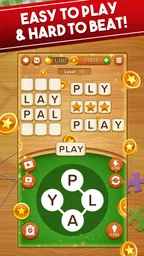
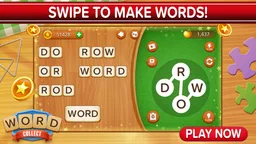
I like word games best when they make a short break feel satisfying without demanding a quiet room, a long tutorial, or a notebook full of clues. Word Collect - Word Games Fun is aimed at that kind of casual play: you work with letters to find words, making it a light way to exercise vocabulary and pattern recognition. It is a free word game from Super Free, and its appeal is easiest to understand if you want a familiar puzzle to dip into rather than a deep, story-led challenge.
Its reception suggests that this simple format has found a broad audience: it has a 4.7 average from around 599,000 ratings and more than 10 million installs. Those figures are a useful sign of reach, but they do not tell me whether its style will suit every word-game fan. The more important question is whether you enjoy spotting possible words from a set of letters and are comfortable with a game whose value comes from repeated, compact puzzles.
What free access means here
You can start without paying, which makes it easy to try the core idea before deciding whether it deserves a place on your phone. The game is rated for Everyone, so its stated audience is broad. It launched on November 16, 2017, and the current version is 2.081; it requires Android 7.0 or later. These details make it straightforward to judge basic compatibility, though your own device and app-store region still matter when installing.
Free access is not the same as a promise that every part of the experience costs nothing. The game includes optional in-app purchases, with listed item prices ranging from $0.99 to $499.99. That is a very wide range, so I would treat purchases as something to inspect carefully in the app rather than assume a particular item or amount is necessary. The practical starting point is simple: install it for free, play before spending, and make sure any purchase matches what you actually want.
I would not use the presence of a high-priced item by itself to judge the game’s everyday value. What matters to a player is whether the free experience is enjoyable and whether a purchase solves a specific annoyance or adds something they genuinely want. Since the price range alone does not explain what each item provides, I would avoid buying on impulse. If you prefer games with a clearly stated one-time price and no optional purchases, this may not be your preferred model.
How the word puzzles fit into a day
The central pleasure is the small moment when a jumble of letters turns into a word you had overlooked. That makes the game a natural fit for short pauses: waiting for a kettle, sitting through a commute, or taking a screen break between tasks. I find this kind of puzzle more inviting than a long crossword when I have only a few minutes, because I can focus on one compact challenge and stop when the moment is over.
A useful way to play is to avoid treating every round as a speed test. First scan the letters for obvious short words, then look again for less familiar combinations or alternate arrangements. If you get stuck, mentally changing the starting letter or grouping consonants and vowels can reveal a route you missed. This little routine makes the game feel more like deliberate observation than random tapping, and it is a practical technique you can use without needing any special knowledge of the app.
It can also work as a low-pressure vocabulary warm-up. I would use it before reading or studying, not as a replacement for a structured language course: finding familiar words can sharpen attention, but a puzzle alone will not explain grammar, pronunciation, or how a word is used in context. For a family setting, the Everyone rating makes it a reasonable candidate to consider, but I would still check the device and purchase settings if a child will be playing.
One trade-off with letter-based games is that success can depend on what words the puzzle accepts, not only on what a player knows. If you think of a plausible word and it does not count, that can interrupt the flow, especially for people who enjoy testing obscure vocabulary. I would approach the game as a casual pattern puzzle rather than a definitive dictionary exercise. That expectation makes a rejected guess less frustrating and keeps the focus on finding the words the game is designed to recognize.
Where it sits among word games
Compared with a crossword, this is a better fit for someone who wants to act on a small set of letters rather than work through clues and crossing answers. Compared with a word-search puzzle, it asks you to construct words instead of scanning a grid. Those differences are useful when choosing an alternative: if you like clue-solving, a crossword will likely feel more rewarding; if you want a visual hunt through a board, a word search may suit you better.
It is also less suited to players looking for a competitive match or a substantial narrative. The appeal here is the repeated act of spotting words, so anyone who needs a campaign, character progression, or a social contest to stay interested may find the format too narrow. I would not choose it as my main game for a long evening unless I already knew that repetitive word puzzles were exactly what I wanted.
That narrower scope is not automatically a weakness. For a phone game used in spare moments, a focused format can be an advantage: there is no need to remember a plot or re-learn complicated rules every time you open it. The trade-off is that the basic pleasure has to carry the experience. If letter combinations stop feeling satisfying, there may be little else in this particular style to keep you engaged.
Who is likely to get good value
I would recommend giving it a try if you enjoy anagrams, want a gentle mental diversion, or often have a few unplanned minutes to fill. It is especially appealing if you like the feeling of finding one more word after you thought you had exhausted the letters. The free entry point keeps the decision low-risk: you can find out whether that loop clicks for you before considering any purchase.
For a daily routine, I would keep sessions short and use the puzzles as a break rather than a task to complete. For example, during a short wait, play a round or two, then put the phone away instead of turning the game into another obligation. That approach preserves the casual feel and helps you judge whether the game is genuinely relaxing or just another source of screen time.
It is a weaker match for anyone who wants guaranteed educational progression, elaborate clue design, or a single clear purchase price. Players who dislike optional in-app spending should be cautious and review purchase choices before tapping through them. Likewise, if you are learning English and need explanations for unfamiliar words, a dictionary or teaching-focused app will offer more direct help; this game is better viewed as practice in noticing word patterns.
Super Free has built a recognizable, accessible word-game proposition, and the scale of its audience is notable: it has around 127,000 written reviews as well as its large rating base. I would take that as evidence that many people find the format worth returning to, not as a guarantee that every player will. The deciding factor is still personal: do you enjoy working through letter combinations at your own pace?
My buy-or-skip verdict
My recommendation is to try it for free if you want a straightforward word puzzle for small breaks. The game’s value is clearest when you enjoy the core activity itself, and there is no need to spend simply because optional purchases are available. I would hold off on buying anything until I had played enough to identify a particular benefit I wanted and checked its price inside the app.
Skip it if your idea of a word game depends on rich clues, a substantial learning path, or a competitive structure. Choose a crossword, word search, or language-learning tool instead when those are the experiences you want. But if you like the quiet satisfaction of spotting words from letters and want a free place to start, Word Collect - Word Games Fun is an easy recommendation to test for yourself. Its best value comes from fitting neatly into spare moments, not from promising more than a simple word puzzle can deliver.
What we like
- Quick rounds make it easy to play during short breaks.
- Hints help when you get stuck on a tricky word.
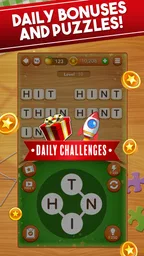
- Daily challenges give regular players fresh goals.
- The simple controls are easy for beginners to learn.
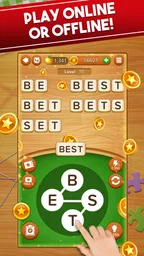
- Offline play is available for enjoying puzzles without a connection.
What could be better
- Some levels may feel repetitive after extended play.
- Hints can be limited unless you earn or purchase more.
- Later puzzles may become difficult without using hints.
- Ads can interrupt the flow between levels.
- The game may offer in-app purchases for extra help.







