Crossword Jam review
 Analysis by Appsdrops
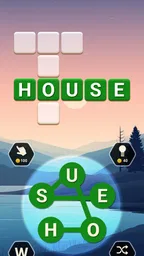
I like word games that give me a clear little challenge without demanding a long stretch of concentration, and Crossword Jam fits that slot well. It is a free word puzzle game from PlaySimple Games, built around making words from a set of letters and placing them into a crossword-style board. The appeal is less about obscure trivia and more about spotting how a small group of letters can be rearranged into several answers. I find it easy to pick up for a few minutes, though its simplicity is also a reason it may not satisfy every word-game fan.
What the puzzle feels like now
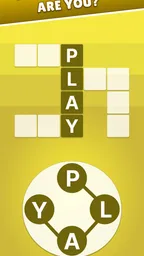
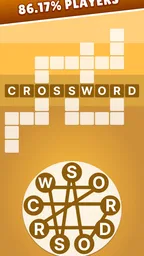
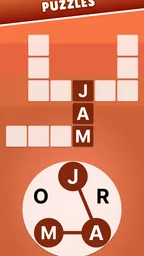
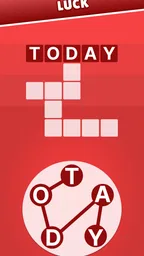
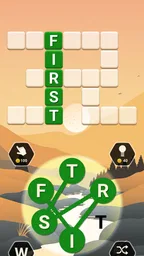
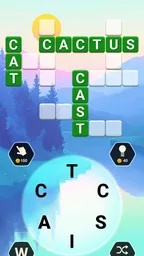
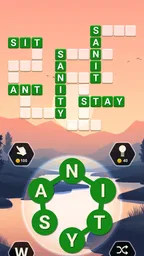
In Crossword Jam, each round gives you letters to combine into words that fill a connected puzzle. The basic loop is straightforward: look over the available letters, try a word, and use the board’s open spaces to work out what else might fit. That makes the game approachable even if you do not usually play crosswords. You are not expected to know a topic or solve a clue written in a particular style; the challenge comes from vocabulary, pattern recognition, and trying different letter combinations.
The crossword layout gives the word search a useful sense of direction. A loose jumble of letters can feel arbitrary, but a board with intersecting answers gives you a reason to reconsider a combination: one completed word can help reveal how another should be formed. I enjoy that small shift from guessing to deduction. When I am stuck, I find it more productive to examine the empty spaces and the letters I have not used than to keep repeating the same obvious guesses.
The game is rated for Everyone, so its basic format is suitable for a broad audience. That does not mean every puzzle will feel equally easy: comfort with English spelling and vocabulary matters, and younger players may need help with less familiar words. I would happily hand it to someone who wants a low-pressure word activity, but I would not treat it as a substitute for a structured language lesson.
Its scenic presentation gives the puzzles a relaxed frame, but I would choose it primarily for the word-solving rather than as a landscape or travel experience. The setting can make a session feel less bare than a plain letter grid, yet it does not change the central decision-making. If you want a game where the visual world and story drive your progress, this is probably not the one to pick.
A practical game for short breaks
The format works especially well in the gaps that are too short for a long game but long enough to focus on one small task. I can imagine opening it while waiting for a friend at a café, solving a few boards, and then putting the phone away without needing to remember a complicated plot or rebuild a strategy later. That start-and-stop quality is one of its strongest everyday advantages. It is also useful for a quiet commute when you can safely look at the screen, though it is not a good choice if you need to keep your attention on your surroundings.
For a more deliberate session, I would play with a simple routine: scan the board first, make the shortest plausible words, then use the new crossing letters to test longer options. This avoids spending too much time on a single guess and helps expose words you might overlook when you focus only on the full letter set. It is a small technique, but it makes the puzzle feel less like random tapping and more like a process you can improve.
Where it sits among word games
Compared with a traditional crossword, this asks less of your general knowledge and more of your ability to rearrange letters. That makes it a friendlier choice when you do not want clues about history, culture, or specialist subjects. Compared with a word-search game, it gives you more of a construction problem: the goal is not merely to spot a word already laid out, but to form answers that belong in a connected board.
It also differs from competitive word games, where speed, an opponent, or a shared score can dominate the experience. Crossword Jam is better suited to a solitary, self-paced pause. If you enjoy arguing over a dictionary with friends, racing against a clock, or building a long-term vocabulary plan, another kind of word game may be more rewarding. Here, the satisfaction is in resolving one compact puzzle at a time.
How it has developed, and what that means for players
The game was released on September 7, 2017, and its current version is 1.792.0. That version number shows that Crossword Jam has continued through many iterations, but a version number alone does not tell me which features changed or how a particular update affects play. I would not infer a major redesign from it. What a player can reasonably take from the current version is that this is an established game rather than a newly launched experiment, with a familiar core format that has had time to mature.
That long-running presence is reflected in its reach: it has more than 10 million installs, an average rating of 4.6 from around 429,000 ratings, and roughly 106,000 written reviews. Those figures suggest that the basic puzzle loop has found a large audience, though popularity cannot guarantee that its pace or difficulty will suit you personally. I would read them as useful context, not as a reason to expect every board to feel fresh or every session to be challenging.
For someone returning after a break, the best way to judge the current experience is to start playing rather than assume that older impressions still apply. The installed version is 1.792.0, and the game remains a word puzzle focused on letter combinations and crossword-style completion. If you enjoyed that central idea before, it is the part worth revisiting. If your reason for leaving was that you wanted richer clue writing, head-to-head play, or a more varied puzzle format, a higher version number does not by itself answer that concern.
For existing players, continuity has a practical benefit: the core skill you build—seeing possible words in a limited set of letters—still applies from one session to the next. You do not need to learn a sprawling set of controls or relearn a complicated ruleset simply to return. The trade-off is that players who want each update to transform the game may find the appeal depends more on enjoying the repeated puzzle rhythm than on anticipating a new kind of experience.
Progress without overcomplicating the routine
One helpful way to keep a session satisfying is to decide what you want from it before opening the game. If you have only a minute, aim to make progress on one board rather than force yourself to finish a long run. If you have more time, slow down and check whether a missed answer could be formed from letters you have been treating as a fixed group. This is a useful habit for this particular format because the same set can conceal several valid combinations, and the board’s crossings can narrow down what belongs.
I would also avoid turning every uncertain word into a test of personal vocabulary. Sometimes a pause is more useful than repeatedly tapping guesses. Looking away briefly and returning to the unused letters can reset your perspective. That is not a hidden feature or a shortcut; it is simply a better way to approach a puzzle that rewards flexible rearrangement. If you often feel annoyed by word games, this kind of self-paced approach may make the experience easier to enjoy.
There are limits to that advice. A puzzle based on word formation can still feel unfair if the answer depends on vocabulary you do not know, especially when you cannot see a clue that explains why that word belongs. Players who prefer every answer to be supported by a clear definition may find a clue-based crossword more satisfying. Likewise, someone learning English from scratch may benefit more from a word app that explains unfamiliar terms than from a game whose main task is filling the board.
Cost, device fit, and the points to weigh
Crossword Jam is free to download, with optional in-app purchases ranging from $0.99 to $99.99 per item. I would go in expecting the core game to be accessible without paying, but I would still check purchase prompts carefully and decide in advance whether I want to spend anything. The wide range means it is worth being deliberate rather than treating every optional offer as part of the basic price. If you are setting up a device for a child, that conversation is especially useful even though the game’s content rating is Everyone.
The listed minimum operating system is version 8.0, which makes the stated device requirement broad enough for many older devices. Still, a minimum requirement is not a promise that every older phone will feel equally comfortable to use; screen size and general device condition can affect how pleasant any game is to play. I would try a short session on the device you actually plan to use before deciding whether it fits your routine.
The main friction is not complicated controls but repetition. The central loop is easy to understand, yet it asks you to keep finding words in a similar kind of puzzle. If you enjoy that focused repetition, it can be calming. If you need a story, a broad set of mechanics, or frequent changes in how you solve things, the same consistency can become monotonous. I would also skip it when I want a game that teaches me why an unfamiliar word means what it does; the puzzle goal and a vocabulary lesson are not the same thing.
Who I would recommend it to
I would recommend it to people who like anagrams, compact crossword boards, and games that can be paused between real-life tasks. It is a particularly good fit if you enjoy quietly testing possibilities rather than competing against someone else. Parents looking for a family-friendly word game may also find the simple premise approachable, while keeping in mind that spelling knowledge affects how easy it feels and that optional purchases should be considered separately.
I would point a dedicated crossword fan toward a traditional clue-based option if they want clever definitions and broad trivia. I would suggest a multiplayer word game instead for someone who needs social pressure or a race to stay engaged. And if a player finds repeated letter rearrangement tiring, a different puzzle category will probably be a better use of their time. Those are not defects so much as clear boundaries around what this game does well.
My overall impression is that Crossword Jam earns its place as an easy-to-return-to word puzzle, not as an all-purpose brain trainer. PlaySimple Games has built a familiar, accessible format around forming words and completing intersecting boards, and the game’s long life and large audience make it a reasonable option to try. I would start with short sessions, use the crossing spaces to guide guesses, and pay attention to whether the repeated rhythm stays enjoyable. If it does, the free entry point makes it an uncomplicated recommendation; if you want clue depth, competition, or a more varied puzzle structure, I would choose a different word game instead.
What we like
- Simple controls make it easy to play with one hand.
- Short puzzles fit well into brief breaks.
- Hints help when you get stuck on a tricky word.
- Daily puzzles offer a reason to return regularly.
- The relaxing pace suits casual players.
What could be better
- Some puzzles rely on obscure or uncommon words.
- Hints can become scarce without purchases.
- Later levels may feel repetitive.
- Ads can interrupt the flow between puzzles.
- The game requires an internet connection for some features.







