
Wordscapes Solitaire review
 Analysis by Appsdrops
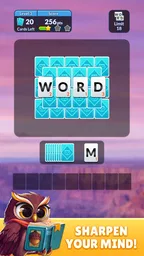
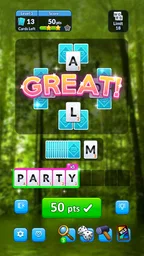
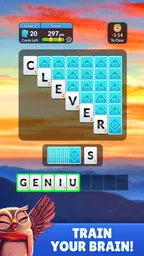
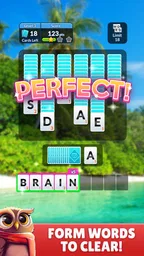
I’d recommend Wordscapes Solitaire to someone who likes word puzzles but wants a gentler, more stop-and-start routine than a long puzzle session. It is a word game from PeopleFun, and its appeal is the mix of word-solving with solitaire-style play. That combination gives me a reason to pause between decisions and look at a puzzle from another angle, rather than simply racing through a string of definitions.
Getting into the rhythm
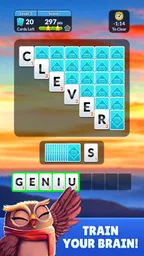
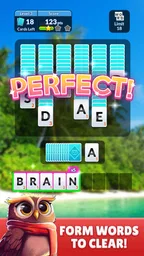
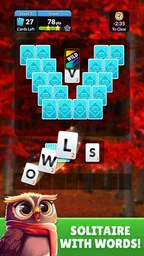
The basic appeal is easy to understand: you are using words to make progress through a card-game structure. The two familiar formats balance each other. Word puzzles invite you to test vocabulary and spot patterns; solitaire brings a more measured, move-by-move pace. For me, that makes the game better suited to a short break than a demanding brain-training session.
The store summary describes it as a relaxing blend, but “relaxing” depends on what you enjoy. If you find word searches soothing and like having a small tactical decision alongside them, the pairing can be pleasantly absorbing. If you prefer a quiet crossword with no secondary layer to think about, this may feel busier than you want. Its core identity is not pure solitaire and not a conventional crossword: the appeal is in moving between those ways of thinking.
I would approach a new session with a small goal, such as finishing the puzzle in front of me rather than trying to play until I run out of time. That keeps the experience casual and makes it easier to stop when real life interrupts. A useful habit is to take a moment before acting when a word seems obvious. In a game combining vocabulary and card decisions, a quick answer is not automatically the most useful one.
When progress seems to stall
One common point of friction in hybrid puzzle games is knowing whether you are stuck on the word challenge, the card choices, or simply overlooking a possibility. I find it helpful to separate those questions. First, look again for a word pattern you may have missed; then reconsider the available move instead of repeating the same thought. Switching mental gears can reveal an option that was invisible when I was focused only on the vocabulary.
If a round feels slower than expected, I would not immediately assume the game has frozen. Pause briefly, check whether the current action has completed, and make one deliberate next move. Tapping rapidly can make it harder to tell what registered, especially in a game where the order of decisions matters. A calm, single-action rhythm is more useful than trying several inputs at once.
Another practical tip is to treat a difficult moment as information about your approach, not as a reason to force a guess. Try a different word angle or reconsider the sequence of play. That distinction matters: a word game can reward a broader vocabulary, but the solitaire element means that a plausible word is not always the whole answer to a round. If you enjoy puzzles that ask you to alternate between recognition and planning, this is part of the attraction; if you want every clue to point directly to one answer, it may be frustrating.
Small checks before blaming the game
Before starting, I’d make sure the game has finished opening and that the device is responding normally. If a screen does not react, wait a moment and try one tap rather than repeatedly pressing the same place. Then close and reopen the app if it remains unresponsive. These are ordinary first steps for a mobile game and avoid turning a temporary pause into a confusing series of extra inputs.
It is also sensible to check that the device has enough free space and that its operating system is compatible. The current version is 2.11.5, and the listed minimum operating system is 7.1. Those details are useful when deciding whether an older device is a likely source of trouble. If the game is already installed and has been working, though, a sudden slowdown does not automatically mean the device is too old; a restart and a fresh launch are reasonable checks first.
Because the game is free to download but offers in-app purchases ranging from $0.05 to $99.99 per item, I’d also take a moment to check purchase settings if a child may use the device. The content rating is Everyone, but that does not mean every household wants purchases to be easy to make. This is a practical device-level precaution, not a judgment about the puzzle itself. If you only want to try the game, you can start without treating optional spending as part of the experience.
Recovering a disrupted session
If you have to leave mid-session, I would reopen the app and see what state it returns to before making assumptions about lost progress. A brief interruption is different from an app that repeatedly closes or fails to respond. In the first case, continue from what is shown; in the second, restart the app and check whether other apps on the device are behaving normally too. That helps narrow down whether the issue is specific to this game or part of a wider device slowdown.
When a puzzle feels impossible after returning, begin by rereading the current screen rather than relying on memory of the last move. It is easy to remember the intended action but not whether it actually registered. I’d make one cautious move and check the result before continuing. This small reset in attention is especially useful after a phone call or notification, when it is easy to tap out of habit.
If the game still behaves oddly after a fresh launch, checking for an available update through the app store is a sensible next step. I would avoid assuming that reinstalling is the first answer, since that can create more work and may affect local progress in some games. If you do consider reinstalling, first make sure you understand how your progress is preserved. That is a general safeguard, not a claim about a particular account or backup feature in this game.
When the phone, not the puzzle, is the problem
Not every slow or interrupted session is caused by Wordscapes Solitaire. A device under heavy load, a weak connection when one is needed, or a temporary operating-system hiccup can make an app feel unreliable. If other apps are also stalling, restart the device and try again before deciding the game itself is at fault. If only this game repeatedly misbehaves, updating it and contacting the developer through the app store’s support options are more targeted next steps.
There is also a difference between a technical problem and a design mismatch. If you keep wishing the game would behave like a plain crossword or a traditional solitaire title, the hybrid format may simply not be your preference. I would not troubleshoot that feeling away. Someone who wants purely vocabulary-focused play is likely better served by a dedicated word puzzle, while a player who wants classic card play without word-solving should choose a solitaire game instead.
Who will enjoy this blend
I think it fits people who want a casual word challenge with a second kind of decision woven into the session. It is a good candidate for waiting in line, taking a short break between tasks, or winding down when you want to pay attention without committing to a long story or competitive match. The ability to approach a round in small bursts is a real strength for everyday use, particularly if you enjoy noticing letter patterns and making measured choices.
It is less suitable for someone looking for deep strategy, a strict vocabulary curriculum, or an uninterrupted card game. The hybrid design may also be a poor fit if switching between word recognition and move planning feels like extra mental work rather than variety. I would try it with an open mind about that balance: the same feature that makes it distinctive is also the main reason it will not suit everyone.
Among word-game alternatives, it offers a different feel from a crossword or a word-search app because the card element changes the pace and adds another decision layer. Compared with ordinary solitaire, it asks you to engage with language rather than focus only on card arrangement. That makes it a useful middle ground, not a replacement for either format. If you want one narrow challenge, a specialist game will probably be more satisfying; if you like alternating kinds of attention, this one has a clearer reason to stay installed.
Value, trust, and the final call
The game is free to install, and its in-app purchase range is broad, so I’d treat it as something to sample at no initial cost while keeping an eye on any optional spending. It has a 4.7 average from around 267,000 ratings, with more than a million installs, which suggests that many players have found the format appealing. Those figures are useful context, but they cannot tell you whether you personally enjoy combining word puzzles with solitaire decisions.
PeopleFun released it on August 1, 2024, and the Everyone content rating makes it broadly accessible as a casual game. I would still use ordinary purchase safeguards on a shared device, particularly if children play. The practical decision is simple: try a few sessions and notice whether the two-part rhythm feels relaxing or distracting. That reaction matters more than the game’s popularity.
My verdict is that Wordscapes Solitaire is worth trying if you want a low-pressure mobile game that gives vocabulary and card-style thinking room to take turns. Its best use is a short, flexible break, not a substitute for a focused crossword or a pure solitaire session. Go in expecting a hybrid, take moves deliberately, and use basic restart and update checks if something seems wrong. If the blend clicks, it offers a distinctive way to unwind; if it does not, choosing a game built around just one of those activities is the better call.
What we like
- Solitaire rules are easy to learn for casual players.
- Word puzzles add a fresh twist to familiar card gameplay.
- Short rounds make it easy to play during spare moments.
- A relaxing pace suits players who prefer low-pressure games.
- Daily challenges offer a reason to return regularly.
What could be better
- Progress can feel repetitive after many rounds.
- Some levels may require repeated attempts to solve.
- Hints can be limited without spending in-game resources.
- Ads may interrupt play for users on the free version.
- The word puzzles may be challenging for some players.







