



Wordington Solitaire review
 Analysis by Appsdrops
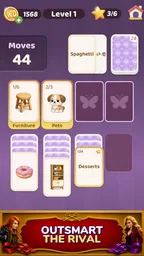
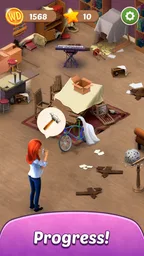
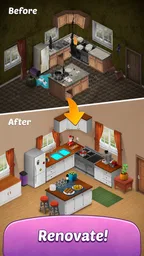
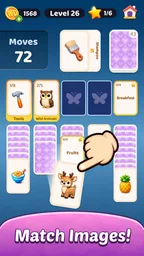
Wordington Solitaire makes a familiar card puzzle feel more purposeful by tying each level to the gradual renewal of a dream home. I like that combination: the solitaire gives me a compact challenge to focus on, while the renovation provides a reason to keep moving through the game. It is best approached as a relaxed, themed word-game-category diversion rather than as a deep card simulator or a home-design tool. The appeal is in switching between those two kinds of progress, not in either one being especially demanding on its own.
How the card puzzles and home theme work together
At its heart, this is a solitaire game built around levels, with home rebuilding as the larger goal. That framing makes each round feel connected to something beyond the cards. If you enjoy checking off a short puzzle and then seeing the story of a home advance, the structure can be satisfying in a way that a plain solitaire app may not be. I found the premise particularly suited to brief visits: play a level when you have a spare moment, then leave the longer sense of progress for another time.
The combination also sets expectations. The cards are the part that asks for attention; the home theme supplies context and a sense of direction. This is not the same experience as a dedicated interior-design game, where choosing layouts and decorating may be the main activity. Here, I would come for the solitaire first and treat the home element as an added reward. Anyone expecting extensive control over every room or a complicated renovation simulator may find the central focus more limited than the theme initially suggests.
That balance is the game's clearest strength. A familiar card format is easy to understand, while level-based progression gives the play a more definite endpoint than an endless run. The renovation goal can also help when I am deciding whether to play one more round: the next level is a manageable step toward a broader objective. The trade-off is that the repeated card play remains central. If solitaire itself does not hold your attention, the home premise may not be enough to carry the experience for long.
Why the level structure suits short sessions
For everyday use, the level format is more practical than a game that demands a long, uninterrupted session. I can imagine opening it while waiting for an appointment or settling in for a quick break, playing until I reach a natural stopping point, and returning later. The home-rebuilding thread gives those separate visits a shared purpose. That is a more useful rhythm than trying to remember a sprawling chain of actions after putting the phone down.
A small but helpful way to approach games like this is to treat each level as a focused puzzle rather than automatically tapping through until the next reward. Taking a moment to scan the available cards before committing can make the session feel more considered, especially if a board presents choices that are easy to overlook. This is a general play approach, not a claim that the game includes a particular hint or undo feature. The useful point is that a little patience can make familiar solitaire decisions more engaging than simply playing on autopilot.
Another practical tip is to stop after a level when you are playing in a short window, rather than starting another round just because the home goal is close. That keeps the game in the role of a casual break instead of letting a progress loop take over a spare moment. If you prefer longer, strategic card sessions, you may enjoy a traditional solitaire app more, where the cards themselves—not a linked renovation objective—are the whole reason to continue.
The main limitation: the theme cannot replace variety
The clearest limitation is also a matter of taste: this pairing depends on enjoying the repeated solitaire loop. A home-rebuilding theme can make progress feel more personal, but it does not automatically make every card puzzle feel new. Players who tire quickly of repeating a familiar format may find that the larger goal adds motivation at first and lessens in importance over time. I would not choose this for a constantly changing collection of word challenges or for a game whose main attraction is open-ended decorating.
There is also a trade-off between clear progression and freedom. Levels give the experience a sequence to work through, which is good for anyone who likes visible milestones. But a player who wants to ignore objectives and simply deal cards at their own pace might prefer a straightforward solitaire title. In the same way, someone looking primarily for a home-design experience should compare it with games centered on décor choices rather than assume that the renovation theme means design is the dominant activity here.
The game is free to download, but it includes in-app purchases priced from $0.99 to $99.99 per item. That broad range makes it sensible to decide in advance whether you want to spend anything at all. I would begin with the free experience and only consider a purchase if it clearly improves the way you personally play; there is no need to treat spending as part of enjoying a casual card puzzle. For people who prefer games with no optional purchases, that setup may be a drawback even if they never buy anything.
Who is likely to enjoy it most
I would recommend Wordington Solitaire to someone who already likes solitaire and wants a light progression hook beyond completing individual hands. It should also suit players who enjoy seeing small steps add up, and who like a gentle home-rebuilding premise without needing a complex design toolkit. The audience is broad: the game is rated for Everyone, and it is listed as a free word game by Qiiwi Games AB. Its average rating is 4.4 from 2.7K ratings, with 278 written reviews, and it has passed 100K installs—useful signs of interest, though those figures cannot tell you whether its particular mix is right for you.
For an ordinary day, think of a short commute with a few minutes to spare, a quiet pause between tasks, or a wind-down session before putting your phone away. In those situations, a level-based card game with a larger home goal can be an easy fit because the task is clear and the progress is easy to pick up again. I would be more cautious about recommending it to someone who wants a long narrative, highly tactical card play, or a deep creative sandbox. Those players may be happier with a story-focused game, a more strategic solitaire variant, or a dedicated decorating game, depending on what they want to do with their time.
It is also a reasonable choice for someone who likes casual games but does not want to learn a complicated set of rules before starting. The familiar solitaire foundation lowers the barrier, while the renovation framing gives newcomers a reason to explore beyond the first few rounds. Still, if you dislike card puzzles or prefer a game that changes its core activity often, the familiar structure may become a reason to move on rather than a comfort.
Practical details before you install
The current version is 1.5.2, and the listed minimum operating-system requirement is version 8.0. The game is free, though optional in-app purchases range from $0.99 to $99.99 per item. It was released on March 15, 2026. Those details are worth checking against your device and your spending preferences before you begin, particularly if you are choosing a game for someone else. Its Everyone content rating makes its intended audience clear, but parents should still use their own judgment about optional purchases and screen time.
One question readers often have is whether the home element makes this a decorating game or simply adds motivation to the cards. My practical answer is to expect the card levels to be the main activity and the home goal to give them a wider context. Another is whether it is a good substitute for a conventional solitaire app: it can be, if you want progression alongside the puzzle, but a plain solitaire game is the cleaner choice if you want cards without a renovation thread. And if you are wondering whether it suits quick sessions, the level-based structure makes short visits a natural way to play, though your own stopping point will depend on how much you want to continue.
A balanced verdict for the right kind of player
My overall view is positive but specific. The game has a clear identity: familiar solitaire levels connected to the gradual rebuilding of a home. That pairing gives casual play a more tangible destination and makes it easier to fit into small breaks. Its best feature is not that it reinvents cards or home design; it is that it joins the two in a straightforward loop that can make a few minutes of play feel like a step forward.
The limitation is just as clear. If the card puzzle is not enjoyable for you, the theme may not sustain your interest, and the renovation framing should not be mistaken for a full design simulator. Optional purchases are another reason to approach it thoughtfully, especially if you want to keep mobile gaming strictly free. I would choose it over standard solitaire when I wanted a light sense of ongoing progress, and choose a dedicated card or design game when I wanted either activity in greater depth.
For players who like solitaire, short sessions, and the feeling of gradually restoring a home, Wordington Solitaire is an appealing option to try. I would recommend it as a relaxed companion game, not as a demanding strategy challenge or a richly open-ended creative project. Start with a few levels, see whether the card loop itself holds your attention, and let that—not the promise of a theme—decide whether it earns a place on your phone.
What we like
- Solitaire rounds are easy to pick up for casual play.
- Story tasks give each level a sense of purpose.
- Decorating choices add a personal touch to progression.
- Short levels work well for quick play sessions.
- The familiar card format feels approachable for new players.
What could be better
- Some levels can require repeated attempts to clear.
- Progress may depend on waiting for more lives.
- Boosters can make difficult rounds feel less forgiving.
- Story progression can slow when card levels become challenging.
- The game may feel repetitive to players who dislike solitaire.







