Word Trip - Word Puzzle Game review
 Analysis by Appsdrops
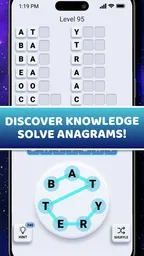
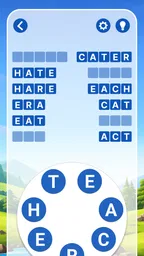
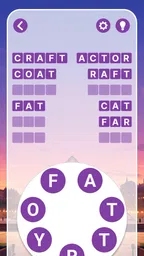
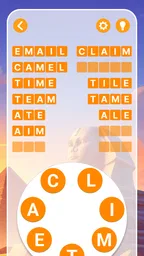
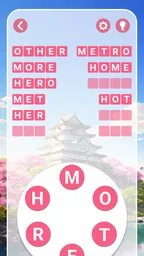
I like word games that let me settle into a puzzle without demanding a long session, and Word Trip is built for that kind of casual play. It is a free word game from PlaySimple Games: you find words from a set of letters, with the aim of making steady progress rather than mastering a complicated rulebook. In my experience, its appeal is the simple rhythm of looking, testing a word, and spotting one more possibility.
A simple puzzle with room to think
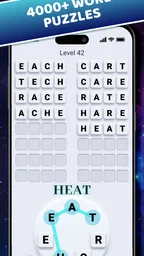
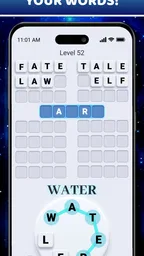
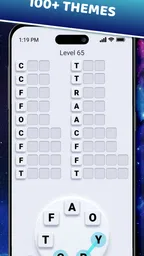
The central task is easy to grasp, which makes the game approachable even if you do not regularly play word puzzles. A group of letters gives you a compact problem to work on; the challenge is noticing useful combinations and deciding what to try next. That simplicity works well when you want a quiet activity during a break, on a commute, or while waiting for something else.
What I appreciate about this format is that it makes attention—not fast reactions—the main tool. I can pause to rearrange letters mentally, try a short word, and then return to the puzzle after a distraction. It suits players who enjoy vocabulary and pattern recognition but do not want the pressure of a timed action game.
The game’s broad audience is reflected in its Everyone age rating. That makes it a reasonable option to consider for shared casual play, though I would still check the device’s purchase controls if a child will use it. The game is free to download, but it includes optional in-app purchases priced from $0.49 to $54.99 per item. That range is worth keeping in mind: free access does not mean every possible purchase is cost-free.
What progress feels like
Word Trip’s basic loop naturally encourages one-more-puzzle play. Completing a word search can feel satisfying even when you only have a few minutes, and the letter-based format gives your brain a small, clear target. I find that useful when I want something more active than scrolling but less demanding than a game that requires full concentration for a long stretch.
A practical approach is to treat each session as a short exercise rather than a commitment to clear a long run of puzzles. If I get stuck, I can take a moment to shuffle through possible letter combinations in my head instead of tapping randomly. That small change makes the puzzle feel more like deliberate wordplay and less like guesswork.
There is also a trade-off in this design. Players who want a deep dictionary challenge, extensive strategy, or a strong narrative may find the core activity too repetitive. The pleasure comes from solving many small letter problems, not from a complex system that keeps changing the rules. If you prefer crosswords with long clues or competitive word games where every move directly affects an opponent, another format may suit you better.
Where it fits among word games
Compared with a conventional crossword, Word Trip puts more emphasis on making words from available letters than interpreting clue writing. That can make it easier to pick up when you are tired, while still rewarding a flexible vocabulary. Compared with a head-to-head word game, it is a more relaxed choice for someone who would rather work at their own pace than measure every move against another player.
That distinction matters when choosing an app for a particular moment. If I have a quiet few minutes and want an uncomplicated puzzle, this style is a good fit. If I am looking for a social challenge, a strict timer, or detailed feedback on language knowledge, I would look for a game designed around those priorities instead.
One useful habit is to slow down before using any in-game help or spending money. First, I try a few different letter orders and look for shorter words I may have overlooked. This is a practical way to get more out of the puzzle itself and avoid treating a stuck moment as an automatic reason to make a purchase. I would also set a spending limit through the device if I were sharing it with a younger player.
Spending, fairness, and what to consider
The purchase range is clear enough to inform a basic decision: the game can be played without paying to download it, while optional items can cost substantially more than a small impulse purchase. I would avoid buying anything until I understood what I wanted it for and had checked the purchase prompt carefully. That is especially sensible if you are trying the game casually and do not yet know whether its puzzle loop will hold your interest.
When it comes to competitive fairness, I would separate the word-solving experience from assumptions about how purchases affect play. The available facts establish that purchases exist, but do not establish what they provide or whether they influence competition. I therefore would not claim that spending gives an advantage—or that it never does. If competitive balance is your main concern, treat that point as unresolved rather than relying on an assumption.
The same restraint applies to other details a careful buyer might want to know, such as the exact contents of each purchase or the way any optional assistance works. Those specifics are not established here, so I would inspect the in-game purchase screens before deciding. The useful takeaway is straightforward: the game is free to start, but the listed range makes it worth being deliberate about any extras.
A real-life way to use it
Imagine having ten minutes between errands. I would open the game, work through a puzzle or two, and stop when the next task begins. Because the word search does not depend on quick reflexes, it is easy to fit around an interrupted day. On a longer trip, it can also provide a low-key activity, provided the device is available and the player is comfortable concentrating on letters rather than conversation or the surroundings.
For a family setting, I would use it as a shared word-spotting activity: one person can suggest a possible word while another checks the letter arrangement. That makes the puzzle more interactive without needing to turn it into a formal contest. It is less suitable if the group wants a game with clearly defined team rules or a dedicated multiplayer structure; I would not assume those features from the basic word-puzzle format.
Who should try it—and who may not enjoy it
I would recommend Word Trip to people who like an uncomplicated vocabulary break, especially those who enjoy rearranging letters and solving at their own pace. It is also a sensible first step for someone who wants a word game without learning a large set of mechanics. Its overall popularity is notable: it has a 4.9 average from around 595,000 ratings, with over 10 million installs. Those figures suggest broad interest, but they do not tell me whether its style will match your taste.
I would hesitate to recommend it to someone who dislikes repeated puzzle loops, wants a serious language-learning course, or expects every feature to be available without optional spending. It is a game, not a substitute for structured study, and the appeal depends on enjoying the simple act of finding words. Players who need a clearly documented competitive system should also compare it with alternatives that explain their head-to-head rules and purchase effects more explicitly.
Compatibility and lasting appeal
The game was released on June 20, 2017, and its current version is 1.842.0. It requires Android 8.0 or later, so checking your device’s software version before installing is a practical first step. That compatibility detail matters more than the version number for most players: if the phone does not meet the minimum requirement, the game will not be a useful download regardless of how appealing the puzzles sound.
Its staying power, in my view, comes from having a clear purpose rather than from promising endless novelty. A fresh set of letters can make a familiar activity feel new for a few minutes, but the underlying loop remains the same. I would judge it by whether that loop relaxes you and whether you enjoy searching for words—not by expecting a major change in play from one session to the next.
My trust verdict: Word Trip is an easy-to-approach word game that makes sense for short, self-paced sessions. I like it most as a small mental reset: the rules are approachable, and the letter puzzles give me something concrete to focus on. The main caution is spending. It is free to begin, but optional purchases range from $0.49 to $54.99 per item, and I would review each purchase carefully rather than assume what it unlocks. If you enjoy this kind of word search and are comfortable keeping purchases in check, it is worth trying; if you want deep strategy, clear competitive guarantees, or a different puzzle structure, another word game may be a better match.
What we like
- Daily challenges add fresh goals beyond the main levels.
- Offline play makes it suitable for travel without internet access.
- Hints offer help when a word puzzle becomes difficult.
- The clean interface keeps letters and clues easy to read.
- Coin rewards provide a steady way to earn in-game currency.
What could be better
- Some later levels may require repeated attempts to solve.
- Hints can run low if you use them often.
- Ads may interrupt play between levels.
- Progress can feel repetitive after many similar puzzles.
- Optional purchases may appeal to players seeking more coins.







