

Word Tiles GO review
 Analysis by Appsdrops
I like word games best when they give me a small, satisfying challenge without demanding a long stretch of concentration. Word Tiles GO aims for that middle ground: it is a free word game from Gulliver's Games built around short duels, with a calmer feel than a frantic head-to-head match. That mix is appealing if you want to think through a word puzzle at your own pace, though the duel framing may not suit someone looking only for a solitary crossword-style experience.
A word duel with room to think
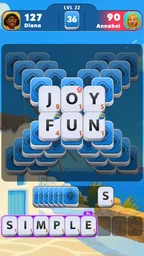
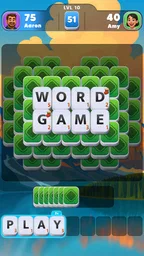
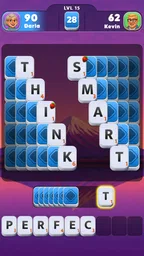
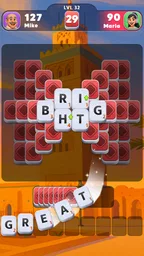
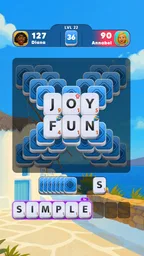
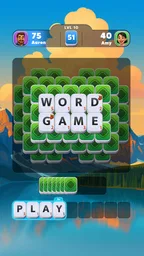
The basic appeal is easy to understand: you work with word tiles in a competitive format, so the challenge comes from finding words while also measuring your choices against an opponent. I find that more engaging than simply filling a grid, because each turn can feel like a small decision rather than a routine search for every possible answer. At the same time, the relaxed tone is a useful contrast to word games that make every round feel like a speed test.
That balance is where Word Tiles GO has its clearest identity. It sits in the word game category, but the duel angle gives it a social, tactical edge: you are not just checking whether a word exists, but deciding what is worth playing in the moment. The store summary describes it as a challenging and relaxing duel, and that combination captures the intended mood without promising a particular pace or a specific set of modes.
I would approach it as a game for short breaks rather than as a deep language-learning tool. A round can fit naturally into a pause between errands or a quiet moment before bed. If you enjoy scanning letter tiles, testing possible words, and making choices under a little pressure, the format has an obvious hook. If your favorite word games are entirely solo and methodical, the competitive framing may feel like an unnecessary layer.
How it fits into an everyday routine
Imagine having a few minutes while waiting for a friend. A quick duel can give that time a clear focus: look over the available tiles, spot a promising word, and decide whether to use it now or keep searching. That is a more active way to pass a short wait than scrolling, but it does not require setting aside an entire evening. The practical advantage is the compact, self-contained nature of a word challenge; the trade-off is that an interrupted round may be less satisfying than a puzzle you can pause and resume without thinking about an opponent.
For a commute, I would treat it as a light mental warm-up, especially if the journey is calm enough to focus on letters. It is not the best fit when you need to keep your attention on announcements, directions, or the people around you. Word duels reward concentration, even when they are relaxed, and trying to play while distracted can turn a pleasant puzzle into a string of missed opportunities.
What the current release tells me
The current version is 3.2.23, while the game was released on May 24, 2025. Those facts establish that this is a relatively recent release with a numbered version that has moved beyond its initial launch. They do not, by themselves, tell me what changed between versions, so I would not claim that a particular feature, balance adjustment, or interface improvement arrived in an update. The sensible takeaway is simply that the game has a current release history, not that every aspect has been refined in a particular way.
For someone already playing, a version number matters most as a practical checkpoint: it helps you identify the build you have installed when comparing notes with another player or deciding whether your app is up to date. I would still judge the experience by the actual rounds you play. A newer number is not automatically proof of better matchmaking, a larger word set, or fewer interruptions, and none of those outcomes should be assumed without seeing them in play.
The game has an average rating of 4.7 from around 18,000 ratings, alongside roughly 861 written reviews and over 100,000 installs. That level of response suggests it has found an audience among mobile word-game players, but popularity does not settle whether its duel style is right for you. I would use those figures as a sign that it is worth considering, then make the decision based on whether you want competitive word play rather than a conventional solo puzzle.
How it compares with familiar word games
Compared with crosswords, Word Tiles GO asks for a different kind of attention. Crosswords usually reward deduction from clues and a gradual filling-in process; a tile duel puts more emphasis on spotting usable combinations and choosing when to commit. That makes it better for players who enjoy manipulating letters and reacting to a changing challenge than for people who prefer a long clue trail with one definitive solution.
It also differs from a plain anagram app, where the main goal is often to uncover a list of words with no opponent in the picture. The duel structure gives word-finding a more immediate consequence, which can make even familiar vocabulary feel more purposeful. The downside is that players who want an exhaustive, unhurried search may find competition distracting. In that case, a solo anagram or crossword game is likely to be a better match, not because this game does anything wrong, but because the central appeal is different.
Against fast word-battle games, its relaxed framing is a point in its favor for people who dislike frantic tapping. Still, a duel remains a contest: even a calm presentation can create pressure to choose quickly or to outthink the other player. If you want a completely stress-free experience, a solo word search may be more comfortable. If you want just enough rivalry to make vocabulary practice feel like play, this format has a stronger case.
Small decisions that can improve a session
One useful habit in tile-based word play is to scan the entire set before committing to the first obvious word. I would look for a short, reliable option, then take a second pass for a longer or less obvious combination. That extra glance helps avoid the common trap of spending a move on the first word that comes to mind when another choice might serve the round better. It is a general strategy for this style of game, rather than a claim about a hidden feature or scoring rule.
I would also treat the game as a way to notice vocabulary rather than as a formal study course. When a possible word does not occur to you, pause afterward and remember the pattern of letters that made it possible. That turns a quick duel into a small mental exercise without needing to keep a separate score or turn every session into homework. Players who need definitions, pronunciation, or structured lessons should pair it with a dedicated language-learning tool instead.
For a shared household or a group of friends, it can be a simple prompt for friendly competition: play a round, compare how each person approached the tiles, and talk about the words that were easy to overlook. This works best when everyone is comfortable with the same kind of word challenge. It is less suitable as a universal party game for mixed ages or language abilities, since word familiarity can vary sharply and may make a duel feel uneven.
Cost, access, and who should be cautious
The game is free to download, but it includes in-app purchases ranging from $0.99 to $299.99 per item. That is a wide span, so I would check the purchase screen carefully before confirming anything and use device-level purchase controls if a child may be playing. The presence of optional purchases does not mean you need to spend to enjoy the core idea, but I would not assume every extra is necessary or judge value until I knew exactly what an item offers.
Its content rating is Everyone, and the minimum listed operating-system requirement is version 7.0. That makes it broadly accessible on compatible devices, though an age label does not replace a parent’s own decision about purchases or screen time. If you are installing it for a younger player, I would review the in-app purchase settings first and decide whether to restrict them. That is a practical precaution for any free game with paid items.
The developer is Gulliver's Games. I would be comfortable trying the game if I wanted a low-commitment word challenge, but I would skip it if I strongly dislike competitive play, expect a full vocabulary curriculum, or want a large, clue-driven solo puzzle. Those preferences are not minor details: they change whether the duel format feels like a welcome twist or a barrier between you and the kind of word game you actually enjoy.
What I would watch as it develops
For existing players, the most useful thing to watch in future releases is not the version number alone but whether updates make the routine of starting and finishing a duel feel smoother. Clearer explanations of how a round works, if needed, can matter more than flashy additions for a game whose appeal depends on quickly understanding the tiles and getting into the challenge. I would also pay attention to whether the relaxed feel survives as players become more familiar with the competition.
For new players, I would spend a few sessions deciding whether the balance between thinking time and rivalry suits you before buying anything. If the game becomes a regular short-break habit, optional spending may be easier to assess in context; if you only play once or twice, there is little reason to rush a purchase. That is a useful way to judge a free-to-start word game without treating a purchase menu as part of the puzzle itself.
My overall impression is that Word Tiles GO is worth trying for anyone who likes letters, quick decisions, and a gentle competitive nudge. It is not a replacement for crosswords, solo anagrams, or structured language lessons, and it does not need to be. Its appeal is narrower and clearer: a tile-based word duel that can fit into a spare moment. I would recommend it to a friend who wants a casual challenge with another player in the mix, while steering a puzzle purist toward a more deliberate solo game.
What we like
- Quick rounds make it easy to play during short breaks.
- Simple controls are approachable for new word-game players.
- Word puzzles provide a light mental workout.
- Progressive challenges can keep regular play engaging.
- The familiar tile format is easy to understand.
What could be better
- Some puzzles may feel repetitive after extended play.
- Later levels can be difficult without a broad vocabulary.
- Ads may interrupt the flow of play.
- Hints can reduce the satisfaction of solving puzzles alone.
- A stable internet connection may be needed for some features.







