


Word Solitaire Go review
 Analysis by Appsdrops
I like word games that let me settle into a small puzzle without demanding a long session, and Word Solitaire Go is aimed squarely at that mood. It combines word sorting and group solving with a solitaire-like format, so the appeal is less about racing through a vocabulary test and more about noticing which pieces belong together. In my view, that makes it a promising choice for a quiet break—provided you enjoy working things out at your own pace rather than chasing a score or competing with other players.
How the puzzle feels in a short session
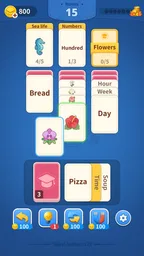
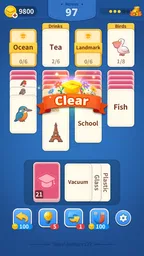
The basic idea is easy to grasp: sort words, identify groups, and make progress through a card-puzzle style of play. That familiar solitaire influence gives the experience a more relaxed shape than many word games built around a countdown. I find that distinction useful. You can approach a puzzle by scanning what is available, considering possible relationships, and adjusting your thinking when a grouping does not seem right.
That does not mean every round will feel effortless. Word grouping asks you to notice more than spelling: meaning, association, and the way several words may fit a shared idea can all matter. If you enjoy the satisfying moment when a set clicks into place, this style has a pleasant rhythm. If you prefer direct clues or a single obvious answer, the sorting can sometimes feel less guided than you want.
The game is a word puzzle from Nebula Studio, and its solitaire framing is the feature that most clearly shapes how I would use it. It is suited to a few minutes while waiting for a kettle, sitting on a commute, or taking a short pause between tasks. I would not choose it when I want a deep narrative or a complex strategy game; its appeal is the compact mental exercise.
Speed expectations: quick to pick up, not a race
I would set expectations around mental pace rather than action speed. The premise is straightforward enough to understand quickly, but deciding how words relate can take longer, especially when several plausible associations compete. That gives the game a useful stop-and-think quality. You can make a little progress without needing to reserve a whole evening for it.
The store identifies the current release as version 1.1.9, but a version label alone does not tell me how quickly it loads or how smoothly it runs on a particular phone. I would judge those things on the device you plan to use. In general, a word-and-sorting puzzle is not the kind of game whose central challenge depends on rapid animation or precise timing, which makes it a sensible candidate for relaxed play rather than a test of reaction speed.
A practical tip is to play with a little attention available, even if the session is short. When I approach word-grouping puzzles while distracted, I tend to latch onto the first connection I notice and overlook a better one. Taking a moment to scan the full set before committing to a pattern is a better way to keep the puzzle enjoyable—and can save you from turning a calm break into a frustrating guessing session.
When you play longer, the thinking becomes the main demand
In a longer session, the likely strain is not frantic tapping but mental repetition: looking across words, testing possible categories, and reconsidering a guess. That is a different kind of “heavy use” from a fast arcade game. I would recommend breaking up a longer run if your attention starts to drift. A short pause can make a stubborn group look different when you return, and there is little reason to force progress when the point is relaxation.
The solitaire-style structure is also useful for fitting play around interruptions. If you are likely to be called away, this kind of puzzle is a more natural choice than a game whose enjoyment depends on maintaining a continuous streak of action. Still, I would not assume a particular save or resume behavior without checking it in practice. If you are about to close the app midway through a puzzle, it is sensible to see how it handles a brief interruption before relying on it during a busy commute.
For a shared setting, I would treat it as a solo activity rather than a group party game. You can certainly talk through word associations with someone nearby, but the core satisfaction comes from your own deductions. That distinction matters if you are choosing a game for a family gathering: it may suit a quiet moment beside someone else, but it is not automatically a lively, turn-taking group experience.
Reliability and the value of a low-pressure format
I can’t responsibly promise that the game will behave identically on every device or network, so I would not make claims about crash-free play or battery use. What I can say is that the described puzzle format does not depend on reflex timing, which makes small pauses less disruptive to the way you think. For an app you intend to open briefly, that is a meaningful practical advantage even before considering technical performance.
The game has an average rating of 4.8 from around 6,300 ratings, with 218 written reviews, and it has passed 500,000 installs. Those figures suggest that many players have found something to like, but they do not tell you whether its particular word choices or puzzle rhythm will suit you. I would use them as a reason to consider trying it, not as proof that every session will be a perfect fit.
One useful way to evaluate reliability for yourself is to try a short session in the situation where you expect to play most: on your usual phone, with your normal level of background activity, and during a break of the length you actually have. Pay attention to whether you can return to the puzzle comfortably and whether the pace feels calming or fussy. That small trial tells you more about personal fit than a broad assumption based on the genre.
Device constraints, cost, and who should think twice
Word Solitaire Go is listed for devices running Android 7.1 or later and is free to install. It is rated Everyone, so its listed audience includes a broad range of ages. The free entry point makes it easy to test the central idea before deciding whether you want to keep playing, but the game also offers in-app purchases priced from $0.99 to $99.99 per item. I would check purchase prompts carefully, particularly if a child will be using the phone or if you prefer to keep all spending outside games.
Those purchase options are a trade-off worth considering even if you only intend to play casually. The existence of paid items does not, by itself, explain what they provide or whether you need them to enjoy the puzzles. I would begin with the free experience and only spend if you clearly understand what an item does and feel it improves your own use. If you want a word game with no in-app spending at all, an alternative with a different payment model may be a better match.
There is also a device-fit question beyond the minimum operating system. I would not assume the game is especially light on storage, memory, or battery simply because it is a word puzzle; those details vary by phone and are not established by the basic description. If your device is older or short on space, check its available storage and try the game before making it part of your daily routine. The puzzle’s format may be undemanding, but that is not the same as a guarantee about resource use.
I would skip it if what you want is a vocabulary course with structured lessons, a competitive leaderboard, or a fast timer-driven challenge. Its central pleasure is sorting and recognizing groups in a relaxed solitaire-like setting. For straightforward word searches, crosswords, or spelling drills, a dedicated game in one of those formats will give you a more focused version of that activity. The comparison is not about one style being better; it is about choosing the kind of thinking you want when you open a game.
How it compares with familiar word games
Compared with word searches, this game asks for more interpretation than scanning a grid for letter sequences. Compared with crosswords, it appears less dependent on clue-writing and filling a fixed pattern. And compared with word games that emphasize speed, its solitaire influence points toward a more measured process of examining what is available and finding a sensible arrangement. That combination gives it a distinct place for players who enjoy vocabulary but do not want every session to feel like a test.
The trade-off is that a sorting puzzle can feel subjective when you see several possible links between words. If you like the certainty of a clearly defined clue, you may prefer crosswords. If your favorite part of a word game is racing a clock, you may find this one too calm. I would choose it when I want to engage my attention without turning a short break into a performance challenge.
For a realistic everyday use, imagine having a few minutes before an appointment. A puzzle like this gives you a small task to focus on, and you can stop once your break is over rather than needing to complete a long level of action. I would avoid opening it when I need to keep close track of a conversation or watch for an announcement, since even a relaxed puzzle still asks you to concentrate on word relationships.
My verdict on its performance and fit
My overall impression is that Word Solitaire Go is best understood as a calm, compact word game, not as a demanding test of device performance. Its appeal lies in combining word recognition with a solitaire-like way of arranging and solving, and that makes it especially suitable for brief, low-pressure sessions. I would try it if you enjoy spotting connections and want something more deliberate than a quick reaction game.
It is not the right pick for everyone. Players who need strong tutorial guidance, a clear competitive goal, or a no-purchase environment may prefer another option. The available in-app purchases are a reason to be mindful rather than an automatic drawback, and the game’s broad age rating makes purchase awareness especially relevant for families. I would also treat claims about smoothness or battery demands as device-specific instead of assuming the puzzle format settles those questions.
With a 4.8 average rating and more than 500,000 installs, the game has attracted a substantial audience, while its free price lets you decide for yourself whether the sorting style clicks. My recommendation is to give it a short try when you have a quiet gap and judge it on the actual pleasure of making groups, not on the promise of endless content or competitive features. If that small moment of recognition is what you want from a word game, Word Solitaire Go is an easy one to consider; if you want a different kind of challenge, a crossword, word search, or timed game will likely serve you better.
What we like
- Combines familiar solitaire rules with word puzzles for a fresh twist.
- Short rounds make it easy to play during a quick break.
- Word challenges can help keep vocabulary practice engaging.
- Card gameplay adds variety to standard word-search puzzles.
- Simple controls make the game approachable for casual players.
What could be better
- Word puzzles may feel difficult for players with limited vocabulary.
- Solitaire rounds can become repetitive over longer play sessions.
- Some levels may require trial and error to complete.
- The mix of card and word mechanics may not suit every player.
- Progress can feel slow if later puzzles become more demanding.







