
Word Seeker review
 Analysis by Appsdrops
I like word games best when I can understand the task in seconds but still have a reason to pause over a tricky answer. Word Seeker aims for that simple appeal: look for hidden words, work through the puzzle in front of you, and decide whether you want to keep going or put the phone down. My overall impression is of a straightforward word game suited to short breaks, rather than a deep, story-driven experience.
Simple goals make it easy to begin
The first thing that works in Word Seeker’s favor is the clarity of its central goal. You are searching for words, so there is little to learn before you can start thinking about the puzzle itself. That makes it a comfortable choice when I have only a few minutes and do not want to spend that time navigating complicated menus or studying rules.
That simplicity also sets expectations. This is a word puzzle game, not a vocabulary course or a broad collection of unrelated activities. If you enjoy scanning letters and testing possible combinations, its focus is a strength. If you want a game that changes its basic mechanics frequently, the narrow premise may feel limiting.
I find this kind of game especially useful during small gaps in the day: while waiting for a meeting to begin, taking a break between chores, or sitting somewhere without much else to do. A clear objective makes it easy to start a round without promising myself a long session. It also makes the game approachable for casual players who might be put off by word games that demand extensive knowledge of obscure terms.
The key distinction is that “easy to pick up” does not necessarily mean “effortless.” Finding hidden words can ask for patience and careful visual attention, even when the rules are straightforward. I would approach it as a quiet concentration game, not as something to play while trying to follow a conversation or watch another screen closely.
What the early play is good at
For a newcomer, a simple search objective gives a quick way to judge whether the core activity feels satisfying. I would pay attention to whether I enjoy scanning the available letters, not just whether I can solve a particular puzzle. If the search itself feels absorbing, the game has a good chance of fitting into a regular casual-play routine.
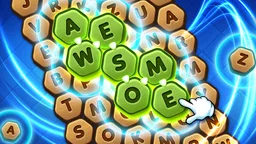
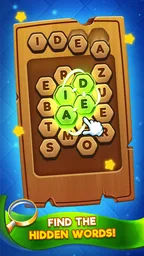
One practical tip is to avoid rushing through a puzzle just because the objective looks familiar. I find it more useful to scan systematically: check a section of the board, then shift to another, rather than repeatedly staring at the same cluster of letters. That small change in approach can make a search feel more deliberate and helps reduce the sense that I am guessing randomly.
Another helpful habit is to take a brief visual reset when I get stuck. Looking away for a moment and returning with fresh attention can be more useful than tapping around in frustration. That is not a special feature; it is simply a better way to handle a visual word search when the letters start blending together.
Progress is best judged by the play, not promises
With a focused puzzle game, progress can feel rewarding when each completed task gives a clear sense of closure. The satisfaction is less about a dramatic narrative payoff and more about noticing a word, confirming it, and moving on with a small problem solved. That kind of feedback suits players who like steady, bite-sized goals.
I would not assume that a long chain of unlocks or elaborate progression is what makes Word Seeker appealing. Its identity is rooted in the word-search activity itself. That is a useful distinction when choosing between it and larger mobile games: here, the attraction is the puzzle in front of you, rather than a sprawling world or a complicated collection of systems to manage.
In my view, the best way to judge whether its progress keeps you interested is to notice how you feel after finishing a puzzle. Do you want to try another because the search was enjoyable, or are you continuing only because you feel obliged to clear a queue? The first response suggests the core loop is working for you. The second is a good reason to take a break rather than turn a casual game into a chore.
Word Seeker is from Gimica GmbH, and its current version is 1.10.0. It is free to download, with optional in-app purchases priced from $0.99 to $4.49 per item. I would treat those purchases as optional rather than part of the basic decision to try it: start with the free experience and only consider spending if you already know the game suits your habits.
That approach is particularly useful for a puzzle game, where personal preference matters more than a feature checklist. Some players love repeating a familiar kind of word search; others need new mechanics to stay engaged. A free starting point lets you discover which group you belong to before committing money.
How challenge can shape the pace
The difficulty of a word search is not only about vocabulary. Letter layouts, visual density, and how easily a player can keep track of possible answers all affect the experience. Even a familiar word can take time to spot when attention is divided. I would therefore judge the challenge by how the search feels, rather than expecting every puzzle to demand the same kind of knowledge.
When a puzzle seems hard, I recommend changing the search method before deciding that you are stuck. Scan in a consistent direction, look for distinctive letter combinations, and pause if you are no longer seeing the board clearly. These are small techniques, but they turn a vague search into a sequence of manageable checks.
There is a trade-off here. A calm, repetitive search can be relaxing, but repetition can also flatten the experience for players who want a strong difficulty curve or frequent surprises. If you usually prefer competitive word challenges, timed rounds, or games that continually introduce new rules, a more demanding alternative in the word-puzzle category may be a better fit.
I would also avoid using this as a test of broad vocabulary. The central pleasure is recognizing words in a visual arrangement, and that skill is different from memorizing definitions or learning a language. Someone looking for structured lessons, explanations, or feedback on word meanings should choose a dedicated learning app instead.
Retention without turning play into an obligation
Word games can encourage “one more puzzle” simply because each task feels small. That can be a pleasant way to fill spare time, but it can also make it easy to play longer than intended. I find it helpful to decide on a natural stopping point before opening the game—for example, finishing the puzzle I started rather than continuing automatically whenever another one is available.
This is a personal boundary, not a claim about a particular reminder or session limit. It matters because short, self-contained games often fit into a day so neatly that they can become a default whenever there is a quiet moment. If you are trying to reduce screen time, keeping the game for specific breaks is more effective than reaching for it every time you feel briefly bored.
The age rating is Everyone, which makes the basic word-search idea accessible to a broad audience. I would still consider the player’s preferences: children who enjoy letter puzzles may find the premise approachable, while anyone who dislikes visual scanning may lose interest quickly. A suitable age label does not guarantee that every player will find the format comfortable or engaging.
One useful everyday scenario is a shared wait, such as sitting with a family member before an appointment. Word Seeker can give one person a quiet activity without requiring a long setup. It is less suitable if the point of the moment is conversation, because a search that takes concentration can pull attention away from the person beside you.
Compared with a crossword-style game, this kind of search places more emphasis on spotting words in a visual field than on interpreting clues. Compared with a large word-game collection, its focused premise may be easier to return to, but it offers less variety by design. I would choose it when I want a simple search task; I would choose a crossword or mixed-puzzle app when I want clue-solving or a change of activity.
The game has an average rating of 4.4 from around 28,000 ratings, with roughly 2,300 written reviews, and it has over one million installs. Those figures suggest that it has found an audience, but they are not a substitute for testing whether its particular style of word search suits you. The most useful question is whether you enjoy the moment-to-moment scanning enough to come back on your own.
Who I would recommend it to
I would recommend Word Seeker to casual players who want a direct word puzzle, people who like finding words visually, and anyone looking for a low-commitment game for short breaks. Its simple objective makes it a sensible starting point if elaborate puzzle rules usually put you off.
I would steer away from it if you need every session to feel substantially different, want a story to follow, or prefer word games built around clues and definitions. It may also be a poor match if you find dense letter searches tiring. In those cases, a crossword, a vocabulary-learning app, or a broader puzzle collection is likely to offer a better fit.
On devices running Android 7.0 or later, the game is available to try for free. That gives prospective players a practical way to make the decision: install it, complete a few puzzles, and notice whether you feel curious about the next one. I would not judge it solely by how quickly I solve the first task; the better test is whether its search rhythm remains pleasant after the novelty wears off.
My verdict on its progression
Word Seeker succeeds most clearly as a focused, easy-to-understand word game. Its goals are immediately legible, and its appeal depends on the small satisfaction of locating hidden words rather than on a complicated progression structure. That makes it a convenient pick-up-and-play option, especially when I want a quiet activity that does not require a long session.
Its limits follow from the same focus. Players who need a pronounced sequence of unlocks, a wide range of mechanics, or a consistently escalating challenge may find the experience too narrow. I would not choose it as my main game for variety, but I can see why someone who enjoys the basic search would return to it between other activities.
My recommendation is simple: give it a try if spotting words is relaxing for you, and treat the free version as a way to test that fit before considering any optional purchase. If the puzzles leave you satisfied rather than restless, it is doing its job. If you keep wishing for clues, competition, or a different kind of challenge, there is no need to force the match—another style of word game will serve you better.
What we like
- Quick rounds make it easy to play during short breaks.
- Multiple difficulty levels suit both beginners and experienced players.
- Word puzzles can help strengthen vocabulary and spelling skills.
- Simple controls make the game easy to learn.
- Offline play is useful when an internet connection is unavailable.
What could be better
- Some puzzles may feel repetitive after extended play.
- Hints can reduce the challenge for players seeking tougher puzzles.
- Small text may be uncomfortable to read on compact screens.
- Ads may interrupt the flow of play.
- Later levels may require more time and patience to complete.







