
Word Master review
 Analysis by Appsdrops
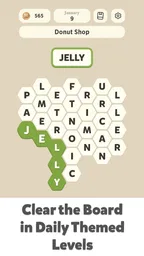
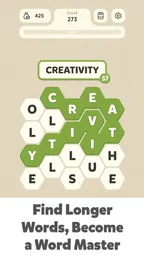
I like word games that give me a clear little task and a reason to keep looking, and Word Master pairs that familiar pleasure with an unusual visual goal: solving word puzzles helps uncover famous paintings. That combination gives each answer a sense of progress beyond simply filling a gap. It’s a free word game from Fugo Games, aimed at anyone who enjoys vocabulary challenges but would welcome a visual thread running through them.
Starting with a puzzle, not a long commitment
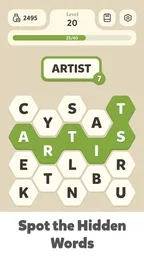
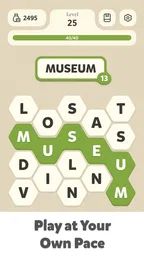
The appeal is easy to understand even before you settle into a session. You work through a word puzzle, then get the satisfaction of seeing a painting emerge as part of your progress. That gives the game a pleasant two-part rhythm: first I focus on letters and possible answers, then I get a visual payoff that makes the effort feel connected to something larger.
As a word-game player, I’d use it in the small gaps of a day: while waiting for a coffee, taking a quiet break, or winding down before bed. The basic idea suits short visits because the central task is immediately clear. You don’t need to learn a complicated premise before you can start thinking about words.
The key distinction is that this isn’t just a collection of word challenges with an unrelated decoration attached. The paintings give the puzzle-solving a destination. If you enjoy seeing a gradual visual result, that can make an otherwise familiar activity feel more inviting. If you only care about rapid-fire word testing, that extra layer may matter less to you.
I would approach the first puzzle with curiosity rather than treating it as a serious vocabulary exam. The enjoyment comes from trying possibilities, noticing what fits, and moving toward the artwork. That makes the game approachable for casual players while still giving word fans a reason to pause over a tricky answer instead of tapping through without thinking.
How the feedback keeps the loop moving
The satisfying part of this setup is the relationship between effort and visible progress. A word puzzle asks for concentration; the painting theme gives that concentration a more tangible direction. Instead of feeling as though I’m solving answers in isolation, I can think of each successful step as contributing to something I’ll eventually see.
That visual framing is also useful when my attention is limited. On a short break, I don’t always want a game that demands a long stretch of uninterrupted focus. A compact word task can give me a clear point to work toward, while the larger artwork provides a reason to return when I have another spare moment.
There is a trade-off here: the painting goal can make progress feel rewarding, but players who prefer puzzles to stand entirely on their own may find the visual objective less compelling. I’d choose this over a plain word list when I want a sense of discovery, but I’d choose a stricter word-training format if my only aim were to challenge vocabulary as intensely as possible.
A practical way to enjoy it is to stop when your focus starts slipping rather than forcing one more answer. Word puzzles are more satisfying when you can still weigh the possibilities. Returning with fresh eyes can help you spot a word you overlooked, and the painting theme gives that renewed effort a natural purpose. The best loop here is not endless play; it is a small challenge, a bit of progress, and a reason to pick it up again later.
What the painting reward adds
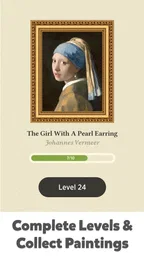
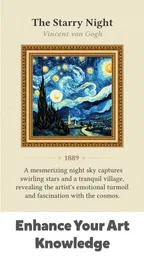
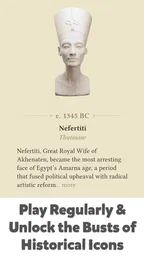
The famous-painting angle is the part that most clearly separates this game from the usual alternatives. Many word games keep the reward inside the puzzle itself: a completed grid, a score, or another challenge. Here, the artwork changes the feeling of the reward. It gives players who like art a second reason to care about solving words, even if they aren’t chasing a leaderboard or competing with friends.
That makes it a natural fit for someone who enjoys both visual culture and low-pressure wordplay. You don’t have to be an art expert to appreciate the reveal; the interest comes from seeing an image take shape as a result of puzzle progress. I’d also recommend it to someone looking for a gentler alternative to word games built around speed or head-to-head pressure.
One useful expectation to set is that the painting theme is a companion to the puzzles, not a replacement for them. The main activity remains solving words. If you install it expecting a deep art-history guide or a gallery experience first, the premise may not match what you had in mind. If you want word puzzles with a visual reward attached, the balance makes much more sense.
The reward works best when I treat it as motivation rather than a promise of constant novelty. A painting can give a session a satisfying endpoint, but the pleasure still depends on whether I enjoy working through the words themselves. That is why this is a stronger choice for people who already like wordplay than for someone who wants an art app that happens to contain a puzzle.
Who will enjoy it, and who may prefer another game
I’d suggest it to casual puzzle fans who want a clear task without a heavy competitive frame, and to word-game regulars who are ready for a different kind of progression. It may also suit a shared quiet moment: one person can suggest possible words while another watches the painting develop. That turns a solo-style puzzle into a relaxed conversation without needing the game to be a formal multiplayer activity.
On the other hand, players seeking a broad range of puzzle formats, a timed challenge, or a direct test of spelling under pressure should look closely at what they want from their next game. Word Master’s central promise is the link between word solving and famous paintings. If that link doesn’t interest you, a conventional crossword-style game or a competitive word challenge may be a better match.
It is also worth considering your tolerance for a measured pace. The appeal lies in taking a moment to think, not simply reacting as quickly as possible. I wouldn’t pick it for a session where I wanted high-energy action or constant changes of activity. Its strength is a calmer loop that lets a small amount of attention produce a visible sense of progress.
Access, cost, and what to expect
The game is free to download and is rated for Everyone, so its basic audience is broad. It has a 4.8 average from around 38,000 ratings, with over one million installs; those figures suggest it has found a sizable audience, though they can’t tell you whether its particular mix of puzzles and art will suit your taste. Fugo Games is the developer, and the current version is 0.6.9.
There are in-app purchases, with items ranging from $0.99 to $39.99. I’d go in expecting the free download to be the starting point and make any purchase decision based on your own play, rather than assuming spending is necessary to enjoy the central idea. If you prefer games with no optional purchases at all, that is a fair reason to choose another title.
The listed minimum operating-system requirement is version 8.0. That is a useful compatibility check before installing, especially if you’re setting the game up on an older device. The release date was February 9, 2025, so this is a relatively recent entry in a category with many established alternatives; its painting-driven progression is the clearest reason to try it instead of reaching automatically for a familiar word puzzle.
The session reset that makes another round appealing
For me, a good casual game needs a clean reason to stop as well as a reason to return. Word Master’s loop offers a natural stopping point when I’ve finished the puzzle I sat down to solve or want to leave the next stretch of progress for later. That makes it easier to fit around ordinary routines than a game that keeps pushing me into one more competitive round.
The return trigger is simple: I still have a word challenge to think through, and the painting gives that challenge a destination. A useful habit is to leave a puzzle alone when you’re stuck, then come back after doing something else. Word answers often become easier to see once you stop staring at the same letters, and a fresh attempt can feel more rewarding than guessing rapidly just to move on.
This is a small but meaningful difference from score-focused word games. If you’re motivated by beating your own speed or someone else’s result, you may miss that pressure here. If you prefer a task that can be resumed at your own pace, the painting progression offers a quieter form of motivation. It turns another session into a choice to continue, not an obligation to protect a streak or keep up with a rival.
My verdict on the loop
I find the concept appealing because it gives a familiar activity a distinct payoff without making the basic goal hard to understand. You solve words, see progress toward famous artwork, and have a simple reason to return when you’re ready for another puzzle. That action-feedback-reward cycle is the game’s strongest idea, especially for players who like calm, visual progression.
Its limits are tied to the same focus. This is most attractive when word puzzles already sound enjoyable and the artwork adds something you’ll notice. It is less compelling if you want fast competition, a wide variety of game modes, or a purely educational art experience. Knowing which of those you want can save you from downloading it for the wrong reason.
Overall, I’d recommend Word Master to a friend who enjoys word challenges and would like a visual reward to make each session feel purposeful. I’d describe it as a thoughtful alternative to a bare puzzle list, not a replacement for every kind of word game. If the idea of working through a puzzle and gradually revealing a painting sounds like a satisfying use of a few spare minutes, this is an easy one to try.
What we like
- Offline play makes it easy to enjoy matches without an internet connection.
- Adjustable difficulty helps players find a suitable level of challenge.
- Built-in hints can help when you get stuck on a word.
- Several board layouts keep matches from feeling repetitive.
- The clean interface makes tiles and scores easy to read.
What could be better
- The computer opponent may feel predictable to experienced players.
- Hints can reduce the challenge of finding words unaided.
- A small mobile screen can make tile placement less comfortable.
- Some features may require an internet connection.
- Players seeking fast action may find the turn-based pace slow.







