


Word Maker: Words Games Puzzle review
 Analysis by Appsdrops
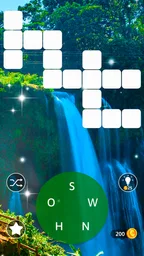
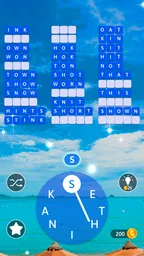
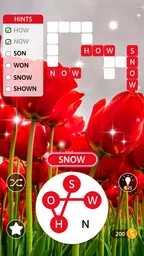
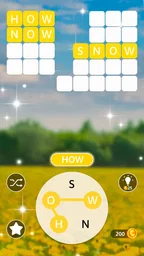
I can see why Word Maker: Words Games Puzzle would earn a place on someone’s phone quickly: it turns spare minutes into small word-finding challenges, with a large collection of levels to work through. My first impression is that this is best approached as a casual word game, not as a serious vocabulary course. Its appeal comes from the simple promise of spotting connections between letters and enjoying the moment when a possible answer clicks.
Developed by AAA Fun, this free word game is rated Everyone and has an average rating of 4.5 from around 54,000 ratings. It has passed 10 million installs, which suggests it has found a broad audience among people who like lightweight puzzles. Those figures are reassuring context, but the more useful question is whether the play loop stays pleasant once the novelty of finding the first few words wears off.
Why the first few sessions work
The opening appeal is easy to understand. A word puzzle gives me a clear, contained task: look at the available letters, try combinations, and see whether they fit. That makes the game a natural choice when I want a short mental break without committing to a long story, a match, or a complicated set of rules. The store’s brief label, “Word Maker,” captures the basic idea without promising a different kind of experience.
Having more than 3,000 levels gives the game a sense of runway. I don’t need to finish a session with a major achievement; completing a small puzzle is enough to make a few minutes feel used rather than lost. That suits waiting rooms, a quiet coffee break, or the stretch of time before bed. The strongest early use case is a player who enjoys making progress in small steps and likes words as a source of light mental exercise.
For a realistic everyday example, I might open it while waiting for a meal to arrive, solve a puzzle or two, then put the phone away when the conversation resumes. This is a better fit than a game that asks me to remember a long chain of objectives. The short-session nature is also useful when I want something more active than scrolling but don’t have enough time or attention for a full-length game.
The word-searching itself can encourage flexible thinking: a string of letters that looks unpromising at first may reveal a familiar word when I change the order or consider a different ending. That can make a puzzle satisfying without requiring specialist knowledge. Still, I’d treat any vocabulary benefit as a side effect, not the main reason to play. Repeatedly rearranging letters can reinforce recognition, but the game is not a substitute for reading or deliberate language study.
Who is likely to enjoy the routine
I’d recommend trying it if you like casual word puzzles, prefer progress that can be made in brief sessions, and don’t mind repeating a core activity across many levels. It may also suit families looking for an accessible game, since its age rating is Everyone. That rating describes its general audience; it doesn’t mean every puzzle will be equally easy or equally engaging for every player.
The game is less compelling for someone who wants a competitive word duel, a social experience, a structured lesson, or a puzzle format that changes dramatically from one session to the next. If you thrive on timed pressure or head-to-head play, a different word-game style may hold your attention better. If you want a rich narrative or strategic systems, this is probably too focused on the central act of forming words.
What keeps it useful after the novelty fades
Long-term value here depends less on surprise and more on whether the basic loop remains comfortable. The large level count gives a player plenty to return to, but quantity alone cannot make every session feel fresh. I’d think of the game as a reusable pocket activity: it earns space if I enjoy the act of solving, not because I expect a constant stream of new mechanics or a dramatic change in direction.
A practical way to make it last is to use it selectively rather than turning it into an obligation. I’d open it when I have a few unclaimed minutes and stop when I’m no longer enjoying the search. That approach preserves its role as a pleasant break and avoids making level progress feel like a chore. For many casual players, a game is more durable when it fits around daily life instead of demanding a daily streak or a fixed session.
There’s also a useful distinction between “I want to keep playing” and “I want to clear levels.” With a large puzzle library, it’s easy to focus on the next milestone and keep tapping after the enjoyment has dipped. I’d use the moment of friction as a cue: if I’m trying combinations mechanically rather than thinking through them, a pause is likely to make the next session more enjoyable. That is a small but worthwhile habit for any level-based puzzle game.
Compared with the usual alternatives, this sits on the relaxed end of word games. A crossword often asks for clues and broader general knowledge; a word search emphasizes scanning a fixed grid; competitive formats add an opponent and time pressure. Word Maker’s appeal is closer to private, bite-sized word formation. That makes it easier to pick up casually, but also means its lasting variety rests heavily on how much I enjoy that one central activity.
Keeping the game low-friction
The version listed is 1.54.00, and the stated minimum operating-system requirement is 8.0. For a player deciding whether to install, those details help answer basic compatibility questions, while the free entry price makes it easy to test the experience before committing. The game includes optional in-app purchases priced from $0.99 to $45.99 per item, so I’d keep that in mind if I’m installing it on a device used by a child or if I prefer to avoid spending inside games.
My practical suggestion is to decide on a spending boundary before playing, rather than making that choice in the middle of a frustrating puzzle. Optional purchases can make a free game less straightforward to manage, especially on a shared device. If you’re setting it up for a younger player, checking the device’s purchase controls is a sensible step. This is not a judgment on the game’s puzzles; it’s simply an easy way to keep a casual pastime within the limits you intended.
Another low-effort habit is to treat a difficult level as a reason to step away, not proof that you need to spend money or keep playing. Word puzzles can become less satisfying when I’m tired, because I stop seeing plausible combinations and begin guessing. Returning later with a fresh mind is often a better test of whether the challenge is enjoyable. This also helps distinguish a momentary block from a broader mismatch with the game’s style.
Where repetition can set in
The main long-term risk is sameness. A large number of levels can be a strength for someone who likes a familiar puzzle rhythm, yet the same consistency may feel repetitive to someone who needs each session to introduce a new twist. If the pleasure of the game for you is specifically the act of connecting letters into words, that repetition may be reassuring. If you need changing objectives, new modes, or social stakes to stay interested, the core loop may run out of appeal well before the available levels do.
There can also be a difference between vocabulary challenge and word familiarity. Players with different ages, reading habits, or language backgrounds may find the same puzzle easy or frustrating. I wouldn’t use a difficult answer as a measure of intelligence, and I wouldn’t assume that every unfamiliar word is a useful lesson. The game is most enjoyable when I treat a solved word as a small discovery rather than an assessment.
Its 4.5 average and roughly 9,500 written reviews indicate that many players have chosen to rate or discuss it, but popularity doesn’t guarantee a personal fit. A word enthusiast who wants more contextual clues may prefer crosswords; someone seeking quick visual scanning may prefer a word-search game. The best comparison is not which format is objectively better, but whether you want to build words from letters or solve a different kind of language puzzle.
One useful test is to notice what you look forward to between sessions. If you find yourself wanting another brief round because the word combinations are satisfying, the game is doing its job. If you only open it out of habit and feel relief when you close it, its large level library may not be enough to justify keeping it installed. That’s a fair outcome for a casual game: it should earn attention through enjoyment, not through the mere existence of more content.
My long-term verdict
Word Maker: Words Games Puzzle is worth trying if you want an uncomplicated word game that can fill short gaps in the day. Its free starting point, broad audience rating, and substantial level collection make it approachable, while optional purchases mean it’s wise to set clear spending limits. I see its strongest lasting value in the dependable, low-commitment rhythm of solving one more puzzle when the mood strikes.
I would keep it on my phone if I regularly wanted that exact kind of quiet, solo word challenge. I’d skip it in favor of a crossword, word search, or competitive word game if I needed more variety, richer clues, or interaction with other players. The deciding question is simple: do you enjoy rearranging letters enough that the activity remains satisfying after the first-week novelty passes? If yes, the long collection gives you plenty of room to make it a recurring small break; if not, more levels won’t change the basic experience.
What we like
- Quick rounds make it easy to play during short breaks.
- Progressive levels provide a steady challenge for word puzzle fans.
- Word discovery can help build vocabulary and spelling skills.
- Simple controls make puzzles easy to pick up.
- Offline play is useful when an internet connection is unavailable.
What could be better
- Later puzzles may feel repetitive to experienced players.
- Some uncommon words can make answers hard to predict.
- Hints may be limited or tied to in-game rewards.
- Small screens can make letter tiles harder to read.
- Ads may interrupt the flow of play.







