




Stress Crusher Relaxing Games review
 Analysis by Appsdrops
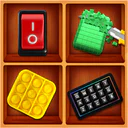
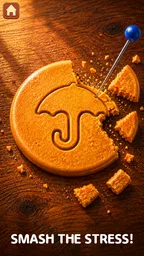
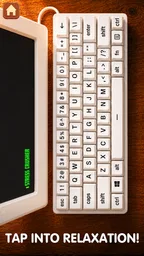
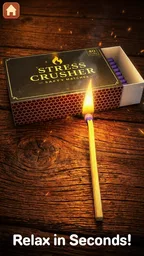
I like casual games best when they ask little of me: no complicated setup, no pressure to keep a streak alive, and no need to make a long session out of a short break. Stress Crusher Relaxing Games is aimed at that kind of moment, pairing ASMR-style sensations with fidget-game play. Its appeal is the chance to shift attention onto small, satisfying interactions rather than a demanding goal. That can make it a pleasant way to unwind, though it is not a substitute for a deeper puzzle or a game built around long-term progress.
Why the fidget-and-ASMR approach works
Made by Mad1 Games, this free casual game is built around a simple idea: give your hands and attention something soothing to focus on. The store describes it as a relaxing ASMR and fidget experience, but the useful point for a player is how that combination suits brief pauses. Instead of asking me to plan moves or learn a complicated system, it offers a light activity whose satisfaction comes from the interaction itself.
That focus makes the game different from many familiar casual alternatives. A match-three game, for example, usually nudges me to clear a board or chase a better score; an idle game encourages me to return and build something over time. Stress Crusher puts less emphasis on those familiar goals and more on the immediate sensory appeal of playing. If I want a small diversion without investing in a campaign, that is a meaningful distinction.
The game’s relaxed premise also sets a useful expectation: enjoyment depends more on whether the interactions feel pleasant to you than on how much content you can complete. Players who like tactile, repetitive activities may find that restraint refreshing. Anyone who needs a strong story, strategic depth, or a clear sense of progression may find the same design too slight.
What a short session feels like
In practice, I would treat it as a game to open when I have a few spare minutes, rather than something that needs a dedicated evening. The fidget focus gives a small task to settle into, while the ASMR angle frames the experience as calming rather than competitive. That makes it a natural fit for a quiet break after work, a pause between errands, or a moment when I want to put a more demanding game aside.
A realistic use case is waiting for a delayed appointment. I might not want to start a story-driven game only to stop midway, and scrolling through social feeds can leave me more scattered than before. A brief session here offers a contained alternative: I can give my attention to the game, then put it down when I am called. The key is to approach it as a small reset, not as a promise that an app will remove stress on its own.
One practical tip is to decide what you want from a session before opening it. If you are looking for a calm distraction, keep the session short and focus on whether the sensory style suits you. If you want a challenge, a score to beat, or a reason to return every day, this may not scratch that itch. Knowing that difference early helps avoid judging the game by goals it is not designed to prioritize.
Where it fits among casual games
Compared with quick arcade games, its relaxing premise makes it less about reflexes and more about a gentler pace. Compared with puzzle games, it asks less of working memory and forward planning. Those contrasts are useful when choosing what to play: a puzzle is a better pick when I want my mind occupied with a problem, while this game is better suited to a low-effort interlude centered on fidget-style play.
That does not mean every player will find it soothing. ASMR is personal: sounds or visual feedback that one person finds satisfying can feel repetitive or irritating to another. I would recommend trying a brief session before deciding whether the style works for you. If the presentation does not feel pleasant, the core idea may not be enough to hold your interest, and a conventional casual puzzle could be a better alternative.
Another useful trade-off is that a simple, low-pressure activity can be easy to return to but may also feel thin if you expect a lot of variety or layered goals. I would not choose it as my main game when I want a substantial progression system. Its strongest case is narrower: a quick, accessible diversion whose value comes from the moment-to-moment feel.
Small habits that make it a better fit
For an intentional break, I would use it as a buffer between tasks rather than keep it open whenever I am bored. A short, defined session can make the game feel like a pause with a beginning and an end. If you find yourself wanting a more involved activity, that is a good cue to switch to something with clearer challenges instead of expecting this title to become a different kind of game.
It can also work as a transition when you are mentally tired but do not want to jump straight into another demanding task. The fidget-and-ASMR focus gives attention a simple anchor. Still, I would not rely on it as a remedy for serious or persistent stress; it is entertainment, and its effect will vary with the player and the moment. That honest boundary matters when a game presents itself as a way to relax.
Before installing, it is worth checking the device requirement. The game requires Android 7.0 or later, so an older phone may not be compatible. Its content rating is Teen, a detail parents should consider when deciding whether it is suitable for a younger player. The app is free to start, with in-app purchases listed at $4.99 per item; if you prefer to avoid spending, check purchase prompts carefully and decide your limits in advance.
Who will enjoy it—and who may move on
I can see this appealing most to players who already enjoy fidget activities, soothing sensory presentation, or casual games that do not demand sustained concentration. It is particularly easy to recommend as a try for someone who wants a small distraction during downtime and is not measuring every session by progress or a high score. The game’s positioning makes that low-pressure expectation central to whether it feels worthwhile.
I would steer away from it if you mainly play for demanding levels, competitive play, elaborate narratives, or a steady stream of unlocks. Those preferences call for a different kind of casual game, and choosing one built around stronger goals will likely be more satisfying. I would also suggest skipping it if ASMR-style presentation tends to bother you; a familiar puzzle or arcade title is a safer choice when you want activity without that sensory emphasis.
For context, the game has a 4.3 average from around 58,000 ratings and has passed 10 million installs. It was released on November 27, 2024, and its current version is 6.79. Those figures suggest that it has reached a sizeable casual audience, but they do not tell me whether its particular style will suit you. I would use them as background, then make the decision based on the kind of break you want.
A sensible verdict for everyday play
My recommendation is conditional but clear: try Stress Crusher Relaxing Games if you want a simple, sensory-led diversion and are comfortable with a game whose main appeal is the act of playing rather than a large goal structure. Its best use is a brief pause where a gentle fidget activity feels more appealing than a demanding puzzle or a fast arcade round.
Mad1 Games has chosen a focused idea, and that focus is both the strength and the limitation. It can suit a quiet gap in the day, but it will not be the right answer when you want depth, challenge, or a reliable solution to stress. I would give it a short try, pay attention to whether its ASMR approach genuinely feels pleasant, and keep it only if that small, immediate kind of enjoyment is what you were looking for.
What we like
- Quick mini-games make it easy to relax during short breaks.
- Simple controls are suitable for players of different ages.
- A variety of activities helps keep sessions from feeling repetitive.
- The casual format does not require a major time commitment.
- Offline play may be available for relaxing without an internet connection.
What could be better
- Some activities may feel repetitive after extended play.
- Frequent ads can interrupt the relaxing experience.
- Certain content may require in-app purchases.
- The game offers limited depth for players seeking a challenge.
- Visuals and sound may not appeal to every player.







