

Candy Crush Soda Saga review
 Analysis by Appsdrops
When I want a puzzle game that is easy to pick up but still asks me to think a few moves ahead, Candy Crush Soda Saga is an appealing choice. Its bright boards and familiar matching action make it approachable, while the changing objectives stop every level from feeling exactly alike. I would recommend it to someone who enjoys short, focused puzzle sessions—not to someone looking for a story-rich adventure or a game with no temptation to spend.
What to consider before you start
This is a free casual game from King, with a 4.6 average from around 8.8 million ratings and over 500 million installs. Those figures suggest broad appeal, but popularity does not guarantee that its pacing will suit you. The better question is whether you enjoy working within a limited board, spotting combinations, and adapting when a level asks for something different from the last one.
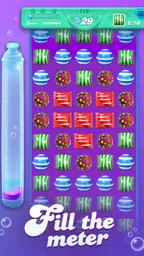
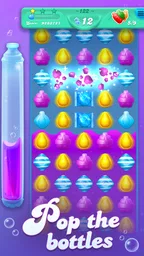
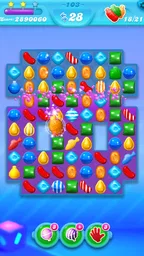
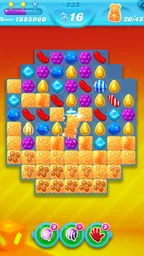
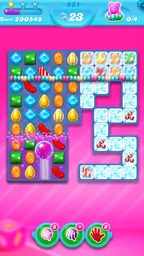
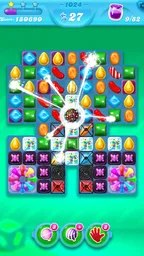
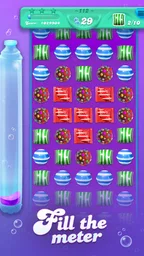
The central activity is matching candies to clear or affect the board, but the game’s soda-and-bear theme gives those puzzles a distinctive direction. You are not simply chasing matches for their own sake: levels can ask you to manage the board around soda and help bears. That shift in purpose gives each puzzle a clearer target, which I find more satisfying than endlessly making matches without a specific objective.
The game is rated Everyone, and its colorful presentation is easy to read at a glance. That makes it suitable for casual play across a broad range of ages, though a simple look does not mean every level is effortless. Some puzzles reward patience and careful planning, so younger players may still appreciate an adult’s help when a board becomes tricky.
It launched on November 11, 2014, and the current version is 1.331.3. It requires Android 7.0 or later. If you are choosing a game for an older device, checking that requirement before installing is a practical first step. The version number also matters if you are comparing advice or screenshots you find elsewhere: older material may not match the game you see now.
Why its puzzle format works
The strongest reason to choose this game is its balance between familiarity and changing goals. Matching colors is immediately understandable, so you can begin without a tutorial-heavy learning curve. The challenge comes from deciding which match helps the objective most, rather than making whichever move looks satisfying in the moment.
One useful habit is to pause before your first move and identify the level’s actual target. In a soda-themed puzzle, a large-looking match may not advance the task as much as a smaller one that changes the right part of the board. I find that asking “What needs to happen next?” is more effective than simply looking for the biggest combination.
Another practical tip is to scan the lower and less accessible parts of the board before making a move near the top. A match can change what becomes available afterward, and reacting to the most obvious candy may leave you with fewer helpful options. This is a small adjustment, but it makes the game feel more like a puzzle and less like a reflex test.
It also suits people who want a clear stopping point. A level gives a session a natural beginning and end, which works well during a commute, a waiting-room break, or a few quiet minutes before bed. In a realistic everyday routine, I might play one level while waiting for a friend, then close the game once that attempt is done instead of committing to a long match or a lengthy story chapter.
Where it beats other casual puzzles
Compared with simpler match-three games that repeat one basic objective, Candy Crush Soda Saga has more personality because the soda and bear themes shape what you are trying to accomplish. The visual style is cheerful, but the more important difference is that the board’s purpose can change. That makes it a better fit if you like familiar mechanics with enough variation to keep you adjusting your approach.
It is also a stronger fit than many open-ended casual games when you want a direct challenge. You can look at a level, understand the immediate goal, and decide whether you want to try it. There is less need to remember a large cast of characters or a complicated sequence of story events. For me, that focus is a real advantage when I want a quick mental break.
There is a trade-off, though. If you prefer relaxing games where progress is almost entirely creative, or puzzles that let you take as long as you like without feeling pushed toward another attempt, this may feel too goal-driven. The level structure gives the game momentum, but it can also make a difficult stage feel like an obstacle between you and the next part of the experience.
Players who prefer word puzzles, spatial logic, or calm building games may be better served by those categories. Those alternatives offer a different kind of satisfaction: finding a word, solving a static brainteaser, or shaping something at your own pace. This game is at its best when you specifically want a colorful board, a concrete objective, and a reason to rethink your next move.
Progress, patience, and spending
The game is free to download, but it includes in-app purchases ranging from $0.99 to $149.99 per item. That is worth knowing before you begin, especially if you are installing it for a child or prefer not to encounter optional spending. I would treat purchases as an extra rather than a requirement and decide in advance whether you are comfortable buying anything at all.
My practical advice is to avoid spending simply because you are frustrated by one difficult level. Step away and return later with a fresh look; a short break can make it easier to notice a move you missed. If a game’s challenge starts feeling like pressure to pay for progress, that is a good signal to stop rather than reach for a purchase.
For parents, the Everyone rating is reassuring as a broad content guide, but it does not replace a conversation about in-app purchases. A child may understand the candy puzzles without understanding the cost of optional items. Setting a device-level purchase restriction or agreeing on clear boundaries beforehand can prevent an otherwise harmless game from turning into an unexpected expense.
The most useful way to approach a tough level is to treat each attempt as information. Notice which part of the objective is holding you back, then prioritize moves that affect that area. This is more constructive than repeating the same opening simply because it looks promising. It also helps you tell the difference between a puzzle you can solve with a better plan and one that is no longer enjoyable for you.
What switching to it involves
If you already play another matching game, the basic skill transfer is straightforward: look for useful combinations and think about what the board will offer afterward. The adjustment is learning to prioritize the specific soda-and-bear objective rather than assuming every match has equal value. Give yourself a few levels to understand that rhythm before deciding whether its style clicks.
Switching away is just as simple in terms of taste. If you find yourself wanting more freedom and less emphasis on completing a particular board goal, a creative casual game may suit you better. If you want more deliberate mental work, a logic or word puzzle is a better alternative. Candy Crush Soda Saga does not need to be your only puzzle game; it works well as the lighter option you open when you want a short, colorful challenge.
One thing I would not do is judge the whole experience by a single frustrating level. The game’s appeal depends on varied objectives and incremental problem-solving, so a difficult stage can be part of the intended challenge. At the same time, there is no obligation to push through if that kind of progression feels repetitive. Your enjoyment matters more than completing every stage.
My recommendation
I recommend Candy Crush Soda Saga to players who enjoy matching puzzles, appreciate a clear goal on each board, and want something that fits into short breaks. King has built a familiar format around a distinctive soda-and-bear theme, and the result is easy to understand without being entirely mindless. Its free entry makes it simple to try, while the purchase range is a reason to set spending boundaries early.
I would skip it if you dislike level-based progress, feel pressured by optional purchases, or want a puzzle game that is consistently slow and meditative. For those players, a word game, a relaxed creative title, or a no-pressure logic puzzle may be a better match. But if you want a lively casual game that asks you to plan rather than just tap, this is an easy one to give a try.
What we like
- New levels regularly extend the puzzle experience.
- Colorful animations make matches satisfying to watch.
- Multiple objective types keep puzzles from feeling repetitive.
- Boosters can help players overcome difficult boards.
- Progress syncs across devices when connected to Facebook.
What could be better
- Lives take time to refill after repeated failures.
- Some levels depend heavily on favorable piece drops.
- Boosters may be limited without in-app purchases.
- Frequent events can add pressure to play regularly.
- Internet access is needed for some features and events.







