




My Talking Angela review
 Analysis by Appsdrops
I’d describe My Talking Angela as a dress-up and pet-care game built around a character who responds to your attention. Its appeal is less about reaching a final goal and more about returning for small, playful interactions: choosing an outfit, tending to Angela, and enjoying her singing or dancing. I find that format easy to pick up in a spare moment, though it won’t suit everyone. If you want a deep story or demanding challenges, this is a much lighter kind of game.
A simple routine that gives the game its shape
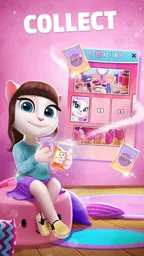
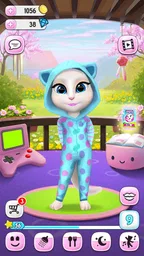
At the center of the experience is Angela herself. You spend time with her, look after her, and make choices about her appearance. The routine is approachable even if you have not played a virtual-pet game before: open the game, see what you feel like doing, and move between care and creative play. There is no need to learn a complicated system before you can enjoy it.
That simplicity is a strength when I want a quick distraction. I can focus on one small activity rather than planning a long session, and the character gives those actions a friendly, expressive focus. The game’s singing and dancing angle also helps it feel different from a plain checklist-style pet simulator. Angela is presented as a personality to spend time with, not just a set of needs to manage.
The most satisfying way to approach it is to treat each visit as a short routine rather than trying to do everything at once. I might start with a care task, then spend a little time choosing a look, and stop when I’ve had enough. That keeps the experience relaxed and makes it easier to avoid turning a casual game into another obligation. The order can be flexible; the point is to let the session remain light.
For a child, that approachable loop can make the game easy to understand, while adults may enjoy it as a low-effort break. Outfit7 Limited developed the game, and it belongs to the casual side of mobile gaming: short interactions and character-focused play matter more here than skill tests. It is rated for Everyone, but younger players may still need an adult nearby when making decisions about purchases.
Make outfit choices feel intentional
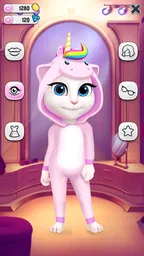
Angela’s fashion element works best when I give it a small theme instead of changing things at random. A color, mood, or occasion can be enough to make choosing clothes feel like a creative activity. This is a useful habit for children too: rather than tapping through every option, they can decide what kind of look they want first, then compare pieces against that idea.
That approach also helps if you’re playing in short bursts. Pick a theme, put together a look, and enjoy the result instead of treating the wardrobe as a task that must be fully explored in one sitting. I like this because it gives a brief session a clear endpoint. It also puts the emphasis on personal taste, which is a better fit for this game than chasing a score.
Check the practical settings before handing over the device
Before I let a child play alone, I’d take a moment to look through the available settings and the device’s purchase controls. The game is free to download, but it includes in-app purchases priced from $0.99 to $99.99 per item. That range makes it sensible to discuss spending first and to use the device’s purchase protections where appropriate. A child can enjoy the core character-focused experience without treating every purchasable option as something they need.
I’d also make sure the game is running comfortably on the device being used. The current version is 26.5.0.8919, and the minimum operating-system requirement is 7.0. Those details are useful when deciding whether an older phone or tablet is suitable; checking compatibility before installing is less frustrating than discovering a problem after setting up a child’s play session.
For shared devices, a simple household routine helps: decide who is playing, agree on a reasonable stopping point, and keep purchases behind an adult check. That advice is not a special feature of the game; it is a practical way to keep a free-to-start mobile game predictable. It is especially helpful when a child enjoys returning to Angela and may be tempted by optional items.
Use repeatable habits, not a supposed shortcut system
I wouldn’t approach this as a game that needs a secret strategy. Its useful “fast pattern” is simply knowing what you want from a session before opening it. If you want a bit of creative play, go straight to styling. If you’re checking in to care for Angela, focus on that rather than letting the session drift. This keeps the game pleasant and makes it easier to stop when the moment is over.
A realistic everyday use is a brief break while waiting for an appointment or winding down after homework. A child can spend a few minutes interacting with Angela and making a look, then put the device away without needing to remember a complicated mission. For an adult, the same short-session quality can be a welcome contrast to games that demand constant attention. I would not use it as a substitute for a more involved activity when I want a substantial challenge.
It also helps to distinguish between repetition that feels comforting and repetition that starts to feel stale. The familiar routine is part of the game’s appeal, but if the same interactions no longer feel enjoyable, there is no reason to force a daily habit. I’d come back when the character and dress-up play sound fun again. Casual games work best when they remain optional entertainment.
Where it stands among casual alternatives
Compared with puzzle games, endless runners, or competitive multiplayer titles, this is a gentler choice. Those alternatives often ask for quick reactions, problem-solving, or improvement against a score. Here, the focus is on caring for and personalizing a character. That makes it a better match for someone who likes expressive, low-pressure play, but a weaker choice for anyone who wants a clear campaign, tough levels, or a strong sense of progression.
The same distinction applies when comparing it with other virtual-pet games. If what you want is a character you can style and watch perform, Angela’s singing and dancing identity gives the experience a clear personality. If you prefer a pet simulator built around more involved management, or a game with a detailed narrative, you may find this one too light. I’d choose based on whether the character interaction itself sounds appealing, not on the assumption that every virtual pet game offers the same kind of depth.
The game’s broad reach suggests that many players have tried it: it has over one billion installs, around 14 million ratings, and an average rating of 4.2. Those figures indicate a widely played casual title, not a guarantee that it will fit your taste. Its 243,000 reviews also reflect a large audience, but the useful question for a new player is still whether character care and fashion play sound enjoyable to them.
Know what the light format does not provide
The biggest limitation for me is that a simple, repeatable loop can become predictable. If you expect each session to introduce a major new challenge, the core appeal may wear thin. The game is designed around returning to Angela and enjoying small activities, so its relaxed pace is not a temporary warm-up before a more demanding game appears.
Optional purchases are another reason to be deliberate, particularly on a device used by children. Free access makes it easy to try, but the available purchase range means I would not leave spending decisions unexplained. A parent who wants an entirely purchase-free environment should set device controls before play rather than relying on a child to distinguish every optional offer independently.
It may also be the wrong pick for someone who dislikes character-care routines or dressing games. A player looking for competitive goals, complex systems, or a story to follow will likely have a better time with a different casual game. I see that as a matter of fit rather than a flaw that can be fixed by playing longer: the game’s identity is deliberately centered on Angela and short, friendly interactions.
My verdict after settling into its rhythm
My Talking Angela is easiest to recommend to people who enjoy making a character their own and returning for brief, low-pressure play. I’d suggest it to a child who likes fashion and expressive characters, or to an adult who wants a small, cheerful distraction rather than a demanding game. Its free starting point lowers the barrier to trying it, while the purchase range makes a quick check of family settings worthwhile.
My practical recommendation is to keep sessions purposeful but relaxed: choose whether you’re there to care for Angela or create a look, enjoy that activity, and stop when it no longer feels fun. Don’t expect a hidden shortcut to transform the game into a strategy challenge, and don’t feel obliged to check in on a schedule. That mindset brings out what it does well without asking it to be something it isn’t.
Released on December 3, 2014, the game has remained a familiar option in Outfit7 Limited’s character-focused casual lineup. I’d try it if the idea of a singing, dancing virtual character sounds charming, especially for short sessions or shared family play. If you need intricate progression, competitive tension, or a deep narrative, I’d pick another game instead. For the right player, its simple routine is the point: a small space to care, dress up, and spend a few easy minutes with Angela.
What we like
- Customizable outfits let players express their style.
- Mini-games add variety beyond caring for Angela.
- Daily activities provide simple goals to work toward.
- Animations make Angela's reactions feel lively.
- The interface is approachable for younger players.
What could be better
- Frequent prompts can encourage in-app purchases.
- Some outfits and items require substantial progress.
- Care tasks may feel repetitive over time.
- Ads may interrupt play depending on the version.
- The game requires an internet connection for some features.







