


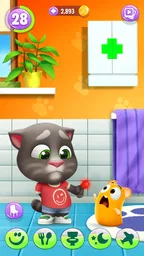

My Talking Tom 2: Pet Game review
 Analysis by Appsdrops
My Talking Tom 2 is at its best when I treat it as a small daily routine rather than a game that demands a long session. I check in with Tom, see what he needs, spend a little time on a mini-game, then leave when I’m ready. That simple rhythm suits its casual style, and the option to play offline makes it handy for a journey or a quiet stretch without a reliable connection.
Getting into a comfortable routine
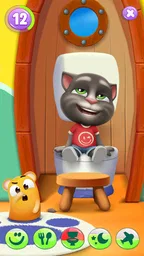
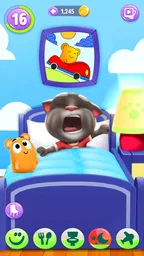
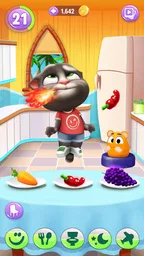
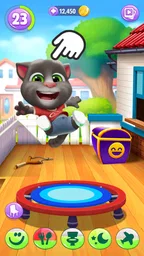
The basic appeal is caring for a virtual cat: Tom needs attention, and the game gives me several ways to spend time with him. I can move between looking after him, playing mini-games, and exploring different worlds. That variety keeps the experience from being only a sequence of care tasks, though the central pleasure is still watching over the same character over time.
For a first visit, I’d avoid trying to do everything in one sitting. I check Tom’s immediate needs first, then choose a mini-game if I want a more active moment. When I have less time, I focus on the care interaction and stop there. This makes the game easier to fit around everyday life and helps prevent the routine from feeling like a checklist I must complete.
A realistic use case is a short break between errands or while waiting for someone. I can open the game, give Tom attention, play a quick round, and put my phone away without needing to coordinate with other players. It is also a reasonable choice for a child who enjoys pet-themed play, with the important caveat that the game includes in-app purchases and parents may want to review purchase settings before handing over a device.
The offline element is genuinely useful, but I think of it as convenience rather than a promise that every part of the experience will always be available without a connection. The core pet-care appeal and mini-games make sense for short solo sessions, while world exploration gives me a reason to return when I have more time. If I’m looking for a competitive game, a deep story, or a demanding skill challenge, this isn’t where I’d spend my time.
What makes the routine work
The strongest habit is to decide what kind of session I want before opening the game. A care-focused visit feels different from a mini-game visit, and choosing one keeps a quick check-in from stretching into aimless tapping. I also find it useful to alternate: care first on one visit, then a mini-game or exploration on another. That small change makes the repeated structure feel less mechanical.
There is a trade-off in the design. A virtual pet is appealing because it gives a familiar character ongoing attention, but that same repetition can lose its charm for players who prefer a clear ending or a steady stream of new objectives. I’d recommend it to someone who likes recurring, low-pressure interactions; I’d steer a player seeking a one-and-done adventure toward a game with a defined campaign instead.
Settings and practical checks
I recommend taking a moment to look through the device and game settings before settling into a routine. The most useful check for families is the purchase setup: optional purchases range from $0.49 to $314.99 per item, so it is sensible to use the platform’s purchase controls if a child will play. That is not a reason to avoid the game, but it is worth dealing with before a child starts tapping through the experience independently.
It is also worth checking that the game is suitable for the device and the player. It is rated Everyone and requires Android 7.0 or later on Android. Those details matter more than a long list of technical tweaks for a game whose appeal is straightforward. I would not assume that changing settings will transform the style of play: the main decision is whether the pet-care loop and mini-games are enjoyable for the person holding the phone.
For younger players, I’d set expectations about purchases in plain language and agree on whether they can make any. For adults who simply want a casual distraction, the same check helps avoid unwanted spending. Since the game can be played offline, I would try it in the situation where I expect to use it—such as a commute—rather than assuming every feature behaves identically whether connected or not.
One practical way to keep the game pleasant is to separate play from purchase decisions. If a child asks for something paid, I’d pause the session and discuss it rather than treating a purchase as the natural next step in caring for Tom. That boundary is especially helpful in a game built around returning to a character, because a familiar routine can make extra items feel more essential than they are.
Faster patterns without turning it into a chore
Experienced use here is less about secret shortcuts and more about making repeat visits intentional. I start with the activity I came for, avoid bouncing between every available option, and stop when the session has done its job. If I have a spare minute, a care visit is enough; if I want a longer break, I add a mini-game or explore. This is a simple way to enjoy the game without letting its recurring structure dictate how long I play.
I also wouldn’t try to optimize every visit around progress. The game’s strength is its approachable mix of looking after Tom and dipping into other activities, not a complicated system that needs a perfect sequence. A repeatable pattern—care, one chosen activity, then leave—works well for casual play. It reduces decision fatigue and makes the app easier to pick up again later.
When introducing it to a child, I’d show the basic care interactions first and let them discover the mini-games gradually. That gives them a clear starting point without making the game feel like a lesson. If they become restless with the pet routine, the mini-games and worlds offer a change of pace; if those still do not hold their interest, there is little benefit in pushing them to keep playing.
Compared with many casual alternatives, this one is more character-centered than a typical collection of disconnected mini-games. That is a plus for someone who enjoys returning to the same virtual pet, but a limitation for someone who wants each session to offer a completely different premise. A puzzle game may be the better choice for focused problem-solving, while a competitive casual game is more suitable for social rivalry. Tom’s appeal is personal routine, not head-to-head play.
Where the limits become clear
The repetition is the main thing I’d weigh before installing. Care tasks can feel soothing at first, yet the same basic relationship with Tom is also what the game keeps asking me to revisit. Mini-games and world exploration help provide variety, but they do not change the fact that this is a virtual-pet experience. Players who quickly tire of recurring care may find that the central loop wears thin.
Another limit is the presence of in-app purchases. The game is free to download, but optional purchases can be expensive at the upper end of the listed range. I would not treat the free price as a guarantee that every possible item or convenience is included. If you prefer games with no purchase prompts or spending decisions, a fully paid game with a clear one-time price may suit you better.
It is also not the right pick for someone who wants an involved simulation with lots of strategic control. The approachable format is part of its charm, but players looking for deep management, precise challenges, or a substantial narrative may find it light. I see it as an easygoing companion game, not a substitute for a more demanding title.
Outfit7 Limited developed the game, which arrived on November 6, 2018. Its long-running reach is reflected in over 1 billion installs, while the average rating is 4.3 from around 6.8 million ratings. Those figures suggest broad appeal, but I’d still make the decision based on fit: a huge audience does not make a recurring pet routine enjoyable for everyone.
Who I’d recommend it to
I’d recommend My Talking Tom 2 to people who enjoy caring for a familiar character in short, flexible sessions, especially families looking for a child-friendly casual game to explore together. The Everyone rating is reassuring as a starting point, though it does not replace checking purchase controls or deciding what boundaries make sense for your household.
I’d skip it if you want a game that is primarily about winning, mastering difficult mechanics, or reaching a firm ending. I’d also look elsewhere if repeated check-ins feel like an obligation rather than a comfort. A puzzle title is a better fit for a quick mental challenge; a story-led game is better for a focused journey; a competitive game is better when playing against others is the point.
A relaxed pet game, with sensible boundaries
My overall view is that the game succeeds when I keep my expectations modest and my sessions purposeful. Tom gives the experience a recognizable center, while mini-games and exploration provide useful variety around the care routine. Offline play adds flexibility, and the casual format makes it easy to pick up for a brief break. The weaknesses are just as clear: repetition may not suit everyone, and purchases deserve attention, particularly on a child’s device.
For me, the best way to enjoy it is to make a small, repeatable habit: check in, choose one activity, and stop when the moment is over. That keeps the game relaxing instead of turning it into another task. If that style sounds appealing, this is an approachable option with a lot of reach; if you want depth, competition, or a definite ending, another kind of game will probably be more satisfying.
What we like
- Mini-games add variety beyond caring for Tom.
- Daily rewards offer useful bonuses for regular play.
- Tom’s reactions make interactions feel lively.
- Players can customize Tom’s outfits and appearance.
- The game is easy for young children to navigate.
What could be better
- Frequent ads can interrupt play.
- Some items and features require in-app purchases.
- Progress relies on repeated care routines.
- The game needs an internet connection for some features.
- Notifications may encourage frequent check-ins.







