






Bridge Race review
 Analysis by Appsdrops
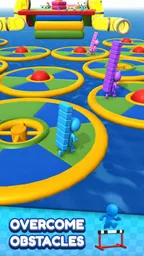
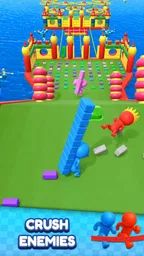
I like casual games that explain themselves quickly, and Bridge Race makes its central challenge clear from the start: gather building pieces, make a bridge, and try to beat the other racers. The idea is easy to grasp, but the race adds a lively competitive edge. It is the sort of game I can pick up for a short session without needing a long tutorial or a big commitment.
A simple race with a clear goal
The premise is right there in the store summary: build your bridge, beat your rivals, and win the race. That simple loop gives each round an immediate objective. I’m not asked to learn a complicated ruleset before I can get going; instead, the appeal comes from turning a straightforward task into a contest against other runners.
As a casual game, Bridge Race is built around accessible, quick-to-understand play. The bridge-building theme gives the race a visual purpose, while the rival element helps keep the goal from feeling like a routine dash to the finish. I find that combination easy to recommend to players who want something direct rather than a sprawling game that takes hours to understand.
The core pitch also works well for a broad audience. Its age rating is Everyone, and the game is free to download. That makes it approachable for people browsing for a light mobile game, though optional in-app purchases are available. The purchase range runs from $0.99 to $99.99 per item, so it is worth checking purchase options before handing the device to a child or anyone likely to tap without thinking.
How the gameplay idea lands
The best thing about the premise is its clarity. The player understands the basic race-and-build objective without needing a wall of explanation. That clarity is valuable on a phone, where a game often has only a moment to make its case. I can see why a short description like “Bridge Race” is enough to set expectations: the title and its central activity point in the same direction.
There is also an appealing bit of tension in the idea of racing against rivals while working toward a bridge. A race naturally encourages quick decisions and attention to what is happening around you. Even with a simple concept, competing for the win gives the activity a reason to repeat. For me, that’s the distinction between a game that is merely easy to start and one that can hold my interest for another round.
Its place among casual games
The casual category is a good fit because the game’s pitch is compact and its objective is easy to communicate. It doesn’t need a detailed story or a long list of systems to make the basic challenge understandable. Players who enjoy quick races and uncomplicated goals are likely to understand what they are getting into before they begin.
That simplicity is also a matter of taste. If you want a game built around deep strategy, an elaborate narrative, or extensive character development, this is probably not the experience you are looking for. I see its appeal in the opposite direction: it keeps attention on the race and the bridge-building objective, making it a practical choice when I want a lighter distraction.
Release history and the current version
Bridge Race was released on February 13, 2021, and its current version is 4.2. Those facts give the game a useful bit of context: it is an established mobile release rather than a brand-new concept appearing for the first time. The version number shows that the app has moved beyond its initial release, although a version number alone does not explain which features changed or how any particular update affected play.
I think that distinction matters when judging an ongoing mobile game. A release date tells me when the title first arrived, while the current version tells me which version is presently identified. Neither should be treated as proof of a specific new mode, redesign, or gameplay improvement. What I can say confidently is that the game has a long enough presence to build a substantial audience, and that its current version is 4.2.
The scale of that audience is striking: the game has over 500 million installs, an average rating of 4.1, around 2.1 million ratings, and roughly 24,000 written reviews. Those figures suggest broad reach and a large pool of player feedback. They are useful context, but they do not guarantee that every player will enjoy the same aspects of the game. I’d treat popularity as a reason to take a closer look, not as a substitute for deciding whether the racing-and-building concept suits me.
What a version number can—and cannot—tell players
For existing players, a current version is a practical reference when checking whether their app is up to date. It is also a reminder that the game has continued to receive versions after launch. But I wouldn’t read a list of digits as a detailed update history. To understand the actual effect of an update, players need the release notes shown in their app store or in the update flow.
That caution keeps expectations grounded. It would be easy to assume that a later version must include a particular feature or a major overhaul, but the version number does not establish that. I prefer to separate the confirmed product facts from guesses: the game began in 2021, is now identified as version 4.2, and still presents itself around building a bridge, racing rivals, and aiming to win.
For someone already playing, the clearest benefit of keeping the game current is simply using the present release rather than an older one. Beyond that, the experience of an update depends on what its notes actually say. If you care about changes to controls, content, stability, or presentation, checking those notes is the sensible way to decide whether an update matters to you.
What new players should expect
Newcomers can approach the game with a straightforward expectation: this is a free casual race centered on bridge-building and beating rivals. That description is more helpful than imagining features that have not been established. If the premise sounds fun, the low barrier to entry makes it easy to give the game a try; if you are looking for a more involved simulation or a narrative-led adventure, its compact pitch may not be enough to win you over.
The game supports a minimum operating system version of 7.1. That compatibility detail can help players check whether their device meets the stated requirement before downloading. As with any mobile game, I’d also keep an eye on the device’s available storage and the store’s current compatibility information, since those practical details can shape the actual download experience.
Spending and player expectations
Because the game is free to download and includes in-app purchases, it helps to distinguish the price of getting started from the optional items available inside the app. Purchases range from $0.99 to $99.99 per item. That is a wide span, so I recommend reviewing purchase settings and using device-level controls where appropriate, especially on a shared device.
I wouldn’t assume that paying is necessary to enjoy the central idea, nor would I promise that purchases have no effect on play. The useful point for players is simply that optional purchases exist and can vary considerably in cost. If you prefer to avoid spending, check your settings before playing and make sure the device’s purchase protections match your preferences.
What to keep an eye on
For the game’s continuing development, the most useful things to watch are concrete updates rather than assumptions based on version numbering. Release notes can clarify what has actually changed, while player reviews can reveal the kinds of experiences people are having over time. With a large audience, feedback is plentiful, but individual opinions will naturally differ, so I’d look for recurring themes rather than treating one comment as the full story.
I’d also watch how well the central appeal continues to suit the game’s audience. The pitch is strongest when the bridge-building objective and the race remain easy to understand and enjoyable to repeat. Any future changes would be most meaningful if they support that basic identity without making the experience harder to approach for the casual players it is designed to attract.
My overall take
For me, Bridge Race is an easy-to-understand casual game with a clear hook: build a bridge, race rivals, and aim for the win. Its established release history, current version, and enormous install base show that it has reached a wide mobile audience. The concept is simple enough for newcomers to grasp, while the competitive framing gives the basic task a reason to feel exciting.
It won’t be the right match for everyone. Players who want deep systems or a lengthy story should look elsewhere, and anyone sensitive to in-app spending should take a moment to review purchase settings. But if you want a free game with an uncomplicated race-and-build premise, this is a straightforward option to try. I’d recommend it most to people who value quick access, clear objectives, and a light competitive mood—and I’d judge future changes by their actual release notes rather than by assumptions.
What we like
- Simple controls make it easy to start playing.
- Short rounds suit quick gaming sessions.
- Collecting blocks gives each race a clear goal.
- Colorful visuals make the action easy to follow.
- Unlockable characters add a light collection goal.
What could be better
- Gameplay can feel repetitive after several races.
- Frequent ads may interrupt the flow.
- Rival behavior can seem unpredictable.
- Progress depends on winning repeated races.
- The game offers limited strategic depth.







