Solitaire Word Association review
 Analysis by Appsdrops
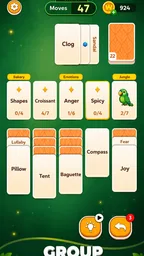
I like word games best when I can understand the goal quickly but still have to think before making a move. Solitaire Word Association aims for that middle ground: it brings word-solving into a solitaire-style format, making it a casual choice for a short break rather than a sprawling puzzle campaign. Its appeal is the combination of familiar card-game rhythm and vocabulary work, though the exact enjoyment depends on whether you prefer open-ended wordplay or clear, structured turns.
A straightforward start, with a different kind of word puzzle
The basic idea is easy to approach if you already enjoy either word games or solitaire. Instead of treating a puzzle as a blank page where you must find any possible word, the solitaire framing gives your thinking a more ordered feel. I find that distinction useful: it can make a word challenge feel less intimidating, especially when I want something focused but not as demanding as a long crossword or a timed vocabulary test.
PlaySimple Games has made a free word game here, and the age rating is Everyone. That broad accessibility suits the uncomplicated premise, but the format is not automatically right for every word-game fan. If you love building long chains of associations or solving elaborate clues, you may find a solitaire-based puzzle more constrained. If you want a small, self-contained mental task, that structure is part of the attraction.
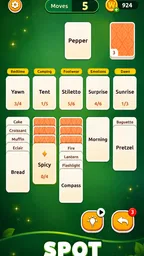
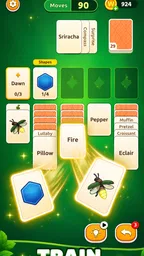
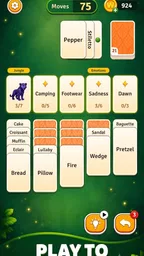
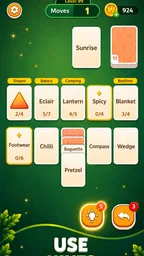
The early goal is best understood as learning to read the puzzle in front of you rather than searching for a complicated rulebook. I recommend taking a moment to inspect the available choices before acting. In a card-like word puzzle, a tempting move may not be the most useful one; pausing to consider how a word relates to the others can help you avoid playing by reflex. That little habit gives the format more thoughtfulness than its casual presentation might suggest.
Small decisions make the opening feel approachable
What works for me about this kind of setup is that it breaks a language task into manageable decisions. You do not need to sit down with a dictionary or prepare for a long session. You can open the game, focus on the current puzzle, and stop when you have had enough. That makes it a natural fit for a coffee break, a quiet stretch on public transport, or a few minutes between other tasks.
A practical approach is to treat each move as both a word choice and a planning choice. Before selecting something that seems obvious, scan the remaining options and ask whether another move might preserve more useful possibilities. This is not a hidden trick or a guaranteed solution; it is simply a way to make the solitaire structure work in your favor. It also helps distinguish a thoughtful round from one where you tap quickly and hope the puzzle resolves itself.
Progress, challenge, and the pace of play
Progress in a word game can be satisfying even without elaborate presentation. Here, the most meaningful signal is your own growing ability to spot relationships and judge when a move is worth making. I would not approach it expecting a full-blown progression adventure with a detailed story. The pleasure is more immediate: see a puzzle, reason through its choices, and get the satisfaction of finding a workable path.
That makes the game’s pacing a strength for casual players, but it also sets a limit. People who need a steady stream of major unlocks, dramatic level changes, or a visible long-term campaign may want a more explicitly structured puzzle game. Solitaire Word Association is easier to enjoy when the act of solving is itself the reward. If you need external milestones to keep playing, the format may feel modest rather than motivating.
The difficulty curve is best judged one puzzle at a time. Word familiarity varies from person to person, so a connection that feels immediate to one player may take another a few extra moments. I find it useful not to assume that a pause means I am stuck; letting possible associations settle can be more productive than repeatedly choosing the first word that comes to mind. Conversely, if you prefer puzzles that demand deep specialist knowledge, this casual framing may not deliver the intensity you want.
How to keep a round thoughtful instead of rushed
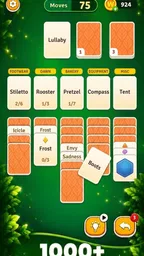
One useful workflow is to begin with the relationships you can explain to yourself, rather than the ones that merely feel vaguely connected. That keeps your choices grounded and reduces the urge to guess. Then reconsider the remaining options after each decision, because a word that looked secondary at first may become more relevant once the layout changes. This kind of deliberate scan is a small but real way to make a simple puzzle feel more strategic.
Another trade-off is attention. The game suits brief sessions, but frequent interruptions can make word association harder because you may lose the thread of why a particular move seemed promising. If you are playing while waiting for something, it helps to finish a decision before switching tasks. If you want a game you can leave in the middle of a complicated narrative and return to much later, a story-driven title may be a better match; this one is most rewarding when you stay with the puzzle long enough to reason it through.
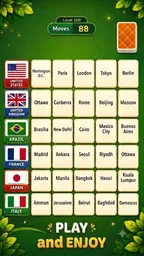
For comparison, traditional solitaire is a better fit when you want card arrangement to be the main challenge and language to stay out of the way. A crossword is preferable when you enjoy clues and a more defined answer grid. A word-search game may suit you better if you want quick visual scanning with less emphasis on choosing a sequence of moves. This game occupies a useful space between those familiar alternatives: its word element asks you to make associations, while the solitaire framing gives those decisions a more orderly cadence.
Who is likely to stick with it?
I would recommend it to someone who enjoys vocabulary puzzles but does not always want a large grid, a long clue list, or a competitive clock. It can also work for a casual player looking for a low-commitment game that rewards attention without requiring a big setup. The best everyday scenario is a short waiting period: instead of scrolling without a goal, you can focus on one puzzle, make a few considered choices, and put the phone away when your turn is done.
I would steer away from it if your main reason for playing is collecting extensive rewards, competing against other people, or following a lengthy campaign. Those are different kinds of motivation, and the solitaire word format is not a substitute for them. I would also choose another option if you dislike word association itself; the card-like structure does not remove the need to think about how words connect.
Cost, version, and what to expect from the commitment
The game is free to download, with optional in-app purchases priced from $1.99 to $69.99 per item. I would treat those purchases as a reason to be deliberate, not as a requirement to enjoy the basic premise. If you are considering spending, first decide what you actually want from the game and whether the current experience already suits your routine. The presence of optional purchases does not change the central question: do you enjoy solving these word-and-solitaire puzzles enough to return to them?
The current version is 1.40.0, and it requires Android 7.0 or later. Its release date is March 23, 2026. Those details are useful when checking whether it fits your device, but they do not tell you whether its style will suit you; the more important test is whether a structured word puzzle feels relaxing or restrictive in your hands.
Its store profile shows a 4.9 average from around 1.7 thousand ratings, with over 50 thousand installs. I see that as encouraging context for a niche casual game, not a promise that every player will enjoy it. Word familiarity and preferred puzzle style are personal, so I would give more weight to whether you like the first few puzzles than to popularity alone.
My progression verdict
Solitaire Word Association works best when I judge it by the quality of its small decisions rather than by how loudly it announces progress. Its early goals are easy to grasp, its challenge comes from considering word relationships, and its pace suits short, focused sessions. The trade-off is that players who depend on frequent unlocks or a substantial campaign may find the motivation too understated.
My advice is to play it slowly enough to notice how the solitaire structure changes your choices. Scan before you move, favor associations you can justify, and avoid treating every obvious word as an automatic play. If that measured rhythm feels satisfying, this is a sensible free word-game option to keep around. If you want a tougher clue-based challenge, competitive pressure, or a more visible progression ladder, a crossword, a timed word game, or a campaign-focused puzzle will probably serve you better.
What we like
- Combines familiar solitaire play with a fresh word-association twist.
- Short rounds make it easy to play during a quick break.
- Word clues add a light mental challenge to card play.
- The rules are simple to pick up without much practice.
- Progress through puzzles can make play feel rewarding.
What could be better
- Some word links may feel subjective or hard to guess.
- Repeated puzzle patterns can make longer sessions feel familiar.
- Players seeking classic solitaire may not enjoy the word clues.
- A missed association can interrupt the flow of a round.
- The combination may appeal less to fans of either genre alone.







