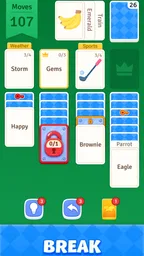
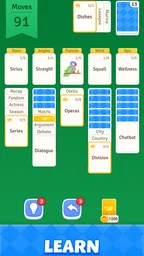
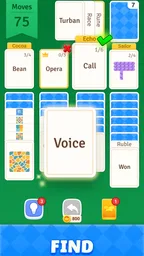


Solitaire Associations Journey review
 Analysis by Appsdrops
Solitaire Associations Journey puts a word-game spin on a familiar card-game idea: instead of focusing only on arranging cards, you look for connections between words. Its premise is easy to grasp, and that simplicity is the main draw. I like games that let me get into the puzzle quickly, and this one offers a straightforward invitation to pause, look for patterns, and make a match.
Finding the first connection
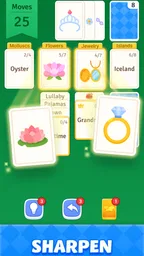
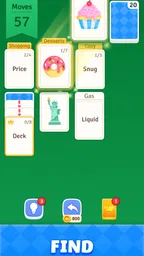
The opening move is about observation. You scan the words in front of you, consider what they might have in common, and choose an association that seems to fit. A connection can come from meaning, context, or the way two ideas naturally belong together. That makes each move feel more thoughtful than simply tapping through a conventional solitaire layout.
The game’s short description, “Solitaire Associations,” captures that blend neatly. The familiar word solitaire suggests a solo puzzle, while associations point toward the mental task at its center. I found the combination appealing because it sets an understandable expectation: this is a game to play at my own pace, with attention on words rather than speed or competition.
As a word puzzle game, it suits players who enjoy making links and testing their intuition. You do not need a long explanation to understand the basic appeal. Read the choices, think about the relationship, then act. That first decision is the hook: even a simple set of words can invite a second look when the obvious connection is not immediately clear.
A familiar idea with a word-first focus
The solitaire reference gives the concept a recognizable frame, but the associations are what give the game its personality. Rather than treating words as isolated answers, the puzzle encourages you to think in groups and relationships. I enjoy that shift in perspective. It makes a small decision feel like a miniature reasoning exercise, without turning the experience into a dense word lesson.
That balance matters for a casual game. A puzzle can be satisfying without demanding a large time commitment or specialist vocabulary. Here, the basic activity is approachable: notice possible links and decide which one makes sense. Players who like anagrams, trivia, or spelling challenges may still find this a different kind of mental workout, because the emphasis is on association rather than simply recalling a definition or rearranging letters.
Reading the puzzle and committing to a move
The most engaging moment comes just before a choice. I might spot one possible relationship, then reconsider because another word seems to point in a different direction. That small pause is where the game’s core idea works best. It asks me to trust a pattern, but also to check whether the connection feels coherent across the words I am considering.
This is a gentle form of challenge rather than a race. The appeal lies in looking carefully and making a reasoned selection, not in rushing to tap first. If you enjoy games that give your mind something specific to chew on while keeping the rules easy to approach, this word-and-card concept has a clear, welcoming pitch.
How the play rhythm holds attention
A satisfying puzzle loop needs more than a possible answer. It needs a response that helps the player understand whether a decision worked, followed by a reason to keep going. Solitaire Associations Journey is built around making an association and seeing how the puzzle responds. That action-and-feedback rhythm gives each choice weight, even when the individual move is small.
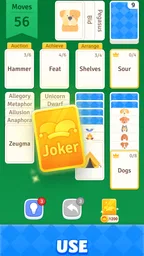
When I make a selection, the useful question is not only whether I was right, but whether the result helps me read the rest of the puzzle. Word association games are at their best when feedback sharpens attention: a successful connection can make a broader pattern easier to see, while an uncertain choice encourages a closer look. That kind of response makes the next move feel connected to the last one instead of like a separate tap.
The rhythm also keeps the experience from becoming a passive word list. I am not merely reading terms; I am deciding how they relate. That active participation is a good fit for quick play. A puzzle can occupy a spare moment while still giving me a real decision to make, and the straightforward premise lowers the barrier to starting another round.
Small decisions, clear mental focus
Word puzzles can frustrate when they rely on obscure answers or leave players unsure what kind of thinking is expected. The association concept points toward a more intuitive approach: consider the relationship between ideas. That does not mean every choice will be automatic. Different words can suggest overlapping meanings, and sorting through those possibilities is part of the fun.
I appreciate games that let a player bring their own reasoning to a puzzle. The same set of words may prompt a quick connection for one person and a moment of reflection for another. That personal element gives the game a conversational quality, even though it is a solo activity. You are essentially asking yourself, “Do these belong together, and why?”
The pace is also well suited to players who prefer low-pressure entertainment. There is no need to treat every decision as a test of speed. Instead, the pleasure comes from noticing a link and seeing whether it holds up. That makes it easier to return after a brief interruption and pick up the central task again: look, associate, choose.
What makes feedback satisfying
Feedback matters because it turns a guess into a learning moment. When the game responds to a move, the player can adjust their thinking and approach the next choice with a little more context. In an association puzzle, that can be especially satisfying: recognition arrives not just from knowing a word, but from seeing how it fits into a larger relationship.
The best moments are the ones where a connection clicks. A word that seemed ordinary can suddenly make sense beside another, and that recognition gives a small burst of satisfaction. I find that kind of reward more appealing than a complicated scoring system. The mental “aha” is the point: I noticed something, acted on it, and got a reason to continue.
That simple cycle is also why the game can suit different moods. When I want a light distraction, I can focus on one decision at a time. When I am in the mood to think more carefully, I can slow down and examine the possible links. The central action stays consistent, but the player’s level of attention can vary naturally.
The reward and the next session
In a casual puzzle, reward does not have to mean a dramatic payoff. The immediate pleasure of finding a valid connection is meaningful on its own. Each successful choice offers a sense of progress through the puzzle, and that forward movement gives the session a shape. It is a small reward, but one that fits the game’s calm, brain-teasing identity.
The appeal is less about a single grand victory than about a sequence of modest discoveries. I make a choice, get a response, and look for the next relationship. That creates a steady loop without requiring the game to become complicated. For fans of brain games, that is a useful quality: the experience can feel mentally active while remaining easy to pick up.
Another session begins for a familiar reason: the next puzzle offers another chance to spot a pattern. Once I have finished one round, the basic question still has appeal. What words belong together? Which connection have I overlooked? That open-ended curiosity is a strong motivator for a word game, because the central challenge does not depend on a lengthy story or a complicated set of controls.
A reset that invites another try
Resetting between sessions is part of the format’s convenience. A fresh puzzle gives me a clean starting point, while the core task remains familiar enough that I do not need to relearn how to play. That combination—new words, recognizable reasoning—can make short visits feel complete and make returning feel effortless.
There is also a useful sense of mental reset within each puzzle. If one connection does not come to mind, I can take another look and approach the words from a different angle. That flexibility is important in an association game. The point is not to force the first idea that appears, but to remain open to a better fit. When a new interpretation clicks, the pause feels worthwhile.
As a free game from Hitapps Games, Solitaire Associations Journey is easy to consider if you want a casual word challenge. It is rated for Everyone, and its simple premise makes it approachable for a broad audience. The game has an average rating of 4.4 from around 483,000 ratings, with roughly 13,000 written reviews, and has passed 10 million installs. Those figures suggest it has found a substantial audience among players looking for this kind of puzzle.
Who is likely to enjoy it?
I would point this game toward people who like making connections more than racing against a clock. If you enjoy scanning a handful of words and thinking about how they relate, the central loop should feel natural. It may also work well as a change of pace for players who already enjoy card games but want a more language-focused challenge.
It is less about elaborate strategy than about observation and judgment. That simplicity is a strength when you want something accessible, though players seeking a deep narrative or a complex competitive mode may be looking for a different kind of game. Solitaire Associations Journey knows the appeal of its central idea and keeps the focus there: words, relationships, decisions, and the satisfaction of getting a connection right.
The game is free to play and offers in-app purchases, with listed item prices ranging from $0.99 to $129.99. Its current version is 1.26.2, and it requires Android 8.0 or later. The release date was August 28, 2025. These practical details help set expectations before installing, but the main decision is simpler: whether a relaxed association puzzle sounds like a good fit for your spare time.
My verdict on the loop
Solitaire Associations Journey has a clear, appealing routine: inspect the words, find a relationship, make a choice, and use the response to guide the next move. Its strongest quality is that this loop is easy to understand but still leaves room for those satisfying moments of reconsideration and discovery. The word-and-solitaire framing gives it a recognizable identity without burying the puzzle under extra explanation.
I like it most as a low-pressure mental break. It offers a reason to focus for a few minutes, then a natural invitation to return when another puzzle sounds appealing. The reward is the connection itself, the reset is the chance to start fresh, and the next session begins because there is always another set of words to examine. For players who enjoy word association puzzles and approachable brain teasers, this is a straightforward game with a loop that makes sense.
What we like
- Association puzzles offer a refreshing twist on familiar solitaire play.
- Short rounds make it easy to play during a quick break.
- The journey format gives each puzzle a clear sense of progress.
- Pairing related cards can feel rewarding without requiring fast reflexes.
- The theme suits players who enjoy word and logic challenges.
What could be better
- Some associations may feel subjective or unclear.
- Later puzzles can become repetitive for some players.
- A wrong match may interrupt a relaxed solving rhythm.
- The game may offer limited appeal to players who prefer classic solitaire.
- Progress can feel slow if puzzles become difficult.







