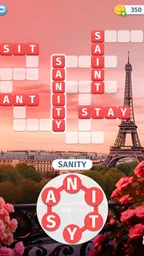
Sky Words: Brain Puzzle Games review
 Analysis by Appsdrops
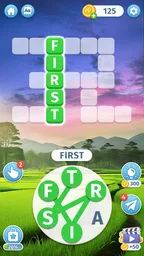
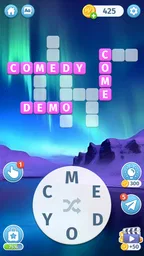
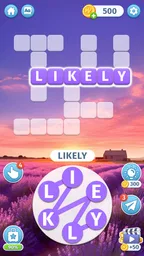
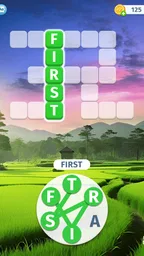
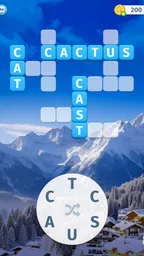
The first thing I like about Sky Words: Brain Puzzle Games is how little ceremony stands between opening it and getting to the point: you connect letters and try to make words that solve a puzzle. That simple action makes it an easy game to pick up during a short pause, without needing to learn a complicated ruleset before the fun begins. I’d recommend it to someone who enjoys word challenges but wants a calmer pace than a timed quiz or a competitive spelling game.
From a handful of letters to a solved puzzle
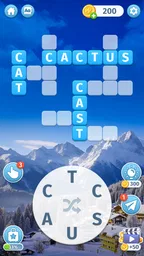
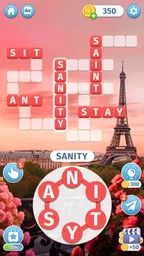
Made by Malpa Games, Sky Words is a free word game for Android, with in-app purchases ranging from $0.99 to $249.99 per item. Its basic appeal is the satisfying gap between seeing a set of letters and figuring out how they fit together. You swipe or connect letters to form words, then use those answers to make progress through the puzzle. The idea is familiar, but it works well when you want a focused task that doesn’t demand your full attention.
In practice, I find it helps to approach each board in two passes. First, look for the obvious short words; they often get you moving and help you notice possible combinations. Then pause and rearrange your thinking rather than repeatedly trying the same sequence. A useful habit is to scan for common endings and letter pairs, but not to assume every valid word will be the first one that comes to mind. The puzzle is more enjoyable when I treat it as a small pattern-finding exercise instead of a race.
That makes the game a good fit for a quiet commute, a coffee break, or a few minutes between chores. For example, if I have a short wait before an appointment, I can open a puzzle, test a few combinations, and stop when I’m called without having to remember a complex story or a long chain of instructions. The letter-connecting action is straightforward enough to suit casual play, while finding less obvious words gives the mind something concrete to work on.
Why the feedback keeps the puzzle moving
The key feedback is direct: a word either contributes to solving the puzzle or it doesn’t. That clarity matters in a word game, because it lets me adjust my approach without guessing what the controls expect. When a possible answer fails to move things forward, I can shift attention to another arrangement or rethink which letters belong together. The interaction stays centered on vocabulary and observation rather than on mastering elaborate controls.
The trade-off is that a simple loop can expose the limits of a simple loop. If you already see the likely words quickly, a board may feel more like a brief warm-up than a deep challenge. If you get stuck, the same letters can start to look repetitive, and trying combinations without a plan is not especially satisfying. I recommend alternating between deliberate pattern searches and a short break; returning with fresh eyes is often more useful than forcing the same guesses.
This is also where Sky Words differs from the usual alternatives. A crossword typically gives you clues and crossing answers, while a word-search asks you to spot words already laid out in a grid. Here, the central job is to build words from the available letters and use them to complete the puzzle. That makes it better for someone who likes experimenting with letter combinations than for a player who wants trivia clues, a large social competition, or a strict speed challenge.
Small wins, and what they are worth
Solving a puzzle provides a clear little reward: the scattered possibilities become a completed task. I like that the satisfaction comes from recognizing a word, not from needing to study a long explanation or manage a complicated game economy. It can be a pleasant way to stay mentally engaged when I don’t want a demanding game. The store presents it as a relaxing experience, and that description fits the general style of connecting letters at your own pace.
There is a useful distinction between enjoying the moment-to-moment puzzle and expecting a full vocabulary course. I would treat Sky Words as a casual brain teaser, not as a structured way to learn a language or prepare for a spelling exam. Finding words can prompt you to think about vocabulary, but the core activity is solving the board. Players who want definitions, lessons, or detailed explanations of unfamiliar words should look for a dedicated learning app instead.
The game is listed for Everyone, which makes its basic word-puzzle premise broadly approachable. Still, the right choice depends on the person: younger players may need help with unfamiliar vocabulary, while experienced word-game fans may want more variety or tougher competition than a relaxed letter puzzle provides. Its audience is strongest among people who like manageable challenges and don’t mind working through a board at a measured pace.
When a session ends—and why I return
A natural stopping point arrives when a puzzle is complete or when I’ve used the few minutes I had available. That makes the game easy to fit around real life, but it also means the reason to return is straightforward: there is another word puzzle to solve. If you need a strong narrative hook, a social team, or a dramatic progression system to pull you back, this may not be the right kind of game. Its appeal is the repeatable act of spotting a word you missed before.
For a better short-session routine, I’d set a simple personal limit: solve one puzzle, or spend a brief stretch exploring combinations, then put the phone away. That keeps the game refreshing instead of turning a relaxing break into a frustrating hunt for every last answer. When I’m stuck, I find it more productive to check whether I’ve overlooked a short word or a less obvious letter order than to tap through random guesses. That small change makes the puzzle feel like reasoning rather than trial and error.
The game has an average rating of 4.8 from around 186,000 ratings, with more than 1 million installs. Those figures suggest it has found a sizable audience, but they don’t tell me whether its particular pace will suit you. I’d use them as context, not as a substitute for thinking about what you enjoy: if calm, compact word challenges sound appealing, the basic concept is easy to understand and try.
Costs, compatibility, and the practical choice
Sky Words is free to start, while optional in-app purchases are available. The listed purchase range runs from $0.99 to $249.99 per item, so I’d check the purchase details in the app store before buying anything and keep spending controls in mind if someone else uses the device. A free download doesn’t mean every purchase is a good value for every player; I’d first see whether the ordinary puzzle loop holds my interest before spending money.
The current version is 1.19.0, and the Android minimum requirement is version 8.0. If you’re choosing a game for an older phone, checking the device’s software version first can save time. On a compatible device, the main question is less about setup and more about taste: do you want to calmly connect letters, or would you rather have clues, head-to-head play, or a more varied set of word mechanics?
My verdict on the repeatable loop
My overall impression is that Sky Words is strongest when treated as a low-pressure puzzle for spare moments. The loop is easy to grasp: connect letters, get a clear response from the puzzle, enjoy the small reward of completing it, then return later for another round. That cycle is its strength and its limitation. It stays approachable because it doesn’t ask much of you, but players who need constant novelty may find the repeated format too familiar.
I’d recommend it to casual word-game fans, people who like spotting combinations, and anyone looking for a brief mental diversion rather than an intense challenge. I’d skip it in favor of a crossword, word-search, or competitive word game if clues, exploration, or pressure are what make puzzles exciting for you. For me, Sky Words earns its place as a simple, easy-to-return-to option, provided you enjoy the puzzle itself and keep expectations—and optional spending—grounded.
What we like
- Short word puzzles are easy to fit into a quick break.
- The game offers a relaxed way to practice spelling and vocabulary.
- Simple controls make it accessible to casual players.
- Solving levels can provide a satisfying sense of progress.
- It suits players who enjoy word challenges without fast reactions.
What could be better
- Some puzzles may feel repetitive after extended play.
- Later levels can be difficult without using hints.
- Players seeking action may find the pace too slow.
- A limited vocabulary may make certain answers frustrating.
- Progress may depend on completing many similar puzzle rounds.







