




Satisfying Toys : Calm Games review
 Analysis by Appsdrops
I judge a casual game by what it asks of me when I only have a spare minute. Satisfying Toys: Calm Games is built for that sort of pause: a collection of small, soothing activities rather than a long campaign to master. Its appeal is easy to understand if you want a quick change of pace, but the important question is whether that simple promise suits your habits and expectations.
A low-pressure game for short breaks
Made by Koko Zone, this is a casual game aimed at easing tension through brief mini-games and calming sounds. I would approach it as a digital fidget break: open it when you want something light to focus on, then leave when your attention is ready to move on. That is a different role from a puzzle game built around steadily increasing difficulty or a simulation that rewards long sessions.
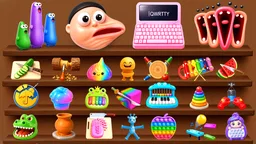
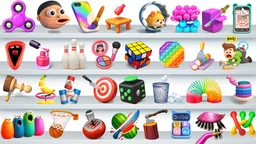
The name Satisfying Toys: Calm Games suggests tactile play, and that framing is useful: think of it as a small assortment of satisfying interactions, not a story-driven game with a destination. It may fit a commute, a short wait, or a few minutes between tasks. If you enjoy casual apps because they offer a quick, low-commitment activity, this is the kind of experience worth considering.
It is free to install, rated for Everyone, and has reached over 10 million installs. Its average rating is 4.8 from around 34,000 ratings, with 159 written reviews. Those figures indicate broad interest, but they cannot tell you whether its particular style of relaxation will work for you. A high rating is a useful signal, not a substitute for matching the game to your own taste.
What “relaxing” means in practice
The main value here is the format: short activities paired with relaxing audio, rather than a demanding objective. That can make it easier to use when you have little time or energy. I would not treat it as a fix for serious stress or as a replacement for rest; it is entertainment designed to create a calmer moment, and its benefit depends on whether the interaction feels pleasant to you.
One practical way to try it is to choose a small window before opening the game: a few minutes while waiting for a meeting, for example, rather than reaching for it whenever a task feels difficult. That keeps a relaxing diversion from quietly becoming another source of distraction. It also helps you tell whether the mini-games are genuinely settling or simply absorbing your attention.
Sound is part of the stated experience, so the game may be most appealing when you can listen without disturbing anyone. In a shared office, library, or quiet room, keep the phone muted or use headphones if appropriate. If sound is not available or welcome, the game’s appeal may be narrower for you; the calm audio is part of its concept, not just an incidental detail.
Progress without a race
There is no reason to approach this as a competition for milestones. Its stated focus is relaxing mini-games, so I would judge it by whether a short session feels satisfying, not by how quickly I can advance or how much time I can accumulate. That distinction matters if you are trying to avoid games that turn every spare moment into a daily obligation.
A useful personal test is to notice what happens when you stop. If you can close the game after a brief break without feeling that you have lost progress, it is serving the low-pressure role you wanted. If you find yourself checking repeatedly for rewards or feeling pushed to keep playing, it may not be the right fit for your downtime, regardless of its calming presentation.
The available information does not establish a particular progression system, challenge schedule, or competitive mode, so I would not install it expecting those things. That is not a flaw for someone seeking a simple diversion; it is a reason to choose another casual game if goals, unlocks, or structured achievement are what keep you engaged. Here, the sensible expectation is modest: try the activities, see whether they relax you, and keep playing only if the experience earns its place in your routine.
Spending and fairness
The game is free, with in-app purchases listed at $0.99 to $9.99 per item. That gives a clear boundary for the basic spending question: you can begin without paying, while optional purchases may be available. I would decide on a personal spending limit before buying anything, especially if the game is being used casually and not as a hobby you have already chosen to invest in.
What those purchases provide is not established here, so I would not assume they buy extra toys, remove interruptions, unlock advantages, or affect progress. Likewise, there is no confirmed competitive structure to assess for pay-to-win fairness. If you are looking for a game where paid items cannot affect a contest, the careful answer is that this title’s competitive balance cannot be judged from the available purchase details; do not infer a system that has not been established.
For a relaxed player, the fairest way to handle optional spending is straightforward: use the free experience first, then consider a purchase only if the game clearly shows what it includes and you personally value it. If you prefer games with no in-app purchases at all, this is not the cleanest match, even though downloading it costs nothing. The listed item range is a useful spending cue, but it does not tell you the contents or frequency of offers.
Where it sits among casual alternatives
Compared with a conventional logic puzzle, this game appears to prioritize soothing interaction over solving a problem. Compared with a general-purpose fidget or relaxation app, it has the framing of a game and mini-games rather than being presented solely as a wellness tool. That makes it a reasonable middle ground if you want a little play alongside a calming mood, but less suitable if you want a deep puzzle, a guided meditation routine, or a structured stress-management program.
That difference also affects when I would choose it. If I have a few minutes and want a playful distraction, a casual mini-game collection can feel more inviting than starting a long level in a larger game. If I am trying to settle down for sleep or deliberately practice breathing, a dedicated relaxation tool may be a better choice because this game is still entertainment. The category label does not make it a health product.
It is also worth asking whether you enjoy variety or prefer one activity done exceptionally well. A collection can make short sessions feel less repetitive, but it may not satisfy someone who wants a single mechanic with room to develop skill. Since the specific activities and their depth are not established here, I would avoid expecting a particular toy or control style before trying it. The best fit is someone open to sampling small, low-stakes interactions.
Who should try it—and who should pass
I would recommend giving it a try if you want an easy casual game for short breaks, enjoy soothing sounds, and are content with entertainment that does not need a grand objective. It may also suit someone looking for a gentle alternative to scrolling through social feeds, provided the game itself feels calming rather than distracting. The Everyone age rating makes its intended audience broad, though parents should still make their own choices about device use and optional purchases.
I would skip it if you need a substantial campaign, precise competitive play, a guaranteed offline experience, or a clearly explained purchase model before installing. Those are reasonable preferences, but they are not things I can promise for this game. Similarly, if repetitive touch-based play does not appeal to you, a puzzle with clear rules or a more active arcade game is likely a better use of your time.
One small but useful habit is to test it in the setting where you actually intend to use it. Try a brief session during a quiet break, then consider whether the sounds and interactions help you reset. A game that feels relaxing at home may be awkward in a noisy commute or a shared space, while a simple, quick activity may be just right during a short wait. Your own context matters more than the rating alone.
Version and practical expectations
The current version is 0.12.0, and the game is listed for Android devices running version 7.0 or later. That gives Android users a basic compatibility check before installing. If you use iOS, check the app store on your device for its current availability and requirements rather than assuming Android details apply. The game was released on Aug 29, 2025, so it is a relatively recent entry, and the version number is a reason to keep expectations practical rather than assume a long-established feature set.
There are a few questions a careful player may still have: exactly which mini-games are included, what each purchase unlocks, and whether the experience needs a connection. Those specifics are not established here, so I would check the in-game descriptions and purchase prompts before committing time or money. This is a real limitation when deciding in advance, but it is better to treat those points as open questions than to build expectations around invented features.
That uncertainty need not prevent a low-cost trial: installation is free, and you can decide whether the basic experience suits you before considering any optional purchase. Just remember that free to download does not mean every item is free, and the listed purchase range is enough reason to pause and read each prompt carefully. If you prefer to avoid all purchase decisions, you can also choose a casual alternative with a fully transparent no-purchase model.
My verdict on its trust and fit
My overall view is that this is a promising option for casual players who want a light, sound-led break, not a game I would recommend as a cure for stress or a deep source of progression. Its large install base and strong average rating make it easy to understand why people are trying it, while the purchase range and unclear item contents mean I would stay deliberate about spending. I would start free, play in a short session, and judge the mood it leaves you in.
For me, the best reason to choose it is its narrow, approachable purpose: a few soothing minutes without needing to commit to a campaign. The best reason to pass is equally clear: if you want verified details about every activity, a firm competitive fairness assessment, or no optional spending at all, another casual game may give you more certainty. As a small break-time diversion, it is worth a try; as a serious relaxation tool or a feature-rich game, I would look elsewhere.
What we like
- Quick mini-games make it easy to play in short sessions.
- Simple controls are suitable for players of different ages.
- Relaxing sounds add a soothing touch to the gameplay.
- Varied activities offer a change of pace between rounds.
- No advanced gaming skills are needed to get started.
What could be better
- Some activities may feel repetitive after extended play.
- Ads may interrupt the experience depending on the version.
- The calming theme may not appeal to players seeking a challenge.
- Progression may offer limited long-term goals.
- Certain toys or activities may require an internet connection.







