PlaySimple Cryptogram review
 Analysis by Appsdrops
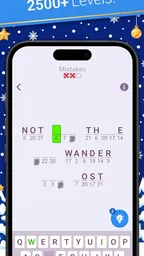
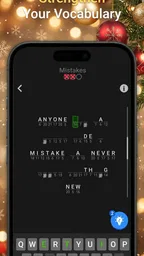
I like word puzzles most when they give me something to reason through rather than a clue to guess at, and that is the appeal of PlaySimple Cryptogram. This is a word game from PlaySimple Games built around cryptograms: you work out which letters stand for which others and use those deductions to reveal a phrase. It is a focused idea, and the enjoyment comes from noticing how one small discovery can make several other letters fall into place.
Turning letter patterns into a solve
A cryptogram can look forbidding at first because the message is concealed, but the task is less about knowing obscure facts than paying attention to language. I start by looking for repeated symbols and short word patterns. A one-letter word, a doubled character, or a familiar-looking word shape can give me a foothold. Once I test a likely letter, I can check whether it makes sense in the other places that symbol appears.
That interconnected reasoning is what makes this format satisfying. A guess that fits one word but creates nonsense elsewhere is probably wrong; a useful deduction tends to clarify more than one part of the puzzle. I find it rewarding to pause, reconsider a pattern, and let the message become legible gradually instead of relying on a quick answer.
The game’s central strength is also its clearest boundary: it is about deciphering coded text, not a broad collection of unrelated word activities. If you enjoy the moment when a partly hidden phrase suddenly clicks, the premise has a strong pull. If you mainly want an open-ended vocabulary challenge, a word-search game or a crossword may suit you better.
A practical rhythm for solving
I get more from a puzzle when I avoid treating every uncertain letter as an invitation to guess. First, I scan for repeated patterns; then I use the most promising deduction to test a few words across the message. If a proposed letter makes several combinations awkward, I back up rather than forcing the rest of the phrase to fit. This simple habit keeps the challenge enjoyable and cuts down on random trial and error.
It also helps to change focus when I stall. Instead of staring at the longest word, I look for a short repeated one or a symbol that appears in several places. A small clue can be more valuable than a dramatic guess because it gives me several chances to check the same idea. That makes the game well suited to brief sessions: I can make a little progress, stop, and return with fresh eyes.
Cryptograms reward familiarity with common word shapes, but they do not require me to be a specialist. The puzzle is a pattern-reading exercise as much as a vocabulary test. Still, the balance will vary by player: people who enjoy patiently testing possibilities will likely feel at home, while anyone who finds uncertainty frustrating may prefer a game where each clue points more directly to one answer.
Where it fits into an ordinary day
I can imagine opening it during a quiet coffee break, on a commute where I can safely use my phone, or while waiting for an appointment. The useful part is that the mental task has a natural stopping point: I can work through a few clues, leave the remaining symbols unresolved, and come back later. That makes it a better fit for scattered spare minutes than a game that asks me to keep a long chain of events in mind.
For example, if I have ten minutes before a meeting, I can spend them looking for recurring letter patterns rather than starting a demanding story or a competitive match. If I solve the message, I get a clear sense of completion; if I do not, I can still leave with a new deduction to test next time. I would not recommend using it when you need to keep your attention on the world around you, but as a small, deliberate break it has a sensible place.
The same format can also work for someone who likes to puzzle alongside another person. One player might spot a repeated symbol while the other suggests a likely word shape. I would treat that as a casual way to share the reasoning, not as a feature the game needs to provide: the appeal is in discussing possibilities and checking them against the visible pattern.
What the focused design gives up
The narrow premise is both the point and the main tradeoff. There is no reason to expect a cryptogram game to offer the variety of a crossword collection, a trivia quiz, or a word-search app. If I want different kinds of challenges in one sitting, I would choose a broader word-game bundle. Here, the same core process is the attraction, so whether it stays fresh depends on how much I enjoy repeated rounds of deduction.
Another natural friction is that cryptograms can feel slow when the first useful clue does not appear. A message may contain several plausible patterns, and a player who wants immediate feedback might find the careful testing tedious. I recommend resisting the urge to fill every unknown quickly; a wrong assumption can make the rest of the puzzle seem harder than it is. For people who prefer direct hints and fast answers, a conventional crossword with explicit clues may be a more comfortable alternative.
It is also worth considering the purchase model before settling in. The game is free to download, with in-app purchases listed from $0.99 to $29.99 per item. I would check the purchase prompts and spending controls that apply on my device, especially if a child will use the phone. The content rating is Everyone, but that does not remove the need for a parent to manage purchases in the usual way.
On compatibility, the current version is 1.210.0 and the minimum operating system is 8.0. Those details matter if I am deciding whether an older device can run it, but they do not change the puzzle’s basic appeal. I would still judge the experience by whether I enjoy the cryptogram format, rather than assuming a high version number means the game will match every preference.
Who is most likely to enjoy it?
I would recommend this to people who like language patterns, codebreaking, and the quiet satisfaction of a deduction that unlocks several more. It is especially appealing if you enjoy taking a puzzle in stages, since the message gives you multiple places to begin and rewards returning to an earlier idea with a new clue. PlaySimple Games has made a word game with a clearly defined center of gravity rather than trying to be every kind of puzzle at once.
It is less suitable for someone who wants a large range of mechanics, a social competition, or a puzzle that can be solved from a single obvious hint. It may also be a poor choice for a player who dislikes ambiguity or expects every session to end with a quick win. I would choose a crossword for explicit clue-and-answer solving, or a word search for a more visual, low-pressure hunt. Those alternatives are not better in general; they simply ask for a different kind of attention.
The game is free and has reached over one million installs. Its average rating is 4.8 from around 29,000 ratings, with about 1,600 written reviews. Those figures suggest that the focused format has found an audience, but I would not use them as a substitute for personal fit: a player who loves deciphering patterns is much more likely to enjoy it than someone who merely wants any word game.
A recommendation for patient puzzle solvers
My view is that PlaySimple Cryptogram is worth trying if the idea of uncovering a phrase one letter at a time sounds more inviting than intimidating. Its best quality is the way a careful observation can turn into several useful deductions, making each solve feel earned. The most practical approach is to look for repeated shapes, test guesses across the whole message, and step away briefly when the pattern stops making sense.
I would keep it in mind for short, quiet breaks and for anyone who likes puzzles that reward patience more than speed. I would skip it in favor of a broader word collection if variety is the priority, or choose a more direct format if cryptograms’ uncertainty feels like work rather than play. For the right reader, though, its narrow focus is not a limitation to work around; it is exactly what makes the game satisfying.
What we like
- The clean interface keeps letter choices easy to read.
- Hints offer help when a puzzle becomes difficult.
- Short puzzles suit quick breaks throughout the day.
- Daily challenges provide a reason to return.
- Progress saves automatically between sessions.
What could be better
- Some puzzles rely on obscure names or phrases.
- Hints may reduce the satisfaction of solving unaided.
- Repeated themes can make later puzzles feel predictable.
- Ads may interrupt play between puzzles.
- A constant internet connection may be needed for some features.







