




Party Charades: Headbands Game review
 Analysis by Appsdrops
Party Charades: Headbands Game is the kind of word game I’d keep in mind for a family visit or a quiet evening when conversation needs a nudge. Its appeal is easy to understand: one person tries to guess a word while everyone else helps, so the fun comes from the people playing rather than from mastering a complicated set of rules. I like that low barrier, though it also means the game depends on a lively group and a willingness to join in.
Quick to understand, best with a ready-made group
This is a word game from SUPERGAME PTE. LTD., designed around charades-style guessing for family and friends. The setup is familiar enough that most players can get started without a long explanation. That makes it useful when you have a mix of ages or guests who do not usually play mobile games: the phone can prompt a round, while the group supplies the clues and energy.
In practice, I’d treat it as a social activity rather than a solo game. It is a better fit for a living room, a family gathering, or a holiday get-together than for filling a long commute alone. If you are choosing something for a group that enjoys shouting suggestions and laughing at wrong guesses, the premise is a natural match. If your group prefers quiet, turn-based puzzles, a conventional word search or crossword app will probably suit them better.
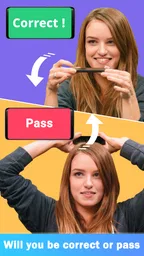
The title suggests the familiar “word on the head” party format, but I would avoid assuming that every detail works exactly like another game with a similar name. The useful expectation is simpler: this is meant to make word guessing a shared activity. Before a group starts, it helps to decide who is holding the device, how the clue-giver will communicate, and whether players want to keep score informally. Those small choices prevent the phone itself from becoming the focus.
How the pace feels in a real gathering
The format promises quick rounds, but the actual pace depends on the group. A confident clue-giver can keep things moving; a younger player or someone unfamiliar with the idea may need a little time to understand what kind of hints are helpful. I’d explain the goal in one sentence, demonstrate a round, and then let the group find its rhythm. That is usually smoother than trying to give a detailed set of instructions before anyone has played.
For a family with children, a useful approach is to put an adult or older sibling in the first guessing spot. They can model how to listen to the clues and keep the mood light when an answer is missed. This is particularly helpful when younger players are shy or still building vocabulary. The game is rated Everyone, which makes its intended audience broad, but age suitability in a particular household still depends on the players’ reading ability, confidence, and comfort with performing in front of others.
One practical trade-off is that a shared-screen party game needs a little coordination. If several people reach for the phone at once, the round can lose momentum. I’d choose a “device host” before play begins and pass the phone only when necessary. It sounds minor, but this makes the activity feel more like a group game and less like everyone waiting for their turn to operate an app.
When the room gets busy
Charades-style play is naturally noisy. People talk over one another, react to guesses, and may get more enthusiastic as a round goes on. That is part of the appeal, but it can also make the game harder for a player who struggles to pick one voice out of a crowd. A useful adjustment is to have everyone take turns giving clues rather than calling out at once. It keeps the room involved while giving the guesser a fair chance.
This is also a good option when a gathering has a short lull rather than a full evening to fill. I’d bring it out after a meal or while people are waiting for another activity, play a few rounds, and stop while the group is still enjoying it. A word game built around shared reactions can be a lively interlude, but it is not necessarily the right centerpiece for guests who want a structured tournament or a long campaign with clear progression.
Another small but useful tip is to think about the physical setting. In a crowded room, seat the guesser where they can see and hear the clue-givers without needing to turn constantly. For a group with children, keep the phone with an adult or a responsible older player so the activity stays focused. These are not elaborate rules; they simply remove avoidable pauses and help the game work in the kind of real-world setting it is meant for.
Reliability and the limits of what I’d expect
I would not judge this game by the standards of a graphics-heavy action title. Its core job is to support a simple social activity, so the experience matters most when the game is easy to bring into a gathering and does not distract from the people playing. I can’t responsibly promise a particular loading time, battery impact, or flawless behavior on every phone. Those things can vary with the device and its condition, and there is no reason to treat an ordinary party game as a performance benchmark.
For a smoother start, I’d open the app before everyone is ready to play, check that the phone has enough charge for the gathering, and keep the device within reach of the group. That is sensible preparation for any shared-phone activity, not a claim that this game is unusually demanding. If the app is interrupted, the simplest recovery plan is to return to it and restart the group’s round as needed rather than allowing everyone to wait while one person troubleshoots. A party game should be easy to pause socially, even if a round has to be reset.
The title has an average rating of 4.5 from around 13,000 ratings, and it has passed one million installs. That suggests plenty of people have tried it, but popularity alone does not tell me whether it will click with your particular group. I’d put more weight on the format: if your friends and family enjoy quick word guesses and playful performance, it has a clear reason to be on the shortlist. If they dislike being put on the spot, a cooperative puzzle played directly on each person’s device may be more comfortable.
Device fit, cost, and what to check first
The game is free to download, with optional in-app purchases priced from $2.99 to $49.99 per item. I’d start with the free version and see whether the group enjoys the basic experience before considering any purchase. Because this is a social game, value depends less on how often one person opens it alone and more on whether it becomes a repeat choice when the same group gets together. A higher-priced purchase is difficult to justify unless you already know the added content or options matter to your group.
The current version is 1.2.6, and the minimum operating system listed is 7.1. That gives a useful starting point when checking whether an older device is eligible, but eligibility is not the same as a guarantee that every handset will feel equally smooth. If you plan to use a spare phone at a family gathering, install and open the game ahead of time instead of discovering a compatibility or setup issue when everyone is waiting.
Because the activity is played together, screen visibility and audio clarity matter as much as raw device speed. A phone with a small screen may still be workable if one person holds it and the others focus on the spoken clues, but a larger display can make shared handling more comfortable. In a noisy room, move closer together or take turns speaking; buying a faster phone will not solve a group that cannot hear one another.
How it compares with other word games
Compared with solo word puzzles, Party Charades: Headbands Game is less about quiet concentration and more about reading the room. A crossword rewards patience and individual knowledge; this format rewards quick associations, clear clues, and a group willing to be a little silly. Compared with a board game, it can be easier to bring out because the phone handles the game’s role, but it does not replace the social feel of a larger tabletop game with pieces, a board, and a longer shared objective.
It is also different from simply asking someone to think of a word and improvise a guessing game. The app gives the activity a ready-made digital structure, which can help a group that wants to start without inventing its own rules. The trade-off is that the group’s enjoyment remains central: if people are reluctant to give clues or guess in front of one another, a more private word game is likely to work better. I’d choose this for a lively group, not as a universal recommendation for every fan of word games.
Developed by SUPERGAME PTE. LTD., it is a straightforward choice for families and friends looking for a light shared activity. It has 242 written reviews alongside its wider rating history, but I would still decide based on the players you expect to have around the phone. A gathering with mixed ages and a few outgoing participants is a promising setting; a group that wants detailed strategy, long-term progression, or uninterrupted solo play should look elsewhere.
My verdict: a handy party option, with a social caveat
I’d recommend Party Charades: Headbands Game to someone who wants an easy way to get a family or friend group guessing together, especially for a holiday visit or an informal evening at home. The strongest reason to try it is that the central activity is understandable without much preparation. The main limitation is equally clear: the game can only be as lively as the people around it, and the shared-phone format takes a little coordination.
As a free game rated for Everyone, it is easy to try without committing to a purchase, though optional items can reach $49.99. I’d download it in advance, test it on the device you plan to use, and introduce it with one short demonstration rather than a long explanation. If your group enjoys wordplay and does not mind being heard or seen while guessing, it is a sensible addition to your party-game options. If you want a quiet, deeply strategic, or reliably solo experience, I’d pick a different kind of word game instead.
What we like
- Quick rounds make it easy for new players to join.
- The headband format keeps players engaged without needing a table.
- Works well for groups with mixed gaming experience.
- Simple rules let you start playing with little setup.
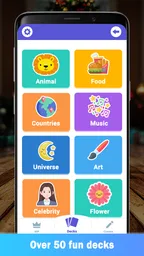
- A broad range of prompts can keep repeat games feeling fresh.
What could be better
- The game is less enjoyable with only a few players.
- Noisy rooms can make guessing clues difficult.
- Some prompts may be unfamiliar to younger players.
- Players need a separate device to display the clues.
- Repeated prompts can reduce the fun over time.







