





Paint by Number: Coloring Game review
 Analysis by Appsdrops
I usually reach for a coloring game when I want something quiet to do with one hand while a kettle boils or a conversation runs in the background. Paint by Number: Coloring Game is built around that sort of small pause: choose an illustration and fill its numbered spaces with matching colors. The appeal is easy to understand, but the experience works best when you treat it as a gentle, focused activity rather than a demanding game.
Why the number-matching format feels calming
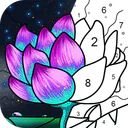
The defining idea is straightforward: each part of a picture corresponds to a color, and the numbers guide you toward the right match. That removes the pressure of choosing a palette or planning a composition. I can concentrate on completing one small area at a time, without needing drawing skills or a particular artistic idea before I begin.
That structure also gives the session a natural rhythm. I look for a number, locate its matching spaces, and watch the picture become more complete. The satisfaction comes less from making a creative decision than from seeing scattered sections resolve into an image. For me, that makes this a better fit for unwinding than for people who want freehand control or a challenge that tests technique.
It is a casual game from Oakever Games, and its focus is coloring by number rather than a broader collection of activities. The game is free to download, with in-app purchases priced from $4.99 to $69.99 per item. That range is worth keeping in mind if you prefer to avoid spending: I would approach the game as a free pastime and make any purchase only after deciding that it adds value to the way you play.
A small task you can pick up and put down
Number-guided coloring suits short breaks because progress is easy to understand even when you have only a few minutes. You do not need to remember a story, plan a route, or warm up your skills. If you leave an image unfinished, the basic task remains clear when you return: continue matching the numbered areas with their colors.
One useful way to keep the experience relaxing is to set a small goal before starting. I might aim to finish a section or simply spend a few minutes filling whatever matching spaces I can find. That keeps the activity from turning into an endless hunt for completion, especially on an evening when I only wanted a brief distraction.
The store summary describes a game that can be hard to put down. I understand how the format invites “just one more area”: each completed patch makes the remaining picture look more inviting. Still, the gentle loop is a matter of preference. If you need a game with dramatic changes from moment to moment, this steady progress may feel repetitive rather than soothing.
What playing it is like in everyday use
The most practical strength of number coloring is that it gives your attention one clear job. When I have a spare moment between chores, I can open a picture and work through a few color matches without committing to a long session. It also makes sense as a quiet option while travelling or waiting, provided you are comfortable using your phone for a visual task in that setting.
There is a trade-off to that simplicity. Looking for the right numbered spaces can become the whole activity, and on a detailed image that may require more scanning than a casual player expects. If you find yourself repeatedly searching for a particular area, switching to another color or taking a short pause can make the session feel less like a checklist. I would not choose it when I want a game that is easy to play without keeping my eyes on the screen.
A helpful workflow is to avoid treating every image as a race to completion. Work in small clusters: choose a color, fill the visible areas that match it, then decide whether to continue with another color or stop. This creates natural break points and makes the routine easier to fit around real life. It is a simple adjustment, but it helps preserve the calm quality that makes this format attractive.
Another useful expectation is that the numbered guide does much of the creative work. That is a benefit if you want a reliable route through a picture, but a limitation if you enjoy experimenting with color choices. This is not the same experience as a blank digital canvas, where you decide what every mark should be. Here, the pleasure is in completing a planned image with less guesswork.
How it compares with other casual choices
Compared with open-ended drawing apps, this game asks less of you creatively. You do not have to choose what to draw, select colors from scratch, or work out how to represent an idea. In return, you have less freedom to make the result your own. I would choose a drawing app when I want to sketch or experiment; I would choose this when I want the structure of a finished picture without the setup.
Against a typical puzzle game, the numbered-coloring format is gentler and less focused on solving a difficult problem. There is a sequence of matching to follow, but the main reward is visual completion rather than overcoming a complicated rule set. If you like logic puzzles because they make you think hard, this may not scratch the same itch. If you want something calmer between more demanding games, the contrast is exactly the point.
It also differs from freeform coloring books on a phone. A blank or lightly guided page gives you more room to decide what the image should look like, while number matching offers a ready-made structure. Neither approach is automatically better; the right choice depends on whether you value expression or ease. I find the numbered approach most appealing when I am tired and do not want to make many decisions.
When the game fits—and when it does not
The most convincing everyday scenario is a short, low-pressure break at home: perhaps after dinner, while waiting for something to finish, or during a quiet part of the day. I can focus on a few areas, put the phone down, and return later without needing to recover a complicated train of thought. That makes it more suitable for little pockets of attention than for an uninterrupted, high-energy gaming session.
It is also a reasonable choice for someone who enjoys visual progress but does not identify as an artist. The number guide lowers the barrier to starting, and the Everyone content rating makes the game broadly suitable by age classification. That does not mean every player will enjoy the style of play, but it does make the basic premise easy to share with people who want a simple coloring activity.
I would skip it if you strongly dislike repetitive tapping, if you want to produce original artwork, or if you prefer games with active competition and a changing challenge. The central loop stays centered on filling numbered spaces, so a player who tires quickly of matching tasks may not find enough variety in that premise. I would also be cautious about purchases if you are trying to keep mobile spending controlled; the in-app price range extends from $4.99 to $69.99 per item, so it is sensible to check any purchase carefully before confirming it.
For a parent or caregiver considering it, the age rating is a useful starting point, but I would still make the choice based on the individual child’s patience for a screen-based coloring task. A child who likes careful matching may enjoy it; one who wants to invent pictures or move quickly between different kinds of play may be happier with another activity. The same distinction applies to adults: liking coloring is not quite the same as liking number-led coloring.
What the popularity and version suggest
The game has a 4.7 average from around 19,000 ratings, and it has passed 10 million installs. Those figures suggest that the straightforward format has found a large audience, though popularity cannot predict whether its calm repetition will suit you personally. I would use them as reassurance that this is an established casual choice, not as a reason to expect a particular level of variety or to assume every player has the same experience.
At version 5.1.16, it is a continuing product rather than a one-off novelty. The release date is March 27, 2026, and the minimum operating system is 7.0. If you are deciding whether your device can run it, checking your system version before downloading is a practical first step. The game remains a focused coloring experience, so the key question is less about technical ambition and more about whether the number-matching routine sounds enjoyable to you.
My strongest recommendation is to approach it as a small relaxation tool, not as a substitute for drawing or a deep puzzle game. Give it a short session and notice whether searching for matching spaces feels satisfying or tedious. If you enjoy orderly visual progress and want a task that does not demand much planning, Paint by Number: Coloring Game is an easy one to try. If you need creative freedom, fast variety, or a more demanding challenge, another kind of casual game will probably serve you better.
What we like
- Numbered color zones make the activity easy to follow.
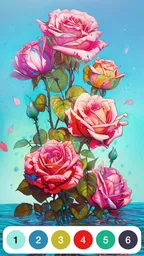
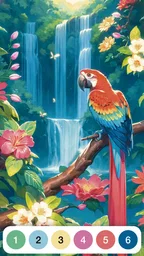
- A wide range of pictures offers plenty of coloring choices.
- Completed images can be saved and shared.
- Hints help locate small or hard-to-find sections.
- Coloring provides a relaxing activity without artistic skills.
What could be better
- Some pictures may require watching ads to unlock.
- Hints and other boosts can be limited without payment.
- Tiny areas can make coloring less comfortable on small screens.
- The app may need an internet connection for some content.
- Frequent prompts can interrupt the coloring experience.







