


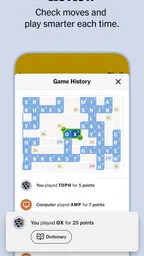

NYT Crossplay: Play and Spell review
 Analysis by Appsdrops
Choosing a word game can mean deciding between a solo brain teaser, a casual way to play with friends, or a more competitive board-style challenge. NYT Crossplay: Play and Spell is aimed at the last two: it invites you to go word-to-word in a game for two players, with room to challenge yourself or someone else. I like that clear focus. Rather than promising to be every kind of word puzzle at once, it gives the familiar pleasure of making words a head-to-head activity.
A word game built around the other player
At its core, NYT Crossplay is a word board game from The New York Times Company. The store’s short description calls it “NYT Crossplay,” while its fuller pitch emphasizes a two-player contest. That makes the central appeal easy to understand: you are not only searching for words, you are also playing in the context of another person’s moves. For players who enjoy language and a little friendly rivalry, that is a more social proposition than a puzzle played entirely alone.
The basic idea also makes the game approachable. You do not need to be looking for a long-form adventure or a sprawling collection of unrelated activities to see what it offers. This is a two-player word board game, and its identity is built around that format. I find that useful when choosing an app: a clear premise makes it easier to decide whether the game suits the way you like to spend a few minutes with your phone.
The game is free to download, and it is rated for Everyone. It has an average rating of 4.8 from around twenty-three thousand ratings, alongside about twelve hundred written reviews. Those figures suggest a strong reception among players, but I would still treat them as context rather than a substitute for your own preferences. The key question is whether you want a word game that puts a second player at the center of the experience.
What to consider before you choose
For me, the first decision point is the kind of attention a game asks for. Some word games are best when you want to sit quietly and solve something at your own pace. Others feel more appealing when there is an opponent to react to and a reason to think about each word in relation to the board. Crossplay’s two-player framing makes it a natural candidate for the second group. If that sounds more engaging than a purely solo routine, its premise is a good match.
The second criterion is who you expect to play with. A game designed for two can be especially appealing when you already have a friend or family member who enjoys wordplay. It can turn a familiar interest into a shared activity, rather than simply giving each person a separate puzzle to complete. On the other hand, if your main goal is a large assortment of solo word challenges, a dedicated single-player puzzle app may fit your habits better. That is not a failing of Crossplay; it is a difference in what you want from a game.
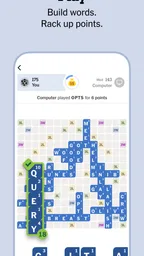
I would also think about how much you enjoy board-style play. The game’s description makes the board format part of its identity, so it is a better fit for someone attracted to placing words in a shared contest than for someone who wants only a quick word search or a straightforward quiz. Word games cover a lot of ground, and two apps can both be about vocabulary while feeling quite different in practice. Here, the social, board-game angle is the point to consider first.
Where Crossplay makes its strongest case
The most persuasive reason to choose Crossplay is its combination of wordplay and direct competition. A solo puzzle can be satisfying, but it does not give you the same feeling of responding to another player. With a two-person format, the appeal is not just finding words; it is taking part in a shared game. If you enjoy friendly challenges, that gives the experience a clear purpose and makes it easier to imagine returning for another round with the same person.
Its simple pitch is another strength. The store summary says to go word-to-word and challenge yourself or friends, which communicates the general mood without making the game sound more complicated than it is. I appreciate that kind of clarity. A player looking for a social word game can quickly tell whether this is in the right neighborhood, while someone who prefers a different kind of puzzle can move on without having to decode a long list of promises.
There is also a benefit to choosing a game with a focused identity. Crossplay does not need to be compared as though it were a full collection of unrelated games. Its appeal is specifically the two-player word board game format. That focus can make it a satisfying pick for players who already know they like this kind of interaction. Rather than bouncing between several solo puzzle styles, you can choose a game centered on playing words against another person.
The game comes from The New York Times Company, and its popularity is reflected in more than one million installs. It has a broad audience, but the premise remains easy to describe: a word game for two. I would not take popularity alone as proof that every player will enjoy it. Still, it does make Crossplay a recognizable option for someone browsing for a word-based game with a competitive, shared focus.
When another kind of word game may suit you better
There is no single best format for everyone. If you prefer to play entirely on your own, a solo word puzzle may be a more natural choice. That kind of alternative can make sense when you want to solve at your own pace and do not want another player to shape the session. Crossplay’s central two-player idea is a strength for the right audience, but it is also the main reason a solo-first player might look elsewhere.
Players who want variety above all else may also prefer a broader puzzle collection. Some people enjoy switching from one kind of word challenge to another, while others would rather spend their time getting comfortable with a focused format. Crossplay is best judged as the latter kind of choice: a distinct board-game concept, not a promise of every possible word activity. If variety is your top priority, compare it with apps whose main draw is offering several different puzzle styles.
There is a similar distinction between relaxed wordplay and a head-to-head contest. A competitive game can make each turn feel more meaningful, but that atmosphere will not appeal to everyone. If you want a low-pressure experience with no opponent involved, an individual puzzle may feel more comfortable. If, instead, a friendly challenge is what makes a game engaging, the two-player framing is exactly what makes Crossplay worth considering.
I also would not choose it solely because it is free to download. Free entry is convenient, but the game includes in-app purchases priced from $5.99 to $49.99 per item. That range is worth keeping in mind when comparing word games, especially if you prefer apps without optional spending. You can make the decision based on the core format first, then consider whether the purchase options fit your own approach to mobile games.
The practical side of trying it
Because Crossplay is free to download, trying it is a relatively straightforward way to see whether its two-player approach suits you. Its current version is 2.38.0, and it requires operating system version 10 or later. Before installing, I would check that your device meets that requirement and think about whether you have someone in mind to challenge. A word game built around two players is more compelling when the social part of its premise fits your plans.
The game was released on January 20, 2026. That release detail can help place it in the app’s timeline, but it matters less to most players than whether the game’s central idea sounds fun. The practical choice is straightforward: if you are curious about a two-player word board game, a free download offers a way to see whether the style clicks. If you already know that you only want solo puzzles, there may be little reason to switch from the type of game you already enjoy.
Switching from another word game does not need to mean abandoning it. I would think of Crossplay as an addition for a different mood: use a solo puzzle when you want independent solving, and turn to a head-to-head format when you want another person involved. That comparison is more useful than trying to declare one category universally better. The best choice depends on whether you want company and competition or quiet, self-directed play at that moment.
My recommendation
I recommend NYT Crossplay: Play and Spell to players who enjoy word games and want to share the challenge with another person. Its strongest selling point is clear: it is a two-player word board game, designed around going word-to-word rather than presenting itself as a general-purpose puzzle collection. That focus makes it an appealing option for friendly competition, particularly if you already have someone who likes spelling and language games.
I would look elsewhere if your ideal word game is strictly solo, or if you want a broad mix of puzzle formats in one place. Those preferences point toward different categories of alternatives, not necessarily better games. Crossplay’s appeal depends on whether the two-player setup sounds like a feature you will actually use. If it does, the focused premise and free download make it easy to consider. If it does not, a solo-first option will probably feel like a better match.
Overall, Crossplay is a straightforward choice for anyone searching for a word board game for two. Its rating and large audience add reassurance, while its clear social angle gives it a reason to stand apart from individual puzzles. Keep the in-app purchase range in mind, make sure your device meets the operating-system requirement, and choose it for the head-to-head wordplay rather than expecting it to serve every possible puzzle preference. If playing words with a friend sounds more fun than solving alone, this is the kind of game I would put on the shortlist.
What we like
- Daily puzzles offer a fresh challenge each day.
- Wordplay can help build vocabulary and spelling skills.
- Short rounds fit easily into a busy schedule.
- Hints provide a way forward when a puzzle gets tricky.
- A clean interface keeps the focus on solving.
What could be better
- Some puzzles may feel difficult for casual players.
- Daily content can leave you waiting for the next challenge.
- Hints may reduce the satisfaction of solving unaided.
- A subscription may be needed for full access.
- Small text can be harder to read on compact screens.







