


Mini relax games-No wifi review
 Analysis by Appsdrops
I like casual games best when they fit into the little gaps in a day: a short break, a quiet commute, or a few minutes waiting for someone. Mini relax games-No wifi is aimed at that kind of play, bringing a selection of mini-games together under a simple, low-pressure idea. It is a free casual game from JMGame, and its appeal is less about a big commitment than having small diversions ready when you want them.
What you get without paying
You can start playing without paying for the game itself. That makes it easy to try rather than having to decide in advance whether a larger game is worth the cost. The game also offers in-app purchases priced at $3.99 per item, so free access and optional spending are distinct parts of the experience.
That price detail is useful, but it does not tell me what each item contains or whether any purchase is necessary to enjoy the basic game. I would treat the free version as the sensible place to begin and consider paying only after you know what you actually want from it. In particular, do not assume that an in-app purchase is a one-time upgrade covering everything: the listed price is per item.
The game is rated for Everyone, which makes its intended audience broad. That rating is a helpful starting point for families, though I would still check the purchase options with a child before handing over a device. The practical value of a free game can change if someone taps through to paid items without understanding that they cost money.
A pocket-sized way to pass a pause
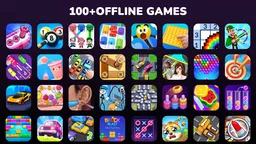
The central value here is convenience. Rather than choosing and installing separate titles whenever you want a different kind of brief distraction, you can turn to one casual game for mini-game play. That format suits moments when you want to do something more engaging than scrolling but do not want to learn a complicated game or settle in for a long session.
I would use it as a small break between tasks, not as a substitute for a deeper game. A collection of short activities is at its best when you can dip in, make a little progress or simply occupy your attention, and then put the phone down without feeling you have abandoned a long match or story. That low-commitment role is a genuine strength for people who play in bursts.
The no-wifi framing also points toward a useful situation: having a casual option available when a connection is inconvenient. That can matter on a commute or while waiting somewhere with unreliable service. I would still check that the game launches and behaves as expected on your device before relying on it for a trip; the title is not a reason to assume every function works offline in every circumstance.
How it compares with other casual options
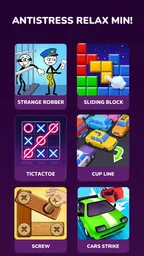
Compared with a single-purpose puzzle or arcade game, a mini-game collection promises variety in one place. That can be more convenient if your mood changes quickly or you are still figuring out what kind of short play you enjoy. The trade-off is focus: a dedicated game often has more room to build a satisfying challenge around one mechanic, while a collection spreads attention across several small experiences.
It also differs from a large, progression-heavy mobile game. If you want a story, a carefully developed skill curve, competitive depth, or a long-term goal, this is probably not the strongest fit. Its casual positioning makes more sense for someone who values immediate, lightweight play over building a substantial routine around one title.
For people who already have a favorite quick puzzle game, the question is whether having multiple mini-games together is more useful than the familiar polish of that one favorite. I would not replace a game you love solely because this one offers variety. I would try it if you often switch between different kinds of brief entertainment and would rather keep that choice in one app.
Where the convenience has limits
A collection can make choosing easier, but it can also create a small decision of its own: which activity should I play now? If you only want one clear, repeatable challenge, the extra choice may not add much. A focused game can be more relaxing precisely because it removes that decision and lets you return to a familiar loop.
There is another trade-off in the pricing structure. Free entry lowers the risk of trying it, while per-item purchases mean you should pay attention if you decide to spend. I would avoid buying anything just because it is presented in the moment; first establish whether the free play already fills the gap you wanted it to fill. If it does, there is no need to turn a simple break into a purchase decision.
Nor would I choose it on the assumption that “relax” means every activity will suit every mood. Mini-games can be calming for one person and mildly demanding for another, depending on what they ask of your attention. If you need something genuinely passive, such as music or a quiet reading app, active play may feel like another task rather than a break.
Who is most likely to get value
I think it makes the most sense for casual players who want short sessions, enjoy changing activities, and do not need a deep progression system. It is also a reasonable option for someone who wants to test a game before spending, because the game itself is free to start. Its broad age rating may make it suitable for shared household use, with the usual care around in-app purchases.
For a realistic everyday use, imagine having a few minutes before a meeting or while waiting for a ride. You can open the game, choose a quick distraction, and stop when the moment is over. That is a better match than launching a lengthy adventure you may have to abandon mid-session. If you are using mobile data or travelling, it is worth testing the offline experience beforehand instead of discovering its limits when you have no connection.
I would steer away from it if you want a single game with deep mastery, a substantial story, or a clear competitive scene. I would also skip it if you are trying to avoid all in-app purchase prompts, since optional items are part of its pricing model. In those cases, a focused premium game or a title with a purchase setup you already understand may be easier to evaluate.
Popularity, compatibility, and staying current
The game has a 4.4 average rating from around 12 thousand ratings, and it has passed 10 million installs. Those figures suggest that many people have tried it, but they cannot tell you whether its particular mix of mini-games matches your taste. I would use them as context, not as a guarantee that you will enjoy every activity.
It was released on December 16, 2025, and its current version is 1.3.5. The minimum operating system is Android 7.0, so compatibility is worth checking before you install it, especially on an older device. The best practical approach is simple: confirm that your phone meets the requirement, try the free experience, and judge whether the activities are pleasant enough to return to.
My verdict: try it free, spend only with a reason
Overall, I see Mini relax games-No wifi as a useful casual option for filling brief pauses, particularly if you like having more than one kind of mini-game at hand. Its free starting point is the clearest part of its value; paid items may suit some players, but I would not count them as necessary without first seeing what you personally want from them.
My recommendation is to try it if you want lightweight variety and are comfortable deciding for yourself whether any optional purchase is worthwhile. Skip it if your idea of a good game is a deep, carefully focused experience, or if you want a completely purchase-free environment. For the right player, it can be a handy little break-time companion; for everyone else, a more focused alternative may offer better value in time and attention.
What we like
- Quick mini-games make it easy to relax during short breaks.
- Offline play works without a Wi-Fi connection.
- Simple controls are approachable for casual players.
- A variety of games helps keep the experience fresh.
- Lightweight sessions suit players who prefer low-pressure play.
What could be better
- Some games may feel repetitive after extended play.
- The overall experience may lack depth for dedicated gamers.
- Ads may interrupt the flow of play.
- Game variety may not appeal to every player.
- Progression may offer limited long-term goals.







