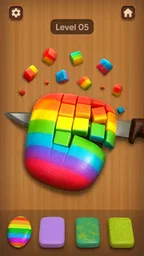


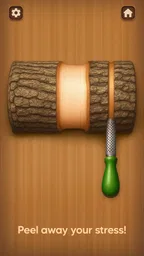
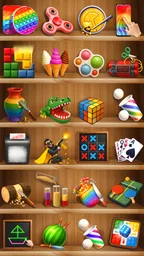
Mini Fidget Antistress Games review
 Analysis by Appsdrops
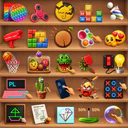
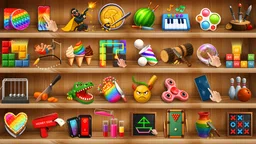
I would describe Mini Fidget Antistress Games as a casual game for brief, low-pressure breaks rather than a game built around a big campaign or a demanding skill ceiling. Its appeal is the chance to move between small fidget-style activities when I want something simple to do with my hands and attention. That makes it an easy choice to try while waiting, winding down, or taking a pause from a more involved game.
The key question is whether a collection of relaxing mini games can hold my interest beyond the first few minutes. In my view, it works best when I treat each activity as a short reset, not as a challenge I need to conquer. The experience is deliberately lighter than a puzzle game with a long sequence of increasingly difficult levels, and that difference is useful to know before downloading.
Small goals make the first session easy
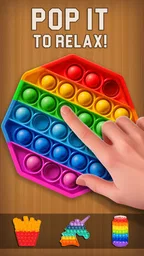
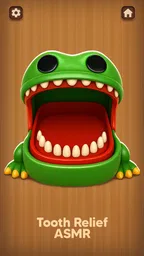
The opening attraction is straightforward: choose an activity and start interacting rather than learning a complicated system first. The store description frames the game around pop-it toys, and the broader mini-game format suggests variety is central to its pitch. I would approach it with the expectation of trying a few different tactile distractions and seeing which ones feel satisfying, rather than searching for one deep mode.
That low barrier is a genuine strength for casual play. A short session does not need a plan, a tutorial-heavy commitment, or a precise stopping point. If I have a few spare minutes, I can use the game as a small change of focus. It is also a reasonable fit for someone who enjoys fidget objects but wants a phone-based alternative when a physical toy is not nearby.
There is a trade-off, though. Simple actions can feel calming precisely because they do not ask much of me, but players who want clear objectives may find the early experience too open-ended. If your idea of progress is completing a story, mastering a mechanic, or earning visible milestones, this is unlikely to provide the same satisfaction as a structured puzzle or arcade game.
How I would use the mini-game format
I would pick an activity based on the kind of break I need. When I want to settle my attention, a repetitive pop-it interaction is a better match than a fast, score-focused game. When I am restless, switching to a different mini-game can make the session feel less monotonous. The practical tip is to sample the available activities early, then return to the ones that feel pleasant instead of forcing myself to play every option in order.
For example, while waiting for a delayed appointment, I would open it for a short spell and try one or two activities, then put the phone away when called. That is a more natural use than expecting a long play session to unfold. It also makes the game’s casual design easier to judge: the useful question is not whether it can replace a full-length game, but whether its quick interactions are enjoyable enough to make a pause feel less idle.
Progress signals, challenge, and pacing
The game’s strongest progression signal appears to be variety itself: the invitation to choose among mini games gives a player a reason to explore before settling into a favorite. I would not mistake that for a deep advancement system. The available description emphasizes relaxing activities, so I would not download it expecting a campaign, a ranking ladder, or a detailed set of goals. Its core promise is a collection of small experiences, not a long-term achievement chase.
That distinction shapes the difficulty curve. In a conventional casual puzzle game, challenge often rises through more complicated stages or tighter limits. Here, the appeal is better understood as low-pressure interaction. A player who wants a steady escalation may find the pacing flat; someone who wants to avoid another demanding task may welcome that lack of pressure. The most useful progress is finding the activity that suits your mood, not pushing through a difficulty curve.
One practical way to keep the experience fresh is to rotate activities according to context. I would use a familiar, soothing option when I have little time or feel mentally tired, then try another one when repetition starts to lose its charm. This is a small self-directed routine rather than a game mechanic, but it makes a collection of short activities more useful than repeatedly tapping through the same one without noticing how I feel.
There is also a limit to that approach: variety only helps if the activities themselves feel distinct enough to you. If several options produce the same kind of interaction, switching may not renew your interest. I would judge the game by whether I naturally want to try another activity after sampling one, not by how many choices the concept seems to promise. That personal test is more informative than assuming every mini game will suit every player.
Who benefits from its gentle pace
This is a sensible pick for players looking for a casual fidget game that asks for little concentration and can fit into fragmented free time. It may also suit someone who enjoys tactile, repetitive interactions but does not want a competitive match or a puzzle that punishes interruptions. With an Everyone 10+ content rating, it is positioned for a broad audience, though parents should still use their own judgment about screen time and in-app spending.
I would steer away from it if you want an absorbing challenge, a story, or a strong reason to return every day. It is also not the best answer for someone seeking an offline physical sensory toy or a focused mindfulness guide; a real fidget object can offer direct touch, while a dedicated relaxation app may be a better fit for guided breathing or structured calming exercises. The game’s role is narrower: light interaction on a phone.
Compared with the usual alternatives in casual gaming, it sits closer to a digital fidget collection than to a level-based puzzle. That can be a welcome change if most games you try demand attention and steady progress. But the same trade-off means it may have less staying power for players who measure enjoyment by unlocking substantial content or improving a score. I would choose it for a brief diversion, not as my main game.
Costs, expectations, and the staying-power question
The game is free to download, while optional in-app purchases are listed at $4.99 to $5.99 per item. I would treat the free version as the sensible starting point and decide whether the activities already available meet my needs before spending. For a game whose main appeal is short, calming play, paying only makes sense if an optional purchase clearly adds something I personally want; I would not buy simply because I assume it is necessary to enjoy the basic idea.
Retention pressure is worth considering in any free game. Here, I would keep my expectations measured: the relaxing format does not inherently need daily tasks or a long progression track to be useful, but players who enjoy a sense of accumulation may want more reasons to return. I would avoid turning a low-pressure break into an obligation. If opening it starts to feel like maintenance rather than a pleasant pause, taking a break from the game is the better choice.
The broad audience figures suggest that it has attracted substantial interest: it has a 4.5 average from around 75,000 ratings and over 10 million installs. Those numbers offer context, but they cannot tell me whether its particular mini-game mix will suit my taste. The Fashion Valley is the developer, and the current version is 0.3.1. It was released on October 23, 2024, and the listed minimum operating-system requirement is version 8.0.
For a first session, I would keep it simple: try a couple of different activities, notice which one actually relaxes or occupies you, and stop before repetition turns into boredom. If you are considering a purchase, first see whether the free experience has already earned a place in your routine. That approach answers the most practical questions—whether it fits short breaks, whether it offers enough variety for you, and whether spending feels worthwhile—without expecting it to be a more ambitious game than it is.
My verdict on its progression
Mini Fidget Antistress Games makes the most sense as a casual collection for brief, self-directed play. Its early goals are easy to understand, its pacing favors relaxation over escalation, and its progression is better judged by whether you find a few activities you want to revisit than by how far you advance. I like that this kind of game can fill a small gap without demanding a major commitment.
I would recommend giving it a try if you want simple digital fidgeting and are comfortable with a light experience that may not hold your attention for long stretches. I would skip it in favor of a more structured puzzle or a hands-on fidget toy if you need deep challenge, clear unlock-driven goals, or physical sensation. Used in short bursts and without pressure to keep progressing, it has a clear purpose; expecting a substantial adventure would be the wrong measure of its value.
What we like
- Offers a broad selection of small stress-relief activities.
- Simple controls make the games easy to pick up.
- Works well for short breaks between other tasks.
- Varied activities provide a change of pace.
- Suitable for players of different ages.
What could be better
- Some activities may feel repetitive after a while.
- Ads may interrupt the relaxing experience.
- Several games offer limited depth or challenge.
- Touch controls may not feel precise in every activity.
- The app may take up storage space on your device.







