


MemeMix Challenge: Funny Party review
 Analysis by Appsdrops
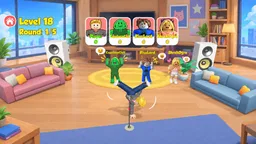
I expected a quick party game to be funny for a round or two, then lose its appeal. MemeMix Challenge: Funny Party has a more specific hook: you imitate a sound, see how your attempt is scored, and decide whether to have another go or pass the challenge to a friend. That simple loop is easy to understand, but it works best when people are willing to make a bit of a fool of themselves. If you prefer quiet, solitary games with steady progress, this one is probably not aimed at you.
Making the first sound is the real first move
The first action is less about mastering controls than getting comfortable performing. The game’s premise asks you to mimic funny sounds, so the player is the main source of the entertainment. I would start by playing somewhere you can speak freely, rather than opening it on a crowded bus or in a quiet waiting room. That small choice makes the game feel inviting instead of awkward.
As a casual sound-mimicry game, it is easy to bring into a get-together without explaining a complicated ruleset. One person can take a turn, others can watch, and the result gives the group something to react to. It is a natural fit for a lull between plans, a family evening, or a short break with friends. Its Everyone age rating also makes it broadly approachable, though the best audience is still a group that enjoys playful noise and silly performances.
The developer is Amobear VN Game Global, and the game is free to download. Its current version is 0.0.9, and it supports Android 7.1 or later. I would treat those details as practical checks before installing: make sure the device meets the minimum requirement, and remember that optional in-app purchases are listed at $1.99 per item. The game can be tried without an upfront price, but anyone who prefers to avoid spending should keep purchase choices in mind.
Play to the room, not to an imaginary perfect score
The most useful way to begin is to make the first attempt quickly. Overthinking how to reproduce a sound can make a party round drag, while an imperfect imitation is often funnier to everyone watching. I would take the prompt as permission to be expressive rather than as a test of vocal talent. The point is to create a moment, not deliver a polished impression.
That also makes the game a better choice for people who enjoy social reactions than for players seeking a deep solo challenge. The store summary emphasizes scoring and challenging friends, so the appeal is tied to comparing attempts. If you are playing alone, you can still engage with the central action, but you lose much of the lively back-and-forth that makes a score feel meaningful.
Feedback gives each turn its punchline
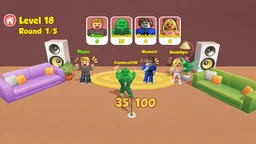
After the imitation comes the score, and that feedback is the hinge of the loop. A number or result gives the group a reason to cheer, tease, or immediately argue that the next attempt will be better. In my view, that reaction matters more than treating the score as a serious measurement. The game is at its best when players use the result to keep the banter moving rather than to judge who is genuinely good at making sounds.
There is a useful social distinction here: scoring can motivate a rematch, but it can also make a hesitant player feel put on the spot. I would set a relaxed tone before starting, especially with children or friends who do not like being compared. Let people skip a turn or perform together if that suits the room. A party game should create a shared joke, not turn a shy guest into the evening’s unwilling entertainment.
For a smoother round, I would keep turns short and pass the phone promptly. Long debates about whether a score is fair can stall the fun, while a quick reaction keeps attention on the next person. The game’s core idea naturally supports this kind of informal rhythm: imitate, see the outcome, laugh, and hand over. It does not need a formal tournament to work.
The reward is a shared reaction, not a long progression plan
Many casual games reward repeated play with collection, upgrades, or a steadily expanding task list. MemeMix Challenge has a different kind of payoff: the immediate score and whatever the group makes of it. That is a genuine strength for a short social session, because there is little need to remember a complicated plan from last time. It is also a limitation if you want a game that gives you a lasting personal goal to chase.
The practical reward is often a story you can refer back to: someone made an unexpectedly convincing sound, or a confident attempt landed badly and became the funniest moment. That payoff depends on the people around the screen, not only on the game. I would choose it when the group already wants to laugh together, rather than expecting the app to rescue a quiet gathering on its own.
Its popularity offers a little context without telling you whether it will suit your particular group: it has a 4.3 average rating from around 3,500 ratings, and over 5 million installs. Those figures suggest that the basic idea has found an audience, but they do not make it a substitute for trying the free game yourself. The number of written reviews is smaller, at around 59, so I would put more weight on whether sound imitation and score-based play match your taste.
Resetting is what makes another round tempting
Once a turn ends, the appeal is that the whole activity can start again without a big commitment. A weaker score invites another attempt; a strong one gives the next player a target to beat. This action-feedback-reset pattern is easy to grasp and suits spare moments. You can stop after a few turns or continue while the group is enjoying itself, rather than needing to set aside a long session.
That flexibility makes it handy for a realistic everyday situation: friends are waiting for food, the conversation has paused, and someone wants a quick distraction. One person can open the game, take a turn, and pass it along. If the room is noisy or people are in a hurry, keep the session brief and treat the result as a joke rather than trying to make every turn count. In a quiet café or shared office, I would choose something less vocal.
A small but useful tip is to decide who wants to participate before starting. The premise is performance-based, so surprise pressure can be uncomfortable. Another is to rotate the phone after each attempt instead of letting one person dominate; that keeps the challenge genuinely social. And if the score starts to outweigh the laughter, change the goal for the next round: make the group’s most dramatic attempt, not the highest-scoring one. These are simple ways to shape the experience without expecting the game to supply a different mode or extra system.
Where it fits among casual alternatives
Compared with a standard trivia or word game, this one asks players to perform rather than recall facts or solve a puzzle. That makes it more energetic and personal, but less suitable for a group that prefers thinking quietly or taking turns at its own pace. Compared with a conventional solo casual game, the score is less of a private achievement and more of a conversation starter. If you are after a calm game to play during a commute, a puzzle or match-style alternative may be a better fit.
The trade-off is refreshingly clear: the central idea is easy to share, but its success depends on the room. Friends who enjoy impressions and playful competition can get a lot from a short session. A player who wants carefully layered mechanics, a long-term progression path, or a distraction that does not involve speaking should look elsewhere. I would also skip it when recording or making sounds would be disruptive, since vocal participation is the point rather than an optional flourish.
My verdict on the repeat-play loop
MemeMix Challenge: Funny Party is most convincing as a quick social icebreaker: make a sound, get a result, react together, and pass the turn so someone else can try. The reset is light enough to encourage another round, while the score gives each attempt a clear ending. I like that the concept does not ask a group to learn a stack of rules before having fun.
I would recommend it to friends who are comfortable being a little ridiculous and want a casual activity for a get-together. I would not recommend it as a deep solo game or as a quiet, dependable time-killer. Free access makes it easy to give the idea a try, but the optional purchases are worth remembering, and the game’s appeal ultimately depends on whether your group enjoys performing. When that social mood is there, the loop has a simple reason to continue: one more imitation might be funnier, or might finally beat the last score.
What we like
- Quick rounds make it easy to play during a short break.
- A simple format helps new players join without a long tutorial.
- Funny prompts can encourage lively group conversations.
- The party-game setup works well for casual gatherings.
- Rounds can create amusing moments worth sharing with friends.
What could be better
- The experience is less enjoyable when played alone.
- Humor can feel repetitive after several rounds.
- Some prompts may not suit every age group.
- Players may need to agree on boundaries before certain challenges.
- The fun depends heavily on having an engaged group.







