



Magic Dancing Tiles review
 Analysis by Appsdrops
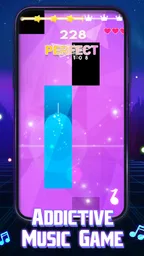
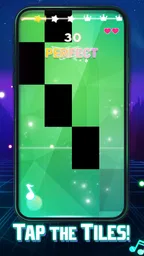
Finding a music game that feels good to play is about more than picking a catchy track. I look for a clear rhythm, simple controls, and a challenge that keeps me engaged without turning every session into a chore. Magic Dancing Tiles takes a straightforward approach: tap piano-style tiles along with EDM music, aiming to make each beat feel like part of the performance. It is free to play, and its large audience suggests that this uncomplicated rhythm-game idea has found plenty of fans.
What to consider in a rhythm game
Before choosing a mobile music game, I’d start with the kind of interaction I actually enjoy. Some games are about building a playlist and listening; others ask for precise taps and quick reactions. Magic Dancing Tiles belongs firmly in the second group. Its central appeal is the connection between the music and the tiles: listen, watch the pattern, and tap in time.
That focus makes the game easy to understand at a glance. You do not need to learn a complicated control scheme to grasp the basic premise, which is useful when you want a quick burst of play rather than a long tutorial. The piano-tile format is familiar, but pairing it with EDM gives the experience a lively, beat-driven identity. If you enjoy turning a song into a timing challenge, the concept is immediately inviting.
I’d also think about how much variety I want from a music game. A title built around tapping tiles is naturally more focused than a music app centered on listening, or a rhythm game that emphasizes a different style of input. That focus can be a strength when you want a clear, repeatable activity. It may be less compelling if you expect a broad music toolkit or a game whose main draw is something other than timing taps to a beat.
A simple premise with a clear audience
Magic Dancing Tiles is listed as a music game by PHY STUDIO. The short description, “Magic Dancing Tiles,” and the longer pitch both point toward the same core experience: tap piano music tiles in an EDM rhythm game. That consistency helps set expectations. This is for players looking for an accessible tile-tapping challenge, not for someone searching for a music player or a professional instrument simulator.
The game is free to download, with optional in-app purchases listed from $3.99 to $29.99 per item. That makes it possible to try the basic experience without paying upfront, while leaving room for purchases inside the game. I’d treat the free entry point as a chance to see whether the rhythm and presentation suit my taste, then make any spending decision based on my own experience rather than assuming every player will need to buy something.
Where Magic Dancing Tiles stands out
The strongest case for Magic Dancing Tiles is its directness. The idea is easy to explain and easy to approach: follow the music and tap the piano tiles. For a casual player, that can be exactly what makes a game appealing. There is little conceptual overhead between opening the game and understanding what it wants you to do, so it fits the mood of a short, focused play session.
Its EDM framing also gives the core activity a specific feel. Electronic dance music is naturally associated with a strong pulse, and a tap-based format invites you to respond to that pulse rather than simply watch or listen. When I’m in the mood for an active music game, that combination sounds more engaging than passively letting a track play. The appeal is not complexity for its own sake; it is the satisfaction of trying to stay with the beat.
The audience numbers offer useful context without telling the whole story. Magic Dancing Tiles has a 4.8 average rating, based on around 50,000 ratings, and it has passed 50 million installs. Those figures point to broad reach and a notably positive reception. They are encouraging signals if you are deciding whether the game is worth a look, although personal taste still matters: a popular rhythm game is only a good fit if you enjoy its particular style of play.
There is also a practical appeal in choosing a game with such a clearly defined central activity. You can tell what sort of attention it asks for: listen to the music, track the tiles, and respond with taps. That makes it an easy option to consider when you want something more interactive than listening but less involved than learning a complex game system. The uncomplicated premise is its selling point, not a promise that it will suit every kind of player.
Who is most likely to enjoy it?
I’d recommend giving it a try if you enjoy rhythm challenges, like music games that use touch controls, or want a game with a premise you can understand quickly. It may also suit players who enjoy EDM and want their listening experience to involve active timing. The game’s mature 17+ content rating is important to consider when deciding whether it is appropriate for you or someone else who might use the device.
It is less obviously suited to someone who wants to compose music, practice piano technique, or browse songs without a gameplay challenge. The tile format is designed around tapping to the beat, so its value depends on whether that interaction is enjoyable. Knowing this distinction can save time: choose it for a rhythm-game session, not as a substitute for a music library or a learning tool.
When another kind of music game may fit better
Alternatives can make more sense depending on what you want from music on your phone. If you primarily want uninterrupted listening, a music streaming or playback app is the more natural category. If your goal is to explore musical skills, an instrument-learning app may be closer to what you need. And if you enjoy rhythm games but prefer a different type of interaction, another title in the genre could be a better match.
That comparison does not make Magic Dancing Tiles a weaker choice; it clarifies the job it is meant to do. Its pitch is narrow and easy to grasp: EDM music and piano-style tiles in a tap-tap rhythm game. A focused game can be more satisfying than an all-purpose option when its central loop matches your mood. On the other hand, players who quickly tire of repeating a single style of interaction may prefer a broader experience.
Because each person responds differently to rhythm, I would not choose solely by popularity or rating. Think about whether tapping in time sounds fun, whether EDM is appealing to you, and whether you want a casual game or a more varied music experience. Those are more useful decision points than expecting one title to cover every music-related need.
What switching really involves
Trying Magic Dancing Tiles does not require replacing your other apps. It is a game, so you can judge it on its own terms and keep using a music player or another rhythm title for different purposes. The practical “switch” is really a choice about where to spend your play time: if you like the tap-and-beat loop, it may earn a place among your casual games; if not, moving on to another category is straightforward.
The free download lowers the barrier to that first decision, while the in-app purchases are worth keeping in mind before spending. I’d start by exploring the experience at no cost and paying attention to whether the basic premise stays enjoyable for me. Optional purchases can be tempting in any free-to-play game, so setting a personal budget in advance is a sensible way to keep the decision comfortable.
The game was released on October 30, 2023, and the current version is 0.5.69. Its stated minimum operating system is 7.1. Those compatibility details are useful to check against your device before installing, especially if you are deciding between several games and want to avoid downloading one that your operating system cannot run.
A balanced way to decide
For me, the best reason to choose this game is that it offers an immediate, recognizable rhythm challenge around piano tiles and EDM. The best reason to look elsewhere is equally simple: you may want a different musical activity, a different kind of input, or a broader focus. That is a practical distinction rather than a judgment about which category is universally better.
Its rating and install reach make it a credible candidate in the mobile music-game space, but they should be treated as context, not a guarantee of a perfect match. The most useful test is whether you enjoy responding to the music through taps. If that idea sounds satisfying, there is little reason not to try the free version and see how it feels on your own device.
My recommendation
Magic Dancing Tiles is an easy game to consider if you want a casual music challenge built around tapping piano tiles in time with EDM. Its biggest strength is clarity: the premise is familiar, the interaction is easy to understand, and the music-game angle is obvious from the start. It has attracted more than 50 million installs and maintains a 4.8 average rating, which makes it a popular option worth checking out, while still leaving the final call to your own preferences.
I’d recommend it to players who enjoy beat-based tapping and want a free way to try that style of mobile game. I would point listeners seeking a music library, learners looking for instrument practice, or players wanting a different rhythm mechanic toward other app categories instead. Keep the 17+ content rating and optional purchases in mind, check that your device meets the minimum OS requirement, and decide based on the experience you actually want.
In short, this is a focused choice rather than an all-purpose music app. If piano-style tiles and EDM rhythms sound like your kind of quick gaming session, Magic Dancing Tiles is a sensible download to test. If they do not, there are other ways to enjoy music on a phone, and choosing one of those is a matter of matching the app to your habits.
What we like
- Simple one-touch controls make songs easy to start playing.
- A broad song selection offers options for different tastes.
- Short rounds suit quick play sessions.
- Increasing difficulty gives experienced players a challenge.
- Rhythm-based gameplay is easy to understand.
What could be better
- Ads may interrupt play or appear between rounds.
- Some songs may require an internet connection.
- Touch accuracy can feel inconsistent on smaller screens.
- Later levels may become difficult for casual players.
- The song library may not include every preferred genre.







