
Smash Colors: Music Ball Rush review
 Analysis by Appsdrops
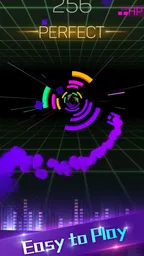
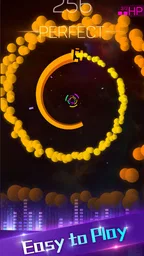
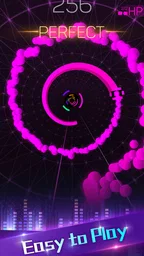
I’d describe Smash Colors: Music Ball Rush as a quick, hands-on music game: you guide a ball through color-matching play while the music sets the pace. It’s easy to understand the basic appeal before you commit to a long session, and that makes it a convenient choice when I want a little focused play rather than a deep game to manage. The important distinction is that this is not a music player or a rhythm game built around tapping along to every beat; the fun comes from steering and matching in time.
What the first few minutes feel like
The game is published by BADSNOWBALL HONGKONG LIMITED and sits in the music-game corner of mobile gaming. Its central idea is simple enough to grasp quickly: follow the action, watch the colors, and try to keep your ball on the right path as the music moves things along. That simplicity is a strength, especially if you’re new to rhythm games, but it also means the challenge depends on paying attention rather than learning a complicated set of controls.
On first opening it, I’d recommend treating the opening play as a short practice run instead of expecting an immediate perfect score. Let your eyes settle on the ball and the route before trying to react to every visual cue. The most useful adjustment is to focus on what is coming next, not only on where the ball is at that instant. That small shift makes the color-matching feel less like a last-second scramble and more like a rhythm you can read.
The game is free to download, with optional in-app purchases priced from $0.99 to $19.99 per item. I’d go in assuming the core experience is something to try at no cost, then decide later whether anything offered in the game is worth paying for. Purchases are not necessary to find out whether this style suits you, and it’s sensible to keep an eye on purchase prompts if you’re handing the phone to a younger player.
It has a 4.2 average from around 346,000 ratings, and it has passed 100 million installs. Those numbers suggest that the basic pick-up-and-play idea has found a broad audience, though popularity can’t tell you whether you’ll enjoy the timing demands. The game is rated Mature 17+, so it is not a title I’d choose for a child without first checking whether that age classification fits your household’s rules.
Getting comfortable before chasing a score
For a first session, use a quiet moment when you can give the screen your attention. The game’s music and color cues are part of the play, so trying to learn it while walking, watching something else, or dealing with constant interruptions is likely to make the controls feel less fair than they are. I’d also start with the sound at a comfortable level; the point is to catch the musical pulse, not to turn a quick game into a test of volume.
A practical way to learn is to separate looking from reacting. On the first attempt, notice how the ball moves and how the color changes relate to the route. On the next, make deliberate corrections rather than flicking at every moment. This is a small but useful habit in a game where visual attention and timing overlap. If you miss, treat it as information about when you reacted—not proof that you need faster hands.
One thing that can confuse newcomers is the difference between hearing the music and being able to predict the game’s movement. A rhythm can make the action feel readable, but listening alone won’t replace watching the colors and the ball. I found it more helpful to use the music as a guide for pacing while keeping my eyes on the immediate route. If you focus only on the soundtrack, you may notice a cue too late; if you stare only at the ball, the timing can feel abrupt.
Your first satisfying run
The first meaningful success is not necessarily a high score. It’s completing a stretch of play while making controlled choices instead of reacting in panic. Try to keep your attention slightly ahead of the ball, then make small, purposeful adjustments when the color or path calls for them. Once that begins to feel natural, you can aim for a cleaner run and pay more attention to how the music supports your timing.
That approach is especially useful if you usually play casual games in short bursts. A commute break, a pause between chores, or a few minutes waiting for someone can be enough to try a run without needing to remember a long story or manage a complicated team. I wouldn’t play it while crossing a street or doing anything that needs my eyes elsewhere, though. The bright, moving action asks for attention, and a “quick game” is still a game that can distract you.
If your first attempt feels messy, change one thing at a time. Keep your eyes on the route for one run; on another, pay more attention to the beat. This makes it easier to work out whether your trouble is timing, visual tracking, or simply unfamiliarity. Rapidly changing how you hold or move the device can make the result harder to judge, so a steady grip and a comfortable screen position are better starting points than trying to find a secret trick.
That is also why I wouldn’t recommend chasing perfection straight away. Music games can encourage repeated retries, and a few misses can turn a relaxing break into a frustrating loop. Decide before you start whether you want one casual run or a longer practice session. If you’re still tense after several attempts, stopping and returning later is often more helpful than forcing another try while annoyed.
Where it fits among music games
Compared with a conventional rhythm game that asks you to hit notes as they cross fixed targets, this one puts more emphasis on steering and matching colors. If you like the feeling of guiding something through a changing visual path, that distinction is appealing. If you prefer precise note lanes, familiar song arrangements, or a score built around tapping patterns, a more traditional rhythm title may suit you better. The choice is less about which style is objectively better and more about whether you want to guide or tap.
It also differs from a music player because the soundtrack is part of an active challenge rather than something you simply put on in the background. I wouldn’t pick it as a way to discover new artists or listen to an album from start to finish. Its value is in combining music with a visual task. That makes it a better fit for a short, engaged break than for background listening while working.
The game is available as version 1.1.79 and requires Android 7.0 or later. If you’re choosing between devices, check that the phone meets that minimum before installing. The interface and play are designed for a handheld screen, so I’d begin on the device you normally use for quick games rather than assuming a larger display will automatically make the timing easier. A larger view may help you see the path, but comfort and control still matter.
Small habits that make play smoother
Because the game combines color and movement, screen visibility matters more than it might in a text-heavy puzzle. If you’re outdoors in bright light, try turning the screen so glare is less distracting before blaming your reactions. In a dim room, keep brightness comfortable rather than unnecessarily high. These are ordinary adjustments, but they can reduce the feeling that a missed cue came out of nowhere.
Another useful habit is to keep sessions short while you’re learning. A few focused attempts give you a clearer sense of improvement than a long sequence of retries where fatigue sets in. Once the controls feel familiar, you can decide whether the game works for longer play. I’d also avoid treating every run as a test of reflexes: watching ahead and staying calm are just as important as responding quickly.
There is a trade-off in the streamlined design. Getting started is less demanding than learning a complex music game, but players who want deep customization, elaborate progression, or a strong story may find the basic format repetitive. I’d choose it for a direct, music-led challenge, not because I expect a sprawling campaign. That expectation makes the game easier to appreciate on its own terms.
Who I’d recommend it to
I’d suggest giving Smash Colors: Music Ball Rush a try if you enjoy colorful, reflex-based play and want something you can understand without studying a long tutorial. It can work well for casual players who like to improve by repeating short challenges, and for rhythm-game fans curious about a format that puts movement and color matching ahead of note tapping. Starting with a no-pressure run is the best way to see whether its pace clicks for you.
I’d skip it if you want a quiet, hands-off music experience, if visual motion tends to bother you, or if you’d rather play a game with detailed strategy and a longer-term narrative. I’d also be cautious about recommending it to younger players because of its Mature 17+ rating, regardless of how simple the basic action looks. The free download makes it easy to sample, but that doesn’t mean it suits every age or every kind of player.
Overall, I think this is a worthwhile option for short sessions when you want music to shape an active challenge. Give yourself a couple of calm attempts, watch the path as well as the ball, and use the beat to support your timing rather than relying on it alone. If that combination feels satisfying, there’s a good chance you’ll keep coming back; if you’re hoping for a traditional tap-to-the-beat game, another music title will probably be a better match.
What we like
- One-touch controls make it easy to start playing.
- Short levels suit quick play sessions.
- Colorful visuals give each run a lively look.
- Music helps set the pace of each level.
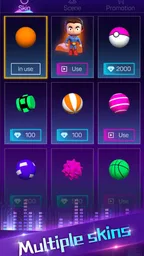
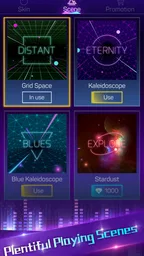
- Unlockable ball skins offer simple customization.
What could be better
- The core gameplay can feel repetitive over time.
- Later stages may demand precise timing.
- A missed move can end a run quickly.
- Ads may interrupt play depending on the version.
- The music selection may not suit every taste.







