

Jewel Coloring review
 Analysis by Appsdrops
The first thing I notice about Jewel Coloring is how little commitment its premise asks for: sort jewels into a pixel-art picture, one small decision at a time. It is a casual puzzle game from TaTa Game Technology Limited, and that combination of sorting and coloring gives it a quieter feel than a quick-reaction game. I would reach for it when I want something to occupy my hands without demanding my full attention.
From a simple move to a clear picture
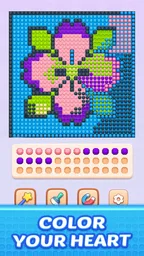
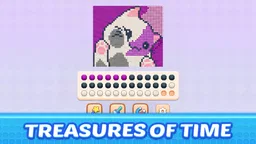
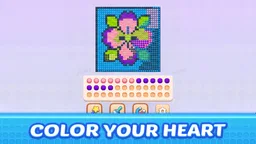
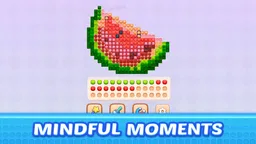
The central action is easy to understand: work with jewels and sort them so that a pixel-art image takes shape. That makes the game approachable even if you do not usually play puzzles. Instead of learning a long set of rules before getting started, you can focus on the immediate choice in front of you and watch it contribute to a larger picture.
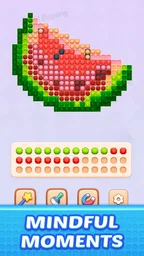
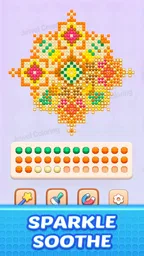
That connection between action and image is the hook. A sorting move is not merely a tile shifted out of the way; it helps turn a scattered arrangement into recognizable art. I find that more satisfying than a puzzle where every move feels like abstract bookkeeping. The visual destination gives your attention somewhere to go, even when the individual steps are repetitive.
The best way to approach a new picture is to look at the available colors and the image’s broad pattern before tapping quickly. When several areas appear to need attention, I would work steadily rather than treating each move as a race. That small pause helps keep the puzzle relaxing: you are making progress by noticing what fits, not by trying to beat an imagined timer.
There is also a useful distinction between enjoying the sorting and enjoying the finished artwork. If you like both, the loop has two sources of appeal: the small decisions along the way and the satisfaction of seeing the image come together. If you only want a demanding logic challenge, the picture-making emphasis may feel light. The game’s casual design is a strength for unwinding, but it is not the same thing as a deep strategy puzzle.
Why the moves feel easy to follow
The pixel-art format makes progress legible. You can connect the act of organizing jewels with visible changes in a picture, which helps a short session feel complete even if you are not trying to master a complex system. It also makes the game more inviting for someone who might find a board of identical pieces or a number-heavy puzzle cold.
I would not treat every completed image as a test of speed or skill. The appeal here is closer to arranging a small visual task until it clicks. That makes it a reasonable pick for a quiet break, a few minutes between chores, or a low-key wind-down when an action game would feel too intense.
The rhythm: move, notice, continue
The feedback loop is straightforward: sort jewels, see the picture progress, and decide what to handle next. Because the response is tied to a visible artwork, the game can provide a sense of forward motion without requiring a dramatic win moment after every move. For me, that is the right sort of feedback for a game whose main promise is calm, incremental progress.
A practical tip is to treat each small stretch of play as a visual check-in. After a few moves, look at the image again rather than tapping on autopilot. That makes it easier to appreciate what has changed and to spot where your attention should go next. It is a simple habit, but it helps the sorting feel intentional rather than like repetitive tapping.
The trade-off is that a gentle loop can become predictable. If you need varied objectives, complicated rules, or a strong sense of pressure, a more demanding puzzle game may hold your interest better. Jewel Coloring’s value depends on whether you enjoy repetition when it steadily produces a visible result. I do, especially when I want a task that stays light.
It is also a better fit for divided attention than a game that punishes every pause. In an everyday setting, I could imagine opening it while waiting for a kettle, sitting through a short break, or taking a breather after work. The useful part is not that it transforms those moments; it gives them a small, self-contained activity. I would still choose something else if I wanted a game that rewards close concentration for a long stretch.
When another kind of puzzle makes more sense
Compared with familiar match-style games, this one puts the emphasis on sorting jewels into art rather than chasing a chain of rapid matches. Compared with a traditional jigsaw, its pixel-art and jewel-sorting premise offers a more compact, piece-by-piece activity. Those comparisons are about the kind of attention each game asks for: quick pattern reactions in one case, physical-looking assembly in another, and gradual visual organization here.
If you like solving puzzles by planning several moves ahead, a logic game with more explicit constraints may be a better choice. If you want a fast score chase, a reflex-based casual game is likely to provide more urgency. I would choose this game when I want the middle ground: enough interaction to keep me engaged, but not so much pressure that I have to set aside everything else.
What the reward is—and why a new round can appeal
The main reward is the transformation of the image. Each bit of sorting contributes to a picture, so the pleasure comes from seeing order emerge from the separate jewels. That is a modest reward, but it suits the mood. The satisfaction is less about proving that you have beaten an opponent and more about finishing a visual task you chose to spend a little time on.
That also explains why another session can sound appealing: a completed picture gives the activity a natural stopping point, while the idea of making another image offers a reason to return. I like that kind of loop when I want to play in short bursts. There is no need to turn a brief session into a long appointment; the picture itself provides a simple sense of closure.
For a more satisfying session, I would avoid rushing through the final part just to reach the end. The last visible areas can make the artwork feel complete, and taking a moment to notice the finished arrangement gives the reward more weight. If you tend to play while distracted, that small pause is also a way to make the game feel like a break rather than background tapping.
Still, the reward is visual and gradual, not a substitute for deep narrative or competitive progression. Players who want story, multiplayer rivalry, or a constantly changing challenge should look elsewhere. I see the game as a small, repeatable activity, not an all-purpose entertainment choice. Its appeal is strongest when that modest scope is exactly what you are after.
Choosing a comfortable session
Because the core task is easy to grasp, I would recommend trying it in a short window first. Notice whether you enjoy the act of sorting as much as the developing picture. If the image gives you a reason to keep making moves, the game is doing its job. If you find yourself wishing for more strategic depth almost immediately, that is a useful sign that another puzzle style will suit you better.
This is also the kind of game I would share with someone who wants a casual activity but does not want to learn elaborate controls. Its Everyone age rating reflects its broad intended audience, and the concept is simple to explain. That does not mean every player will enjoy the same pace; people who prefer intense competition or intricate systems may find the experience too gentle.
A gentle loop, with a clear limit
Jewel Coloring is free and sits in the casual-games space. It has a 4.8 average from around 225,000 ratings, with more than 10 million installs. Those figures suggest that the simple premise has found a substantial audience, but I would still judge it by whether its particular mix of sorting and pixel art matches the way you like to relax.
The game is on version 1.23.1 and supports Android 6.0 or later. Its release date is February 25, 2026, so it is a relatively recent option for players browsing casual puzzles. I would check that your device meets the operating-system requirement before installing, then give the core loop a fair try rather than expecting a sprawling game with many different modes.
My overall take is that this is an easy recommendation for someone who enjoys small, visual tasks and wants to make progress without a steep learning curve. I especially like the link between each sorting action and the artwork taking shape; it gives repetition a purpose. The main limitation is the same feature viewed from another angle: if you need constant novelty or demanding decisions, the measured pace may wear thin.
So I would pick it for a quiet pause, a short commute wait, or a low-pressure evening moment, and I would skip it when I wanted a serious logic workout or a fast competitive rush. The loop is simple—sort, see the picture change, enjoy the result, then decide whether another image sounds relaxing. For the right mood, that is enough.
What we like
- Easy coloring controls make the game accessible to casual players.
- Gem artwork offers a relaxing alternative to fast-paced games.
- Short coloring sessions fit well into brief breaks.
- Completing pictures provides a simple sense of progress.
- The jewel theme gives the coloring pages a distinctive look.
What could be better
- Coloring gameplay may feel repetitive over time.
- Players seeking a challenge may find the tasks too simple.
- Some pictures or features may require in-game purchases.
- Ads may interrupt play depending on the version.
- The game offers limited appeal to players who dislike coloring.







