





Imposter Game - Party Edition review
 Analysis by Appsdrops
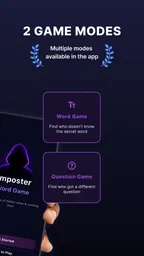
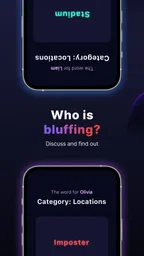
I like party games that turn a quiet room into a lively argument, and Imposter Game is built around exactly that kind of social energy. It is a word game in which players exchange clues while trying to work out who does not belong. The appeal is less about mastering a complicated ruleset than about reading the people around you: a confident answer may be a bluff, while a hesitant one can be perfectly innocent. When a group is willing to talk, tease, and occasionally accuse the wrong person, it has the ingredients for a good shared evening.
Why the first rounds are easy to start
Imposter Game, developed by Sven Vucak, has a clear premise that is easy to explain before a round begins. Players give clues, listen for answers that seem out of step, and try to identify the impostor. That makes it a natural choice for a gathering where not everyone knows one another or has played a party game before. I would still explain the central idea aloud rather than assume every newcomer will understand the social deduction immediately; a short demonstration can get people into the rhythm faster.
The early goal is refreshingly human: pay attention, contribute a clue, and decide whom you trust. Unlike a word puzzle that asks you to search for one correct answer alone, this format makes each person’s contribution part of the puzzle. A clue has to be useful enough to show that you understand the topic, but not so revealing that it removes the uncertainty that makes the round fun. That balancing act gives even a simple word prompt a little tension.
In practice, I would use it when a group is waiting for food, winding down after a meal, or looking for something to play between longer activities. It suits people who enjoy conversation and playful suspicion more than people who want a solitary challenge. If your friends are comfortable improvising, the game can get going quickly. If they are shy, unfamiliar with one another, or reluctant to speak in front of a group, the same clue-giving format may feel more like pressure than entertainment.
The most useful early-round tip is to agree on the pace before starting. If everyone takes too long to craft the perfect clue, the energy can drain away; if answers fly out immediately, quieter players may not get a chance to participate. I would invite each person to keep a clue brief and then move on. This does not change the game’s rules; it is simply a practical way to keep a mixed group involved and preserve the quick, conversational feel the premise depends on.
What counts as progress in a social word game
There is no reason to judge progress here by a long solo campaign or a growing collection of complicated skills. The satisfying progress is in the group learning how to play better together: people become more careful about how much they reveal, listeners get better at spotting answers that do not fit, and the impostor learns to sound plausible without overexplaining. Those are social signals, not a promise of a particular unlock system, and they are enough to give repeated rounds a sense of development.
That distinction matters if you are deciding whether this is the right kind of game for you. Players who need visible milestones, a clear route through levels, or a steady stream of rewards may find the appeal less durable. Imposter Game’s central loop asks the group to supply much of its own variety through different personalities, clue styles, and conversations. I find that a strength when the people are the main event, but it also means a familiar group can eventually feel that it has seen the same basic shape of round before.
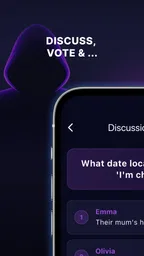
The challenge is partly about words and partly about social reading. A vague clue can protect the speaker, but it can also make an innocent player look suspicious. A highly specific clue can establish credibility, yet it may help the impostor catch up. One useful approach is to listen not only for whether a clue sounds clever, but for whether it fits the level of detail other people are using. That comparison gives the group a more grounded basis for discussion than simply accusing whoever seems nervous.
For a first session, I would avoid treating every uncertain answer as proof. Ask the group to explain what made a clue feel unusual, then let the discussion move on. This keeps the game playful and makes it easier for beginners to learn how the social deduction works. It also avoids a common party-game problem: one loud player dominating the conversation while everyone else becomes an audience. Making space for each person to speak is a small adjustment with a noticeable effect on the round.
How the difficulty changes with the group
The game’s difficulty is naturally shaped by who is playing. A group that knows one another well may recognize personal habits and catch a bluff quickly; strangers may have fewer social cues to work with, but they may also be less worried about being judged. Players who enjoy wordplay can make their clues unusually subtle, while a more casual group may keep things broad and funny. That flexibility is a reason I would bring it to a varied gathering, though it also means the experience can differ substantially from one table to another.
There is a trade-off between making the discussion lively and making it fair. If people are allowed to debate endlessly, confident players can steer the decision even when their reasoning is thin. If the group votes too quickly, the quieter participants may never have a chance to explain what they noticed. I recommend a simple conversational boundary: let everyone offer a short observation before the group settles on its decision. It gives the game room for suspicion without turning each round into a debate that outlasts the fun.
Imposter Game is a word title, but it does not reward vocabulary in quite the same way as a crossword, word search, or spelling challenge. Those alternatives are better if you want a measurable solo test, a calm activity, or a puzzle with an objectively checkable answer. This game is better when you want language to serve a social purpose: hinting, concealing, and interpreting. A group that expects every clue to have one obvious right or wrong reading may be frustrated by the ambiguity, because uncertainty is part of the experience rather than a flaw to solve away.
It also helps to choose the moment carefully. I would not use it as the main activity for people who are trying to focus on something else, or for a group that has little patience for taking turns. On the other hand, it can work well as a short interlude at a family gathering or casual get-together, especially when people want to interact without needing a board, a long setup, or deep knowledge of a fictional world. The best fit is a group ready to listen as well as speak.
Keeping the fun from turning into pressure
The game’s retention comes from replaying the same basic social problem with different people and different clues, rather than from an elaborate progression ladder. That can be enough for a lively group: one round prompts a rematch, and the rematch gives someone who was misread a chance to turn the tables. But the format depends heavily on the group’s mood. If players are tired, distracted, or already familiar with one another’s usual bluffing habits, the conversation may lose its surprise sooner than it would in a more varied gathering.
For that reason, I would treat it as a game to bring out at the right time, not an activity that must fill an entire evening. A few rounds can be a satisfying break; insisting on continuing after the group has run out of fresh energy can make the repetition more obvious. Rotating who starts the discussion, encouraging different people to explain their reasoning, and taking a break between sessions are simple ways to refresh the social side without assuming the app has hidden modes or extra mechanics.
There is a small but important distinction between playful bluffing and making a player feel personally targeted. Because suspicion is the point, a group should keep accusations focused on clues and answers rather than someone’s personality. I would especially make that clear with younger players or people who have just met. The game is rated Teen, so it is sensible to consider whether the tone and group dynamic suit the people involved, rather than assuming that a party label automatically makes every setting appropriate.
As a free game, it is easy to try without paying upfront. In-app purchases are available, with items priced from $2.99 to $12.99 each, so anyone who wants to keep spending to a minimum can simply decide in advance whether optional purchases are relevant to them. I would not treat paid items as necessary to enjoy the core social premise based on what the game is about. If you are evaluating value, the more important question is whether your regular group enjoys this style of conversation enough to return to it.
Who should download it, and who should pass
The audience response is strong: Imposter Game has a 4.9 average from around twelve thousand ratings and more than a million installs. That scale suggests plenty of people have tried it, but it does not guarantee that every group will click with the format. Ratings are a useful sign of broad appeal, while your own group’s appetite for bluffing and discussion is the better predictor of whether it will become a regular choice.
The game is currently at version 4.4.0 and is listed for Android 7.0 or later. It was released on November 7, 2025, which makes it a relatively recent title to consider if you are comparing party games. These details are useful when checking device compatibility, but they do not change the main decision: this is for people who want a social word game, not for someone seeking a large solo campaign or a highly structured competitive ladder.
I would recommend it to friends who enjoy guessing games, bluffing, and lively discussion, especially when they want an activity that does not require everyone to learn a complicated strategy first. I would skip it if your group dislikes being put on the spot, prefers puzzles with definite answers, or wants visible long-term goals to work toward. It is also a weaker pick when one or two people tend to monopolize group conversations, unless everyone is willing to make room for quieter players.
My verdict on its staying power
What I like most is the way a small clue can become a whole conversation. The game gives players a reason to listen closely, and its tension comes from deciding whether a person’s words fit rather than from memorizing a large rulebook. What limits its staying power is the same thing that makes it easy to approach: the group supplies much of the variety. When the people are engaged, that is an advantage; when they are not, a new round may not be enough to revive the room.
Overall, Imposter Game is a worthwhile pick for a casual gathering that wants a word-based social deduction game with room for bluffing and discussion. I would keep it in mind as a short, repeatable party activity, while choosing a conventional word puzzle for solo play or a more structured game for players who want clear advancement. Its best progression is the group getting sharper at reading clues and one another, and that is compelling only when everyone is enjoying the conversation. If that sounds like your friends, it is easy to see why the game has found an audience.
What we like
- Quick rounds make it easy to play between other activities.
- Simple rules help new players join without a long tutorial.
- Social deduction encourages lively discussion among friends.
- The party format gives groups a shared activity without special equipment.
- Different roles can keep repeat rounds feeling varied.
What could be better
- Gameplay depends on having a group ready to play together.
- Players may need to agree on rules before starting a round.
- Quiet players can find it harder to take part in discussions.
- Rounds may feel repetitive for groups that play often.
- The experience is less engaging when players are not in the same social setting.







