




Idle Cat Gunner: Shooter RPG review
 Analysis by Appsdrops
I like casual games best when they give me something to check in on without demanding a long, uninterrupted session. Idle Cat Gunner: Shooter RPG is aimed squarely at that kind of play: a cat-themed shooter with idle-RPG framing, designed to make short visits feel worthwhile. My main question with a game like this is whether the waiting between bursts of action feels satisfying or merely asks me to keep coming back. Its appeal depends on how much you enjoy gradual progress and a playful combat theme, rather than on deep, hands-on shooting.
Quick visits, gradual progress
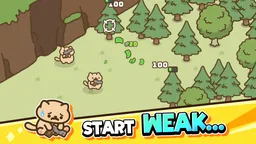
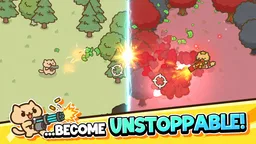
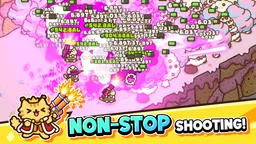
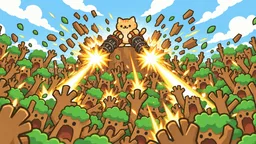
As a casual game from NEPTUNE(TREEPLLA), Idle Cat Gunner has a clear premise: build up a feline fighting force and let the RPG progression give brief sessions a sense of direction. The cat-and-gun contrast makes the concept easy to understand, while the idle angle suits players who would rather make a few decisions, leave, and return later than stay focused on every moment of combat.
That rhythm is useful in ordinary situations. I can imagine opening it while waiting for a ride, checking how things are going during a break, then putting the phone away without needing to reserve the evening for a match. The important distinction is that this is not a replacement for a precise action shooter. If what you want is constant aiming, movement, or split-second decisions, the idle-RPG approach is likely to feel too hands-off.
The game is free to install and rated for Everyone, which makes it approachable for a broad audience. It has an average rating of 4.4 from around 72,000 ratings, and has passed 1 million installs. Those figures suggest that the format has found an audience, though they cannot tell you whether its pace will suit your own taste. I would treat them as a useful sign of reach, not a promise that every player will enjoy idle progression.
What “idle” means for your time
Idle games can create the impression that progress should always be fast, but the more useful expectation is steady rather than immediate. Here, the draw is the loop of returning to a developing cat army and continuing its shooter-RPG journey. That makes it a better fit for frequent small check-ins than for someone who expects every tap to produce a dramatic change.
A practical way to decide whether the pacing works for you is to try it in short sessions instead of treating it as a game that must be played continuously. Pay attention to whether you enjoy the feeling of picking up where you left off. If you find yourself wishing you could directly control every fight, the idle structure—not a lack of attention on your part—is probably the mismatch.
It also helps to separate “something is happening” from “I need to watch it happen.” Idle progression is most convenient when the game can fit around other tasks. On a busy day, that can be a strength: I do not have to plan a long session just to engage with the central idea. On the other hand, players who want a sustained challenge may find that brief check-ins do not provide enough active involvement.
When the action and progression pile up
Heavy-use moments are less about demanding reflexes and more about how much you want to manage in one visit. If you return after being away, it is tempting to spend time catching up and pushing progression before closing the game again. I would keep those visits purposeful: decide whether you are checking progress or settling in for a longer look, rather than opening it repeatedly out of habit.
That approach is useful for managing attention as well as screen time. An idle game can be easy to revisit whenever there is a spare minute, but repeated interruptions are not automatically more satisfying than one deliberate session. If you prefer to keep games from taking over your day, treating it as a small break rather than a background obligation is a sensible way to enjoy the format.
For players who like comparing games, the key trade-off is between this kind of incremental RPG loop and a conventional arcade shooter. A direct-action alternative gives you more moment-to-moment control and makes each encounter depend more visibly on your play. Idle Cat Gunner is the better choice when you want the feeling of a growing team without needing to steer every second. Neither style is inherently better; the right pick depends on whether you value involvement or convenience more.
Reliability and what I would check
I would judge reliability in a practical way: can I return to the game, understand where I am, and continue without the session becoming a chore? The game’s current version is 1.1.69, but a version number alone does not tell me how it behaves on every phone or after every interruption. If you are deciding whether to make it a regular part of your routine, try it through the kinds of pauses you normally have—closing the app, switching tasks, and coming back later.
That simple trial is more useful than assuming an idle game will handle every recovery situation perfectly. If you often play while moving between apps, see whether resuming feels clear and comfortable on your device. If you mainly play in one short stretch, recovery matters less than whether the core pace holds your attention. In either case, I would avoid building a routine around constant check-ins until you know that the game’s return-and-continue rhythm suits you.
There is also a difference between a game being easy to pick up and being rewarding over time. Idle Cat Gunner’s premise is immediately legible, but long-term enjoyment will depend on whether you like the gradual RPG side enough to keep returning. I would recommend it to someone who enjoys seeing a roster or army develop in the background; I would not recommend it as a substitute for a story-led RPG or a skill-focused shooter.
Device fit and spending choices
The minimum operating-system requirement is Android 8.1, so it is worth checking your device’s software before installing. That requirement does not establish how smooth the game will feel on a particular handset, especially if it is older or already under strain. If performance is important to you, start with a short session on your usual device and see whether the interface and pacing feel comfortable before committing to regular play.
I would be cautious about making assumptions about battery use or resource demands from the idle label alone. A game can be designed around short visits and still behave differently from one phone to another. If your device has limited storage, battery life, or processing headroom, the sensible test is to install it when you have time to assess it, rather than relying on expectations based on other idle games.
There are in-app purchases, with individual items priced from $0.99 to $49.99. The free entry point makes it easy to try the basic experience, but the broad range means I would look carefully at what a purchase offers before spending. A useful personal boundary is to decide in advance whether you are happy to play at the free pace. If not, consider whether a paid item would genuinely improve your enjoyment, rather than buying simply because progress feels slower than you hoped.
For families, the Everyone rating is reassuring as a content classification, but spending is still worth discussing where children use the device. A no-purchase rule or a clear budget can prevent an easy-to-make impulse decision. For adults, the same advice applies in a different form: treat optional purchases as optional, and first find out whether the core idle loop is enjoyable without them.
Who will enjoy it—and who may not
I would point a casual player toward Idle Cat Gunner if they like cute character themes, incremental progress, and games that can be visited in short bursts. It may also suit someone who wants a light companion game alongside more demanding titles. The most revealing question is not whether you like cats or shooters in general, but whether you enjoy progress that does not require continuous direct control.
I would steer a competitive player or action-game fan elsewhere if they want precise input, a strong test of reflexes, or lengthy encounters built around active decisions. Likewise, someone who dislikes waiting for progression may find the idle structure frustrating. A conventional shooter is a better fit for hands-on combat; a more traditional role-playing game is a better fit if character development and a sustained narrative are the priorities.
It is also not necessarily the right choice for anyone who wants a game to occupy a full commute or a dedicated evening. Its casual framing points toward flexibility, not a guarantee of deep engagement in every session. Before making it your main game, ask whether you want a low-pressure loop to dip into or a substantial experience to focus on. That distinction will tell you more than the cute theme does.
My verdict on its pace
Idle Cat Gunner: Shooter RPG is a straightforward option for players who enjoy the contrast of a playful cat army and shooter-RPG progression, with the convenience of an idle-style routine. I see its strongest use as a short, low-pressure check-in between other activities, not as an intense action game. The main limitation is built into that appeal: less required attention can also mean less direct involvement.
With a free starting point, a broad audience rating, and a substantial player base, it is easy to understand why the concept attracts casual-game fans. Still, ratings and popularity cannot settle the question of pacing for you. I would try it if you like gradual progress and do not mind a lighter touch; I would skip it if you need every session to be hands-on. That is the clearest way to judge whether this particular mix of idle play, RPG framing, and feline combat belongs on your phone.
What we like
- Idle battles can earn rewards while you are away.
- A range of cats gives you options for building a team.
- Upgrading heroes provides a clear sense of long-term progression.
- Short stages suit quick play sessions.
- The shooter RPG mix adds variety to routine idle combat.
What could be better
- Progress may slow when upgrades require more resources.
- Idle rewards can make active play feel less rewarding.
- Team building may take time to understand for newcomers.
- Repeated combat encounters can become predictable.
- Some progression may encourage in-app purchases.







