





Home Pin 4: Pull the Pin review
 Analysis by Appsdrops
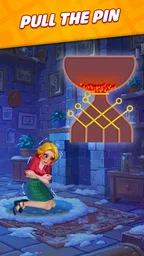
I like pin puzzles most when the challenge is not simply spotting a pin, but working out what will happen after I pull it. Home Pin 4: Pull the Pin builds its casual play around that kind of decision-making, then gives the puzzles a story setting with drama and humor. I found it best approached as a short, focused game: look at the layout, predict the consequences, and pull only when the order makes sense.
How the pin-puzzle routine works
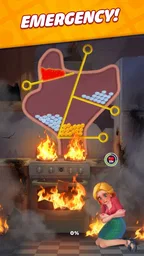
The basic appeal is easy to understand. A puzzle presents pins that hold parts of a scene in place, and I decide which one to remove first. The important question is not just “Which pin can I pull?” but “What will move, fall, or become reachable if I do?” A rushed choice can spoil an otherwise simple-looking arrangement, so the game rewards a moment of planning before each move.
That makes it a natural fit for small breaks. I can open it when I have a few spare minutes, work through a puzzle, and put it aside without needing to learn a complicated control scheme. It also suits people who enjoy visual logic but do not want a long strategy session. The interaction is direct, while the order of actions supplies the thinking.
The story gives the puzzles a little more personality than a bare sequence of mechanical diagrams. Its tone mixes dramatic situations with humor, which helps make progress feel like part of a light narrative rather than a string of unrelated tests. I would not choose it primarily for a deep story, but the narrative framing is a welcome reason to keep moving from one puzzle to the next.
My most useful habit was to pause before the first pull and trace the likely chain reaction. I look for what a pin is holding back, what might fall into another area, and whether removing it could block a later move. That quick mental rehearsal is more valuable than tapping rapidly. When a layout seems confusing, I find it helpful to reduce it to one question at a time: what is currently trapped, and what needs to happen before it can move safely?
Small habits that make puzzles clearer
A repeatable routine helps more than trying to remember every previous solution. I scan the whole scene first, identify the pins that appear to control the largest pieces, then consider which move has the fewest unwanted consequences. If two choices seem equally plausible, I prefer the one that preserves more options for the next step. In pin puzzles, keeping the board flexible is often safer than committing to a dramatic first move.
When I get stuck, I avoid repeating the same sequence immediately. Instead, I reconsider the dependency order: perhaps I am trying to release something before creating a safe place for it, or perhaps a pin that looks central is actually protecting a useful position. This is a practical way to learn from a failed attempt without turning each puzzle into random trial and error.
The game is also easy to fit around everyday interruptions. I can play while waiting for a drink or during a quiet part of a commute, then return to the same kind of visual reasoning later. It is a better match for brief attention than a game that expects a long uninterrupted run. If you often have only a few minutes at a time, that stop-and-start friendliness is a real advantage.
Check the practical details before settling in
There are a few simple things I would check before making it a regular time-killer. It is a free casual game from Gamee Global, with optional in-app purchases listed at $1.99 to $3.99 per item. If you prefer to avoid spending inside games, it is worth being deliberate around purchase prompts and making sure the device’s purchase controls suit your household. The core decision to try it does not require buying it upfront.
The game is rated Everyone, which makes its general audience broad, but I would still judge it by the person playing: the main draw is visual puzzle-solving and light story presentation, not a demanding action challenge. It runs on Android 7.0 or later. On an older device, checking that requirement before installing is a simple way to avoid an unnecessary download attempt.
On the store, it has a 4.4 average from around 70 thousand ratings, with more than 10 million installs. Those figures suggest that the pin-puzzle format has found a substantial audience, though popularity is not a substitute for personal taste. The release date is January 15, 2025, and the current version is 1.3.3. I would treat version details as a useful compatibility check rather than a reason to expect a particular feature or performance result.
One sensible play pattern is to separate solving from spending. I first give a puzzle a calm attempt, using the layout rather than rushing toward any shortcut or purchase option that may appear. If I am stuck, I take a short pause and inspect the dependencies again. That keeps the game’s main pleasure—the satisfaction of finding the right order—at the centre of the experience.
Where experience helps, and where it cannot
As the basic logic becomes familiar, I get faster by noticing relationships instead of treating every pin as an isolated choice. A pin that controls a large section deserves attention because its removal may affect several other parts of the scene. I also try to distinguish a move that is merely possible from one that actually advances the puzzle. This reduces unnecessary actions and makes the solution feel reasoned rather than lucky.
There is a trade-off, though: once I recognize a familiar arrangement, some puzzles can feel more like checking a known sequence than discovering a new idea. That is common to a focused puzzle format. If you want every session to introduce a substantially different mechanic, or prefer open-ended play where you can experiment freely, this may feel repetitive. Its pleasure comes from working through pin arrangements and seeing the story continue, not from broad systems or an expansive world.
I also would not recommend it as a substitute for a full-length narrative game. The story adds context and humor, but the moment-to-moment activity remains puzzle solving. Likewise, someone looking for fast reflexes, competitive play, or a complex simulation should choose a different kind of game. Home Pin 4 is strongest when the goal is a low-pressure mental break with a clear problem to untangle.
Compared with many casual alternatives, its appeal is more deliberate than a simple matching game or endless tap-and-score loop. You spend your attention on consequences and order, not on speed. On the other hand, a number puzzle or a deeper logic game may offer more variety for players who want layers of rules to master. I see this as the lighter option: approachable enough to pick up quickly, but still satisfying when a pin sequence takes a little thought.
For a smoother session, I would keep a few habits consistent: inspect the full layout before acting, protect options when the consequences are unclear, and change the plan after a failed attempt rather than repeating it blindly. These are not secret mechanics; they are simply good ways to approach the game’s visible puzzle logic. They also make it easier to decide whether a level is a quick win or one to leave for later.
Who will enjoy it most
I would recommend Home Pin 4 to someone who likes short logic challenges, wants a casual game that can be played in small gaps, and enjoys a little comic or dramatic framing around the puzzles. It is particularly well suited to players who naturally think ahead and enjoy the moment when a sequence finally clicks. The broad age rating and simple central interaction also make it approachable for a range of casual players.
I would suggest skipping it if you dislike repeating a puzzle after a mistaken move, want a highly varied set of activities, or expect the story to be the main event. And if you prefer puzzles with elaborate rules or a longer campaign structure, a more substantial logic title may hold your attention better. This game knows its lane: it offers pin-based problem solving in a light, story-led package.
My verdict after settling into its rhythm
My recommendation comes with a clear condition: enjoy the process of planning a few moves ahead. The game’s most satisfying moments come when I stop treating the pins as buttons and start reading them as a chain of cause and effect. Its light tone keeps that thinking approachable, while the possibility of repetition means it is best played in the mood for a compact puzzle rather than a major gaming session.
For a free casual game, it is an easy one to try if pin puzzles already appeal to you. I would begin with the straightforward workflow—scan, predict, pull, reassess—and use the story as a pleasant thread between challenges. If that rhythm sounds relaxing rather than restrictive, this is a good fit for spare moments. If you need constant novelty or deeper strategic systems, I would look elsewhere instead of expecting this format to become something it is not.
What we like
- Levels offer a quick challenge that fits into short breaks.
- Simple controls make it easy to start playing.
- Rescue scenarios give each puzzle a clear objective.
- Star ratings provide a reason to replay completed levels.
- The game can be played offline.
What could be better
- Some levels rely on trial and error.
- Repeated puzzle mechanics can feel predictable.
- Mistakes may require restarting a level.
- Ad interruptions can disrupt the flow of play.
- Later puzzles may feel more difficult without clear hints.







