
Hangman Words:Two Player Games review
 Analysis by Appsdrops
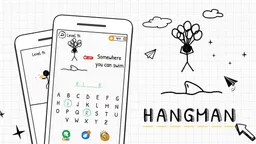
I like word games that get a group talking without requiring a long explanation, and Hangman Words: Two Player Games has a straightforward appeal: one person chooses a word, the other tries to uncover it before the drawing is complete. In practice, that familiar format makes it easy to start a quick head-to-head round with a friend, whether you have a few minutes to fill or want a small challenge during a break.
It is a free word game from Kerun Games, with a 4.9 average rating from around 327,000 ratings and over 10 million installs. Those figures suggest broad appeal, but the more important question is whether this particular take on hangman fits how you want to play. I see it as a handy digital companion to the pencil-and-paper version, especially when two people are together and want the game to handle the routine parts.
How a round works between two players
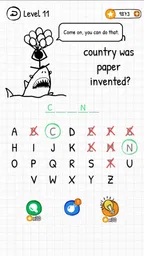
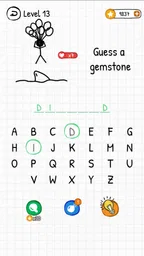
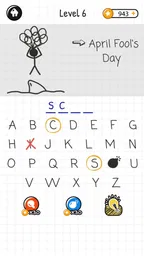
The central routine is easy to understand: players take turns setting and guessing words, using correct letters to reveal the answer and wrong guesses to bring the hangman closer to completion. The point is not to learn a complicated rulebook; it is to make choices about letters, word length and how much risk to take. That simplicity is the game’s strongest practical feature.
A good first session is best treated as a shared warm-up. Agree on whether you want familiar everyday words or a harder vocabulary challenge, then take turns being the setter. That small conversation matters because hangman can feel unfair when one player chooses an obscure word and the other expects a casual round. The app supplies the playing space, but a quick agreement on difficulty keeps the contest friendly.
I would use it in the sort of everyday gap where a board game would be too much effort: waiting for food, sharing a quiet break, or winding down with a family member. Because the game is designed around two players, it has a clear social purpose rather than asking one person to spend a long session alone. Its Everyone age rating also makes the basic concept suitable for a broad audience, though the best experience still depends on choosing words that suit the players.
One useful habit is to alternate who chooses the word rather than letting the more confident player set every puzzle. The setter gets to think about fair clues and an appropriate challenge, while the guesser has to make decisions with limited information. Switching roles keeps the game from becoming a one-sided test of vocabulary and gives both people a reason to stay engaged.
Set expectations before raising the difficulty
Hangman rewards players who think about letter frequency, but that does not mean every round should be a contest in obscure word knowledge. For a relaxed game, use words both players are likely to know. For a sharper challenge, agree to less familiar vocabulary before starting. This is a simple way to tune the social experience without assuming the game has a special difficulty system.
It also helps to decide how you will handle proper nouns, unusual spellings or words with multiple accepted forms. Those choices can prevent a dispute after several guesses have already been made. This is especially useful when playing with children or with someone learning English: keep the target vocabulary familiar, and treat the round as practice in noticing letter patterns rather than a test of obscure definitions.
Small habits that make guessing more deliberate
When I guess, I try not to burn turns by naming letters at random. I start with common vowels, then use what the revealed positions tell me about possible word shapes. Once a vowel appears, I look for likely combinations rather than immediately jumping to a full answer. This does not guarantee a win, but it makes each guess easier to explain and turns the round into a little exercise in pattern recognition.
A useful adjustment is to think about the word’s likely structure, not just its length. If a pattern suggests a common ending or a repeated letter, I weigh that against the letters already ruled out. The setter can make the contest more interesting by choosing words that are fair but not instantly obvious. The balance is important: a word that is too easy ends the exchange quickly, while an unfairly obscure choice can make every deduction feel pointless.
For a quick session, I would keep rounds moving rather than overanalyzing every possibility. If someone is stuck, the setter can offer a broad verbal hint in person, provided both players agree that hints are allowed. That keeps the game friendly and gives less experienced players a way to learn how letter patterns work. It is also a good reminder that the rules can be adjusted socially without needing to assume extra in-game tools.
Another repeatable approach is to use a simple rotation: one round with a familiar word, one with a slightly trickier choice, then switch who starts. This prevents one player from controlling the pace and makes it easier to compare strategies across turns. It works particularly well for a short family session, where an escalating challenge can be more fun than repeatedly choosing words at the same level.
What to check before making it a regular pick
The game is free to download, with optional in-app purchases listed from $0.99 to $4.99 per item. I would treat those purchases as optional rather than a reason to start spending: the appeal of hangman is its basic two-person guessing loop. If you are considering a purchase, check what is offered in the app before paying and decide whether it adds something you will actually use.
The current version is 1.5205, and the stated minimum operating system is Android 6.0. That makes compatibility worth checking before you plan a shared session on an older device. The game’s word-game category and simple premise make it an approachable choice, but the actual fit depends on whether both players can access it and are comfortable using a phone for a face-to-face activity.
Store feedback is notably positive, with 2.1K reviews alongside the large rating total. I take that as a reassuring signal of general satisfaction, not proof that every player will enjoy the format. Hangman is inherently turn-based, and the guessing can feel slow if you prefer games with constant action, larger groups or more varied objectives.
Where this version fits—and where it does not
Compared with paper-and-pencil hangman, a phone-based version is convenient when you do not have anything to write with and want the device to keep the game organized. The trade-off is that paper is more flexible: a group can invent house rules, sketch freely and adapt the setup without interacting with an app. If you are already sitting at a table with a pen, the traditional version may be just as quick.
Compared with solo word puzzles, this game’s defining advantage is the direct exchange between two people. A solo puzzle is better when you want a quiet activity on your own; this one makes more sense when another person is ready to take turns. It is also not the strongest choice for a larger gathering, because the basic setup centers on a pair. A group can still watch and suggest ideas, but that changes the experience from a balanced duel into a shared guessing session.
The main limitation is the narrowness of the core idea. Hangman can be satisfying precisely because it is simple, but players looking for a deep progression system, a broad collection of modes or a fast arcade challenge should choose a different kind of word game. I would not recommend it as a substitute for a full party game night either. It works best as a compact activity, not as the centerpiece of a long evening.
There is also a social trade-off in using a phone while playing with someone beside you. The screen can make the turns clear, but it can also pull attention away from the conversation. I find it works best when one person holds the device and both players focus on the same round, rather than treating the game as a reason for each person to disappear into a separate screen.
My verdict after weighing the routine
Hangman Words: Two Player Games is an easy recommendation for people who already enjoy the classic guessing game and want a convenient way to play it together. I appreciate that its premise is immediately understandable and that it can fit into short, ordinary moments. The most satisfying sessions come from setting fair word expectations, taking turns choosing the answer and using a deliberate letter strategy instead of guessing blindly.
I would skip it if you want solo depth, constant action, or enough variety to keep a large group occupied for a long time. I would also choose paper if customization and free-form house rules matter more than having a ready-made digital version. But for two people who want a familiar word challenge without a lengthy setup, it earns its place as a simple option. Its strongest quality is how quickly it turns a spare moment into a shared puzzle.
If that sounds like your kind of game, Hangman Words: Two Player Games is worth trying as a casual head-to-head pick. Just approach it for what it is: a focused hangman experience whose enjoyment comes less from bells and whistles than from the words you choose and the guesses you make. Kerun Games keeps the concept accessible, and the high average rating reflects its broad appeal, but your best measure will be whether you and your regular opponent enjoy the back-and-forth.
What we like
- Local two-player mode makes it easy to play together on one device.
- Simple rules make it suitable for quick casual rounds.
- Word guessing can help reinforce spelling and vocabulary.
- Rounds are short enough to fit into brief breaks.
- No internet connection is needed for local play.
What could be better
- The experience depends on having another person available to play.
- Repeated word choices may make long sessions feel predictable.
- Small screens can make letters harder to tap accurately.
- Players looking for solo play may find limited replay value.
- Ads may interrupt the flow depending on the app version.







