


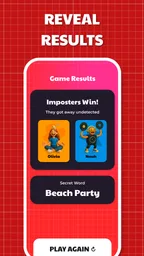
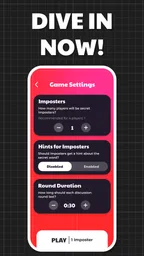
Fakeit: Imposter Game review
 Analysis by Appsdrops
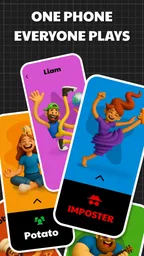
I’m most interested in party games when the rules are easy to explain and the fun comes from watching people react to one another. Fakeit: Imposter Game is built around that social setup: players try to identify the person who is secretly out of step with the group. It is a word game from smak apps, but its appeal is less about vocabulary drills than about conversation, attention, and a little friendly suspicion.
How the game works in a group
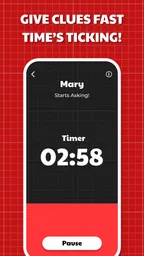
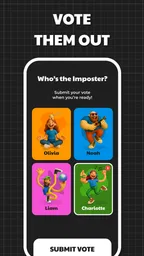
The premise is quick to grasp, which makes Fakeit a natural choice when friends want something livelier than taking turns answering trivia questions. Rather than asking everyone to solve a puzzle alone, it gives the group a shared mystery to discuss. The fun depends on people listening to each other, judging whether an answer sounds convincing, and deciding when to speak up.
That social focus is also the main thing to understand before installing it: this is not a word game I would choose for a quiet solo session. Its best use is as a prompt for face-to-face play, where players can hear the discussion and enjoy the reactions. If your group is already comfortable joking and bluffing with one another, the simple premise can get a round moving without a long rules explanation.
The game’s short store label is “Fakeit,” while its full name makes its impostor-party angle clearer. I find that distinction useful when deciding whether it fits a gathering: expect a group activity organized around guessing and social clues, not a conventional word search, crossword, or spelling challenge.
Readable presentation and a simple entry point
A party game needs to communicate what people should do without making the host stop the room for a tutorial. Fakeit’s central idea is straightforward enough to explain aloud, and that lowers the barrier for guests who have never played a social-deduction game. In a mixed group, I would still give a short spoken explanation before starting, rather than assume everyone understands the impostor premise from the name alone.
That quick explanation matters for more than convenience. Some players may be unfamiliar with the genre, may not be fluent in the language used by the group, or may simply prefer to know the objective before joining in. A host can make the first round feel less intimidating by describing the goal in plain language and checking that everyone knows when they are expected to contribute.
I would not treat the word-game label as a promise that the experience is equally easy for every reader. A person who finds written words difficult, processes text more slowly, or is playing in a second language may need extra time. The group can help by reading relevant prompts aloud when appropriate, allowing a pause before discussion, and avoiding pressure to answer instantly.
Social play, movement, and sensory comfort
Because the core appeal is discussion, players can usually take part through listening and speaking rather than relying on fast physical reactions. That is a welcome contrast with party games built around tapping quickly, moving a character, or coordinating complex controls. Still, speaking in a group is not accessible or comfortable for everyone. A shy player, someone with a speech difference, or a person who finds spontaneous conversation tiring may prefer to observe first or contribute in shorter turns.
For a considerate host, the practical adjustment is to make participation flexible. Give people a moment to think, do not turn hesitation into evidence against them, and let a player pass on a question if they need to. These small choices preserve the playful suspicion of the game without making social confidence the price of admission.
The setting also changes how well this kind of game works. In a calm living room, it is easier to follow who is speaking and catch the nuance in a reply. In a noisy café or a crowded family gathering, overlapping conversations can make clues harder to hear. I would choose a quieter corner, keep the group close enough to hear one another, and avoid running a round while people are also trying to talk over music or announcements.
That recommendation is about the social format, not a claim that the game has particular audio, display, or accessibility settings. If someone in the group depends on a specific assistive feature, I would check the current app experience on their device before planning a session around it. The game’s premise is easy to explain, but that alone does not guarantee that every screen or interaction will suit every player.
Where it fits in everyday life
A realistic use case is a small group waiting for food at home while one person gets dinner ready. Instead of opening a lengthy board game, someone can suggest a quick round, explain the idea, and let the conversation do most of the work. It can also suit a casual get-together when guests want an activity that gives everyone something to react to without requiring a dedicated table or a large collection of pieces.
For that kind of moment, I would make the group’s comfort the priority. If people are meeting one another for the first time, begin with a low-pressure round and avoid treating every suspicious answer as a personal accusation. Among close friends, playful teasing may be part of the fun; among new acquaintances, it can land differently. The same game can feel welcoming or awkward depending on how the host frames the bluffing.
Fakeit is less suitable when the group cannot easily share a conversation. A remote call with unstable audio, a loud public place, or a gathering where several people do not share a comfortable language may weaken the central experience. In those situations, a turn-based puzzle or a game with clearer individual actions may be a better fit, because players are less dependent on reading the room and catching spoken details.
How it compares with other word and party games
Compared with a traditional word puzzle, Fakeit asks less of a player’s solo vocabulary and more of their ability to notice what other people say. That makes it a different kind of challenge: a strong word-game player does not automatically dominate, while someone who enjoys conversation may have an advantage. If your group wants quiet concentration and a clear right-or-wrong answer, a crossword or word search is likely the better pick.
Compared with a general social-deduction game, the word-game framing gives the group a more focused topic for its suspicion. The trade-off is that the fun depends on keeping the discussion understandable and engaging. Players who dislike bluffing, being questioned, or having their choices analyzed may find the premise uncomfortable even when everyone is being friendly.
One useful way to choose is to ask what the group wants from the next few minutes. For a lively exchange where people can make guesses about one another, Fakeit has a clear purpose. For a game night centered on strategy, a long campaign, or individual progression, it is not the category I would reach for. Its value is in the shared moment rather than a deep solo system.
Practical expectations before downloading
Fakeit is free to download, with in-app purchases listed from $5.99 to $59.99 per item. I would keep that in mind if you are installing it for a one-off gathering: the free entry point makes it easy to try, but optional purchases can matter to anyone who prefers to avoid spending inside games. The app is rated for Everyone, and it has reached over five million installs, which suggests that it has found a broad audience without telling you whether your particular group will enjoy its social style.
Its average rating is 4.6 from around 154,000 ratings, while roughly 750 written reviews offer another way to gauge player reactions. I see those numbers as useful context, not a substitute for matching the game to the people in the room. A highly rated party game can still be the wrong choice for a group that prefers low-pressure play or does not enjoy bluffing.
The game was released on October 22, 2025, and its current version is 1.27.0. It requires Android 7.0 or later. Before a planned gathering, I would check that the intended device meets that requirement and that the app is ready to open; doing this ahead of time is more considerate than asking everyone to wait while a host troubleshoots.
Who will enjoy it, and who may prefer something else
I would recommend Fakeit to friends who like conversation-led games, enjoy spotting inconsistencies, and are happy to play with a bit of theatrical suspicion. It is also a reasonable option for a host looking for a word-themed activity that does not ask every participant to solve a long series of puzzles alone. A group that enjoys improvising can create much of the energy themselves.
I would skip it for a solo player seeking a substantial vocabulary workout, for a group that dislikes bluffing, or for people who find spontaneous verbal exchanges stressful. I would also choose another game if the setting makes it hard to hear one another or if participants need specific accessibility support that has not been checked on the device. Those are not failures of the party-game idea; they are signs that this format may not match the situation.
An inclusive choice when the group sets the pace
My overall view is that Fakeit’s strongest feature is also the source of its biggest limitation: it puts social interaction first. That can make a simple word-game session feel lively and personal, but it means the experience depends heavily on the group’s communication style, noise level, and willingness to include quieter players. A thoughtful host can make a real difference by explaining the objective clearly, allowing people time to respond, and treating participation as flexible rather than demanding constant performance.
For an easygoing gathering with people who enjoy playful deduction, I think it is worth trying. For a quieter, more structured, or more individually paced session, I would pick a different word game. Fakeit: Imposter Game works best when everyone can hear the conversation, feels comfortable joining it, and understands that the point is shared amusement—not catching someone out at any cost.
What we like
- Quick rounds make it easy to play during short breaks
- Simple rules help new players join without a lengthy tutorial
- Social deduction creates suspense as players compare clues
- Works well for groups that enjoy bluffing and lively discussion
- Different secret roles can make each round feel unpredictable
What could be better
- The experience depends on having enough people to play
- Players may need to be in the same place to share clues easily
- Rounds can feel repetitive after several games
- Quiet players may struggle to contribute during discussions
- Imposters can have a tough time if clues are too specific







