


Easy Words - Word Puzzle Games review
 Analysis by Appsdrops
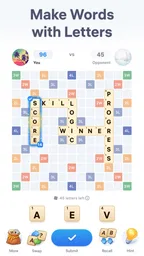
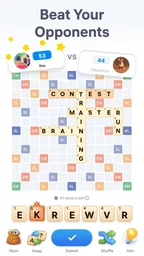
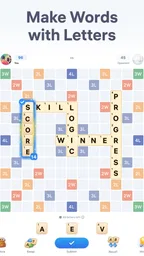
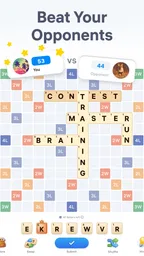
I like word games that make me think without demanding a long, uninterrupted session. Easy Words is built around quick head-to-head rounds: you work with a set of letters, try to form words, and aim to beat your opponent. That competitive framing gives each move a little urgency, while the familiar word-building task makes the game easy to understand. My main reservation is that this format rewards quick recall as much as vocabulary, so it suits some moods better than others.
How a round fits into an ordinary day
Easy Words is a free word game from Easybrain, designed for players who enjoy making words under a bit of pressure. It was released on October 16, 2023, and its current version is 2.20.0. The game is rated Teen. Its appeal is straightforward: rather than asking you to solve a large puzzle at your own pace, it puts your word-finding ability into a contest against another player.
The basic routine is simple enough to pick up without a tutorial-heavy learning curve. Look at the available letters, spot a word, and make your move. The interesting part is not only knowing a word, but noticing possibilities quickly. A useful habit is to scan for short, familiar combinations first, then check whether a longer word is hiding in the same letters. That keeps me from fixating on one difficult possibility while easier points slip by.
A realistic use case is a short break between errands or while waiting for a friend. I can start a round, focus on the letters for a few minutes, and put the phone away afterward. It is a better fit for small pockets of attention than for someone looking for a long narrative campaign or a quiet, open-ended crossword session. Because another player is part of the premise, the game has more of a contest feel than a solitary word puzzle.
That distinction matters when choosing between word games. Traditional crosswords reward patient deduction and clues; word searches ask you to visually locate fixed answers; anagrams often let you work at your own pace. Easy Words instead emphasizes generating words from letters while trying to outperform an opponent. If you enjoy that direct comparison, the format can make familiar vocabulary feel lively. If you dislike time pressure or prefer to mull over every answer, a solo puzzle is likely more comfortable.
Build a repeatable letter-scanning habit
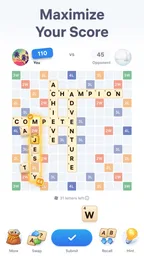
Players who get more consistent are not necessarily the ones who know the rarest words. They often use a repeatable scan. I start by checking common prefixes and endings, then consider whether the letters can form a plural or a familiar verb form. After that, I look for a longer option rather than repeatedly rearranging the same few letters. This is a practical routine, not a guaranteed scoring trick: the available letters still decide what is possible.
It also helps to avoid spending the entire turn testing one uncertain word. When a candidate does not come together quickly, I move on to another arrangement and return only if time and attention allow. That small discipline is useful in any competitive word round, but especially here, where hesitation can be more costly than failing to find an obscure answer. I would rather make a sound, readily recognized word than gamble on something I am not confident exists.
There is a trade-off between speed and breadth. Searching for a longer construction may produce a satisfying answer, but it can also distract from several shorter words. I treat the letters as a small search space: identify the obvious patterns, check a couple of alternatives, and stop when the next possibility is becoming guesswork. This approach makes a quick session feel purposeful without turning it into a study exercise.
Check the available settings before settling in
Before making the game part of a daily routine, I would take a moment to inspect the settings and controls that are actually present in the installed version. I do not assume a particular option will be available or that every player will want the same setup. The practical aim is simply to make sure the game behaves comfortably on your device, especially if you plan to play in short breaks or with sound on in a shared space.
It is also worth noticing how the game presents a round and how your actions are entered before you start playing competitively. A brief first session can show whether the interface feels clear at your preferred pace. If you tend to play one-handed or while commuting, check that you can comfortably read the letters and make selections without rushing into accidental moves. That is not a special strategy; it is a sensible way to avoid blaming your vocabulary for a control mistake.
Easy Words is free to download, with in-app purchases listed at $14.99 per item. I would begin without buying anything and decide later whether an optional purchase would genuinely improve your own use. The existence of purchases does not mean you need them to enjoy the central word-building idea. If you are considering spending, check the item and its terms in the app store first, then compare that cost with how often you expect to play.
The game has a 4.8 average from around 149,000 ratings, with about 3,500 reviews, and has passed one million installs. Those figures suggest that the basic format has found a substantial audience, but they cannot tell you whether its pace suits you personally. I would judge it by a few rounds: do you enjoy scanning letters against an opponent, or do you find yourself wishing you could pause and solve at leisure?
Get quicker without turning every round into a scramble
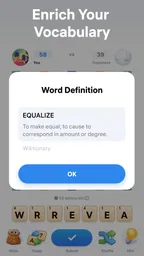
A useful improvement is to practice recognition rather than memorizing long lists of unusual words. Pay attention to the patterns you routinely overlook: a common ending, a short word tucked inside a longer one, or a different order for a familiar cluster of letters. After a round, the most useful reflection is specific: “I missed that ending” is actionable, while “I need to be better at words” is too vague to guide your next move.
I would also keep a steady pace instead of tapping through guesses. A fast but careless move can break concentration, while a brief pause to check the letters may prevent an avoidable mistake. The balance depends on the round, but the repeatable workflow is the same: scan, form a plausible word, verify it against the available letters, then move on. Treating each turn as a small routine makes the game easier to return to than trying to invent a new strategy every time.
For a light learning use, I can see playing alongside a child or a friend who enjoys vocabulary games, as long as the Teen age rating and the competitive style suit the people involved. The two players can talk about how they spotted a word after a round, turning a quick contest into a casual language exercise. It is not a substitute for structured spelling practice, and a player who finds losing frustrating may prefer cooperative or solo puzzles instead.
Where the competitive format has limits
The central strength of Easy Words is also its main limitation: the opponent changes the feel of a word puzzle. That can be motivating when I want a little challenge, but less appealing when I want to relax without comparing performance. Players with very different vocabularies or comfort with quick decisions may not find each contest equally satisfying. If your preferred word game is about careful clue-solving, the head-to-head structure may feel like the wrong emphasis.
There is another limit to what practice can do. A better scanning habit helps with familiar patterns, but it cannot make every letter set equally intuitive, nor does it guarantee that a player will always find the best answer. I would not treat a lost round as evidence that I need to memorize a dictionary. The more useful question is whether the game’s short-form challenge remains enjoyable even when I miss a word or an opponent moves faster.
Easy Words is also not the option I would choose for a long, quiet session devoted to one complex puzzle. Its appeal is compact play and direct competition, not the slow satisfaction of filling a grid from clues. If I want an unhurried solo challenge, a crossword or another single-player word puzzle is a better match. If I want to sharpen quick word recall while another person gives the round a clear goal, this game has the more relevant format.
It runs on devices with Android 8.0 or later. That makes the operating-system requirement worth checking before downloading, particularly if you keep an older phone or tablet in use. For most people choosing between word games, though, the bigger compatibility question is personal rather than technical: whether you like making decisions quickly and competing, or prefer to set your own pace.
Who I would recommend it to
I would recommend Easy Words to someone who already enjoys anagrams and wants the extra spark of trying to outplay an opponent. It also works for a player who wants a brief mental break with a clear task, rather than a game that asks for a long commitment. Its basic rules are easy to grasp, and the word-finding itself leaves room to improve through better scanning and calmer decision-making.
I would steer a few people elsewhere. If you find competitive pressure distracting, choose a solo word puzzle. If you want a rich story, complex progression, or a broad collection of activities, this focused word game is unlikely to meet that need. And if you only enjoy word challenges when you can take as long as you like, the opponent-centered format may make even a simple turn feel more hurried than fun.
A clear verdict for word-game fans
My verdict is positive, with a clear condition: you need to enjoy quick word construction and a competitive edge. The strongest way to approach it is to build a small routine—scan common patterns, check a few alternatives, and avoid wasting the whole turn on a doubtful guess—then decide whether the pace keeps you engaged. For players who want an approachable contest in short sessions, Easy Words is an appealing free choice. For those who prefer solitary, unhurried solving, another kind of word puzzle will be a better use of their time.
What we like
- Quick rounds make the game easy to play during short breaks.
- Word puzzles offer a relaxing alternative to fast-paced games.
- Simple controls are easy for new players to learn.
- Daily challenges can help keep gameplay feeling fresh.
- Offline play is useful when an internet connection is unavailable.
What could be better
- Some puzzles may feel repetitive after extended play.
- Hints can make tougher levels less challenging.
- Ads may interrupt the flow of play.
- Later puzzles can become difficult without using hints.
- The game offers limited variety beyond word-based puzzles.







