

Dice Words - Fun Word Game review
 Analysis by Appsdrops
I like word games best when they give me a clear reason to try one more round without turning every session into a chore. Dice Words - Fun Word Game sets out to make word play feel social and approachable, with a simple pitch: a great word game to enjoy with friends. It is a free game from FunCraft Games, and its dice-and-words identity gives it an easy-to-grasp place among casual vocabulary games.
A friendly start for word-game fans
The first appeal is how little ceremony the idea needs. You come to play with words, not to study a complicated rulebook or manage a sprawling collection of systems. That makes Dice Words a natural fit for short breaks, relaxed evenings, or a casual challenge with someone you know. I find that kind of straightforward invitation useful: it lets the game’s central activity take the spotlight.
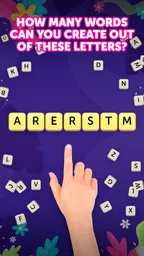
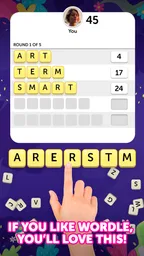
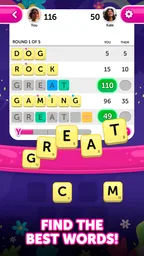
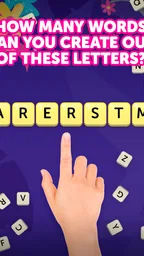
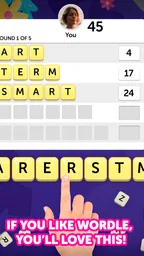
The title suggests a playful blend of dice and word-making, while the game’s store description emphasizes playing with friends. Together, those cues point toward a light, social take on the word-game genre rather than a solitary vocabulary course. The concept is easy to explain, which matters when you want to bring another player in without spending the first few minutes walking them through layers of setup.
That accessible framing also gives the game a broad audience. Rated for Everyone, it can suit players looking for familiar word-play entertainment, including families who want a game that feels less intense than a competitive action title. It is still a game, so the fun comes from engaging with its challenge rather than simply watching progress happen. I appreciate that balance: the format sounds welcoming without making the activity itself feel meaningless.
Small goals that make a round feel worthwhile
Good casual games give each session a manageable purpose. In a word game, that often means focusing attention on the next word, the next turn, or the immediate challenge instead of asking the player to think about a distant endgame. Dice Words’ concise premise supports that kind of play. I can approach it as a quick mental exercise, then decide whether I feel like continuing once I have had a taste of the action.
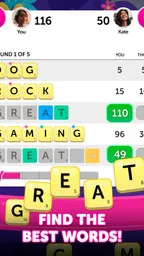
The social framing adds another possible source of motivation. Playing with friends can make a familiar word puzzle feel more personal: there is someone else to compare ideas with, share a laugh, or challenge in a friendly way. That human element can be more compelling than a long list of abstract objectives, especially for players who enjoy games as a way to spend time together. The game’s central promise is easy to understand even before a session begins.
I also like that the word-game category naturally rewards attention and flexible thinking. A round can feel satisfying when I spot a promising possibility or reconsider a set of letters from a different angle. That sense of discovery gives even a compact session a clear payoff. It is not necessary for every casual game to dress up its basic activity with elaborate goals; sometimes the pleasure of solving the immediate problem is enough to bring me back.
Progress signals and the value of a simple loop
Progress in a casual word game does not always need to arrive as a dramatic unlock. There is value in recognizing that I am getting more comfortable with the style of play, noticing possibilities faster, or becoming more willing to test an idea. Those are personal signals rather than claims about a particular reward system, and they can make repeated rounds feel meaningful without distracting from the words themselves.
Dice Words has reached a sizable audience, with over one million installs and an average rating of 4.9 from around 70,000 ratings. Those figures suggest that plenty of players have found the basic proposition appealing. They do not tell me exactly how every person plays, of course, but they do help place the game as an established choice for people browsing for a free word game with a social angle.
The distinction between progress and pressure matters here. A good progression loop gives me a reason to continue while still letting me stop comfortably. When the immediate activity is enjoyable, the game does not have to rely on a constant stream of unlocks to justify every minute. I would rather feel drawn back by a satisfying challenge than pushed forward by a checklist that makes a casual session feel like work.
Challenge, pacing, and the learning curve
Word games depend on a delicate difficulty balance. If a round feels too obvious, attention drifts; if it feels too demanding, a relaxed pastime can become frustrating. Dice Words’ accessible framing makes it sound suited to casual play, where the goal is to engage the mind without making every turn feel like a test. The best experience for me would be one in which I can settle into the rhythm and still have to think.
The dice-and-words concept also gives the game a distinctive identity among word titles. That combination suggests a playful element of chance alongside language skills, a pairing that can keep a familiar activity from feeling too predictable. I like games that allow me to respond to what is in front of me rather than follow the same mental route every time. The important thing is that the challenge remains understandable: I should be able to focus on making words, not deciphering an unnecessarily opaque system.
A gradual learning curve is especially helpful when a game is intended for a wide audience. New players can ease into the experience, while regular word-game fans can bring their own habits and vocabulary to each session. That broad appeal does not mean every player will find the same level of challenge, but the simple premise gives people a clear starting point. It is easier to return to a game when I remember what I enjoyed about it and can get back into the action without a lengthy warm-up.
Pacing is just as important as difficulty. A casual word game should respect the difference between a quick visit and a longer stretch of play. I value experiences that feel complete in small portions, because that makes them easier to fit into daily life. Dice Words’ compact pitch supports that sort of flexible use: it is easy to understand why someone might open it for a brief round, then stay longer if the social or mental challenge is hitting the right note.
What keeps the experience inviting
The strongest retention comes from a loop that remains pleasant after the novelty wears off. For Dice Words, the core appeal is the combination of word play and the possibility of sharing that activity with friends. The social angle can give rounds a different feel depending on who is playing, while the language challenge keeps the focus on thinking and choice. That is a more grounded reason to return than assuming every player needs a large set of unlocks or a constantly escalating reward track.
It is also a free game, which lowers the barrier to trying it. There are in-app purchases, with items ranging from $0.99 to $49.99, so players should be aware that optional spending is part of the experience. I see that as a practical consideration rather than a reason to judge the core idea before playing. Anyone who prefers to keep mobile gaming simple can pay attention to purchase prompts and decide for themselves what, if anything, is worth buying.
Retention can become pressure when a game makes a player feel that stopping means losing something important. A more comfortable rhythm leaves room for choice: play because the current round is enjoyable, pause when life gets busy, and return when the mood strikes. The game’s approachable word-game identity lends itself to that kind of relationship. I prefer it when a casual title feels like an invitation rather than an obligation, especially when its main attraction is a familiar activity I can enjoy at my own pace.
For players who like company, the promise of a game with friends may be the biggest reason to keep it installed. For solo-minded word fans, the appeal is more about the mental exercise and the immediate satisfaction of working with words. Either way, the concept is easy to place: this is not trying to be a sprawling role-playing game or a demanding strategy project. It is a casual word game, and its value depends on how much you enjoy that focused, social possibility.
Who may enjoy Dice Words
I would point word-game fans toward Dice Words if they want a casual option with a friendly tone and an emphasis on playing with other people. It may also suit anyone who wants a lightweight way to keep their mind engaged between other activities. The game’s Everyone rating makes its intended audience broad, while its simple description helps new players understand the general appeal before they commit to a session.
Players seeking a deep, story-driven campaign or a highly complex competitive system may be looking for a different kind of game. Dice Words’ appeal is more modest and focused: words, a dice-inspired identity, and a social invitation. That focus can be a strength. Not every mobile game needs to expand into a dozen modes; a clear central activity can be exactly what makes a title easy to pick up and share.
Its audience figures are notable as well: the game has around 5,600 written reviews alongside its much larger pool of ratings. I treat that as evidence of a substantial player conversation, not as a guarantee that every individual will enjoy the same things. Personal taste still matters. If you like casual vocabulary challenges and value the chance to involve friends, the game’s premise should make sense right away.
Final thoughts on its progression
Dice Words works best as a relaxed word game whose motivation comes from the next enjoyable challenge, not from an imagined mountain of progression mechanics. Its early appeal is clear, its social framing gives it a reason to share, and its simple premise makes it approachable for a broad range of players. I find that combination promising because it keeps the focus where it belongs: on playing with words and enjoying the moment.
The game has been available since August 25, 2023, and its current version is 2.0.26676. It requires Android 8.1 or later, which is a useful compatibility detail for Android players checking whether it fits their device. Beyond those practical points, the more important question is whether you enjoy the idea of casual word play with friends. If you do, the game offers an easy starting point without asking you to approach it like a major time commitment.
Overall, I see Dice Words - Fun Word Game as a straightforward pick for players who want a free, social word-game experience. The challenge is meant to feel approachable, the pacing suits casual sessions, and the prospect of playing with friends gives each round a friendly context. Its strongest progression signal is the pleasure of returning to a word challenge you genuinely enjoy. If that sounds like your kind of mobile game, it is well worth considering for your next relaxed gaming session.
What we like
- Dice rolls add a fresh twist to familiar word puzzles.
- Short rounds make it easy to play during a quick break.
- Finding longer words can make each round feel rewarding.
- The rules are straightforward for new players to learn.
- It offers a casual way to practice vocabulary.
What could be better
- Random dice rolls can make some rounds feel luck-based.
- Limited letter options may leave you stuck without a word.
- Repeated rounds can feel similar over time.
- Players seeking a deep story may find little narrative.
- Word difficulty may vary depending on your vocabulary.







