
Cryptogram: Word Logic Puzzles review
 Analysis by Appsdrops
Cryptogram: Word Logic Puzzles is best approached as a quiet word challenge rather than a full crossword replacement. I like the idea behind it: instead of filling a grid from conventional clues, you work out words through letter logic, using deduction to turn a puzzle into readable language. That makes it a good fit for short breaks when I want to think without committing to a long game. Its appeal depends on enjoying that process; if you mainly want a big variety of word formats or a steady stream of fresh surprises, its focused premise may feel narrow.
What the cryptogram format does well
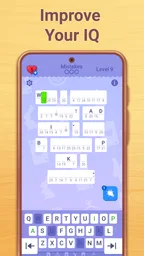
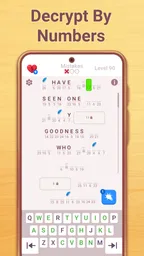
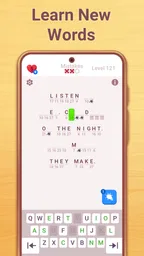
Cryptograms ask you to reason about letters, not simply recall vocabulary. You look for patterns, consider which letters could fit, and test whether a proposed word makes sense in context. I find this a satisfying change from word searches, where the challenge is spotting a visible sequence, or ordinary crosswords, where clues often reward general knowledge. Here, the pleasure comes from gradually making a coded phrase legible.
The game is a word puzzle from Gismart, and its central format gives each session a clear purpose: examine the available text, make a sensible deduction, and keep going until the message comes together. The best moments are when one confident letter unlocks several possibilities at once. That small chain reaction is more rewarding than guessing a word at random, because it feels like the result of noticing a pattern.
There is a useful way to keep the experience engaging: treat each tentative answer as a hypothesis, not a commitment. If a letter assignment creates awkward fragments elsewhere, reconsider it before building more guesses on top. This habit makes the game feel more like a logic exercise and less like trial and error. It also helps when a familiar word seems obvious but does not fit the surrounding pattern.
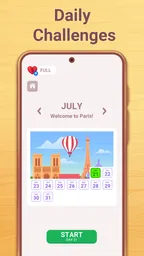
The wider store summary mentions logic puzzles, word unscrambling, and daily crossword-style play, while the short description identifies the game as a cryptogram. I would read that as a broad word-game framing, not a promise that every session will feel like a conventional crossword. If you are choosing it specifically for letter-code deduction, that is the part to focus on; players seeking a traditional clue-and-grid routine may be happier with a dedicated crossword app.
A puzzle for small gaps in the day
A realistic use is opening it while waiting for a bus or taking a short break between tasks. A cryptogram can offer a defined mental diversion: I can concentrate on a phrase, make progress, then put the phone away when the interruption ends. That is more convenient than starting a long story-driven game, and more mentally active than scrolling through a feed. It suits people who enjoy a compact challenge but do not need an elaborate game world around it.
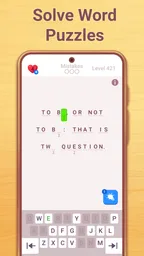
For a relaxed session, I would begin by scanning for repeated patterns rather than attempting to solve the entire message from its first word. Short repeated groups can suggest common word shapes, while a letter that appears in several places may provide a useful anchor. The practical point is to build evidence across the whole puzzle. Solving one isolated fragment can be misleading; checking whether the same letter choice works in multiple positions is a stronger test.
That approach also makes the game approachable for people who are new to cryptograms. You do not need to arrive with a specialist vocabulary, but you do need patience for partial progress. Some players enjoy that uncertainty; others find it irritating when a puzzle does not yield immediately. I would recommend taking a brief pause rather than forcing guesses if the pattern stops making sense. Returning with fresh eyes can be more satisfying than tapping through possibilities just to finish.
Where it sits among word games
Compared with a word search, this is less about visual scanning and more about interpreting relationships between letters. Compared with a standard crossword, it puts less emphasis on answering a clue from outside knowledge and more on using the structure of the coded text. That difference is the main reason to try it. If you like spotting repeated sequences and testing logical deductions, the format offers a distinct kind of concentration.
It is not the strongest choice for someone who wants every session to shift between very different mechanics. A cryptogram-led game naturally returns to the same basic mental activity, even when the text changes. That consistency can be a strength when I want a familiar puzzle to settle into, but a weakness if I tire quickly of one format. In that case, a mixed collection of anagrams, crosswords, and word searches would offer broader variety.
Another trade-off is that letter deduction can feel less social than a quiz or competitive word game. The satisfying part is often a private moment of recognition, not a dramatic match or shared score. I would choose it for solo downtime, not as my first pick for playing alongside friends. Its pace is better suited to concentration than conversation.
Who will enjoy it—and who may not
I would point Cryptogram: Word Logic Puzzles toward people who like language puzzles, enjoy noticing patterns, and want a game that can fit around everyday interruptions. It may also suit crossword fans who want to exercise a different kind of reasoning without leaving word games behind. The game is rated for Everyone, so its stated age suitability is broad, though the best fit still depends on whether a player enjoys reading and working through letter clues.
It is free to download, with in-app purchases ranging from $0.49 to $99.99 per item. That makes trying the basic experience an easy decision, but I would check purchase prompts carefully and decide in advance whether I want to spend anything. The range is wide, so it is sensible to treat optional purchases as a separate choice rather than assume that every part of the game will be paid for in the same way.
The game has an average rating of 4.6 from around 436,000 ratings, and it has passed 10 million installs. Those figures suggest that the format has found a substantial audience, but they do not tell me whether a particular player will enjoy cryptograms. The key question is simpler: do you like reasoning from letter patterns, even when the answer takes a little patience? If yes, this is a plausible match. If you prefer instant word association, rapid rounds, or action, I would look elsewhere.
Gismart released it on August 18, 2023, and version 3.8.1 is the current version. It requires Android 10 or later, so that requirement is worth checking before installing on an older Android device. The game is also available as a free word-puzzle option for people browsing in this category. I would not choose it solely because of its popularity; I would choose it because its specific style of deduction sounds enjoyable.
Small habits that make solving smoother
One practical tip is to resist filling every uncertain position as soon as an idea occurs. First look for a pattern that appears more than once, then see whether a likely letter fits all of its occurrences. This reduces the risk of letting one attractive guess distort the rest of the puzzle. It is a useful workflow for anyone who tends to get stuck by committing too early.
A second tip is to use context as a check, not as a shortcut. A phrase may make one answer feel inevitable, but the letter pattern still needs to support it. When a guess seems right in meaning but creates impossible combinations elsewhere, the puzzle is telling you to revisit the deduction. This balance between language intuition and pattern evidence is what gives cryptograms their character.
Finally, match the game to your attention span. If you have only a minute, you can inspect the puzzle and search for one promising repeated pattern without expecting to finish. If you have a longer quiet stretch, you can follow several deductions through the phrase. Thinking of progress in small steps makes the experience more flexible and avoids turning a casual game into a frustrating race against the clock.
My verdict
My overall view is positive, with a clear condition: this is most appealing when you genuinely like letter logic. The format gives word-game fans a different route to a solution, and its gradual reveals make it suitable for short, thoughtful sessions. It is less compelling for players who want a broad menu of puzzle types, a conventional crossword experience, or fast competitive play.
I would try it if I wanted a free, focused way to exercise pattern recognition during spare moments, while keeping purchases optional and expectations centered on cryptogram-style solving. I would skip it if repeated letter deduction sounds more like work than fun. That is the honest dividing line. For the right player, the pleasure is not merely reaching the final phrase; it is seeing how a handful of careful observations can make the whole message click.
What we like
- Short rounds make it easy to fit a puzzle into a break.
- Hints can help when a decoded phrase feels difficult.
- Solving letter patterns offers a satisfying mental challenge.
- The familiar quotes add variety to the puzzle answers.
- A simple interface keeps attention on the cipher.
What could be better
- Some quotes may be unfamiliar to players.
- Repeated cipher patterns can make later puzzles feel predictable.
- Hints may reduce the satisfaction of solving unaided.
- Small text can be harder to read on compact screens.
- Progress may feel slow when a puzzle requires several guesses.







