


Crossword Puzzle Explorer review
 Analysis by Appsdrops
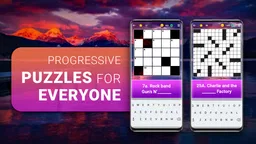
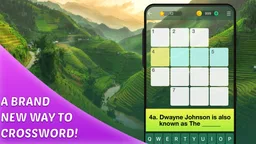
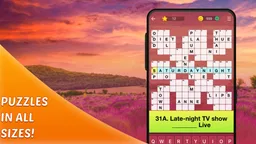
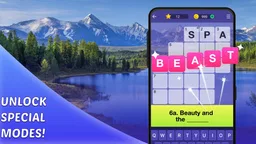
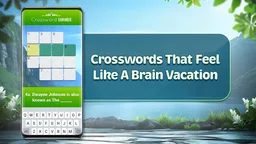
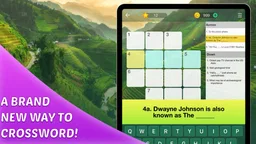
I like word games best when they fit into the gaps of an ordinary day: a few clues while waiting for an appointment, or a longer puzzle when I want to settle in. Crossword Puzzle Explorer is built for that kind of flexible play. It is a free word game from PlaySimple Games, and its central appeal is straightforward: crosswords that range from approachable to challenging, with offline play making it useful beyond a reliable internet connection.
What you can expect from the free version
The download costs nothing, so you can try the game without paying upfront. That makes it easy to find out whether its clue style and difficulty suit you before deciding whether to spend anything. The game also offers in-app purchases, with listed item prices ranging from $0.99 to $49.99. Those figures describe the available purchase range, not a requirement to pay in order to start playing.
I would treat the free entry point as the main value proposition, rather than assuming that a purchase is necessary or that every paid option is worthwhile. If you are comfortable with the experience as it stands, you can use it as a no-cost crossword option. If you consider an in-app purchase, check its details in the app store first and decide whether the specific item addresses something you actually want.
The game is rated for Everyone, which makes its general audience broad. Its age rating is useful context for families, though I would still make the usual choice based on the individual player and their preferences. On Android, the current version is 1.404.0 and requires Android 8.0 or newer; platform requirements matter if you are installing it on an older device.
A crossword habit without a connection
The most practical advantage is offline play. You can solve puzzles somewhere with patchy reception, such as during a commute, in a waiting room, or while travelling, without relying on a live connection for the crossword itself. I especially like that distinction for a word game: the activity is naturally suited to brief sessions, and losing a signal does not have to end the moment.
Offline availability is also helpful for people who want a puzzle as a small break rather than another reason to browse online. Before a trip, I would open the game and make sure it is ready to play on the device; that is a sensible habit for any app you plan to use away from a connection. The key point is that the crossword experience is designed to work offline, not that every app-related function must do so.
How the difficulty range changes the experience
Crossword Puzzle Explorer aims to cover both easy and hard puzzles, which gives it more room to serve different moods than a game fixed at one level. An easier puzzle can be a low-pressure warm-up when I have only a few minutes. A tougher one is more satisfying when I want to give clues proper attention and work through a challenge rather than simply fill time.
That range is useful, but it does not guarantee that every puzzle will match every solver’s preferred style. Crossword fans often have strong opinions about clue wording, familiar references, and how much lateral thinking a puzzle should demand. If you prefer a particular national crossword tradition or carefully themed constructions, a dedicated publication or specialist crossword app may be a closer fit.
A practical way to judge the difficulty is to notice what slows you down. If you are stuck because a clue depends on knowledge you do not enjoy being tested on, that is different from being challenged by wordplay you find satisfying. I would use that distinction when deciding whether to keep playing: a useful puzzle stretches your vocabulary or reasoning, while an irritating one can feel like guesswork.
Where it sits beside other word games
Compared with word searches, anagrams, and quick word-link games, a crossword asks you to connect each answer to a clue and to the intersecting entries. That makes it a better choice when I want deliberate solving and the small reward of seeing several answers confirm one another. If I want something almost automatic for a very short break, a simpler word game may be less demanding.
Compared with a printed crossword, the phone version is easier to carry and convenient when I do not have a newspaper or puzzle book nearby. A paper puzzle can still be preferable if you like writing freely, seeing a full grid at a glance, or taking notes in the margins. Crossword Puzzle Explorer makes most sense as a portable companion, not as a reason to give up every other way of solving.
It also differs from a broad collection of mini-games: the focus here is specifically crosswords. That concentration is a strength if you already know you enjoy clues and grids. It is less compelling if you are looking for lots of unrelated game modes or a social competition. I would choose it for a crossword habit, not as an all-purpose replacement for every kind of word puzzle.
Small habits that make the puzzles more enjoyable
One useful approach is to start with the clues you can answer confidently, then return to the uncertain ones after crossing letters have narrowed the possibilities. This is a standard crossword-solving technique, but it pays off especially when a puzzle initially feels harder than expected: an answer you already know can provide a useful letter for a neighbouring entry.
Another tip is to use different sessions for different goals. When I have a short pause, I can aim to make progress rather than insist on finishing the puzzle. When I have more time, I can revisit the clues that resisted a first pass and see whether the grid has made them clearer. This keeps a challenging crossword from turning a five-minute break into a frustrating test.
Finally, pay attention to whether the easy-to-hard spread actually works for you over several sessions. If you repeatedly find the lower challenge too simple and the harder puzzles too demanding, the range may not land at your preferred middle ground. That is a more useful assessment than judging the game from a single puzzle, since clue familiarity and mood can change how difficult a crossword feels.
Value, audience, and limitations
The game has a substantial audience: it has more than five million installs, an average rating of 4.9 from around 46,000 ratings, and roughly 4,900 written reviews. Those figures suggest that many players have tried it and responded positively, but they do not tell me whether its particular clue style will suit you. I would use them as context, not as a substitute for testing the puzzles yourself.
For value, the balance is simple: free access lowers the risk of trying it, and offline crosswords give the game a clear practical role. Purchases are available, but their presence means it is worth being deliberate if you prefer to keep mobile games entirely free. I would not spend just because an option is offered; first decide whether the free experience already gives you the kind of crossword practice you wanted.
The main tradeoff is focus. A dedicated crossword game can be satisfying precisely because it does not need to distract you with unrelated activities, yet that same narrow scope may feel limited to someone who wants varied puzzles in one place. Another tradeoff is that “easy to hard” is a broad promise, not a personal difficulty guarantee. If you are new to crosswords, some clues may still feel unfamiliar; experienced solvers may want a more specialized challenge.
Crossword Puzzle Explorer is a good fit for casual and regular solvers who want a portable crossword and value being able to play offline. It is especially convenient for travel, waiting periods, and short breaks, and the free download gives you a straightforward way to test whether its puzzles click with you.
I would skip it if your priority is a highly specialized crossword style, a wide mix of word-game formats, or an experience with no in-app purchase options at all. In those cases, a paper puzzle, a specialist crossword source, or a broader word-game collection may suit you better. For everyone else, I think it is a sensible free place to start, with paid choices best judged on their own merits rather than assumed to be necessary.
PlaySimple Games released the game on July 10, 2020, and it remains a focused option for solving on a phone. My recommendation is modest but clear: try it if you want crosswords that can travel with you, take a little time to assess the clue style, and keep spending optional. If that combination matches how you like to play, the game can earn a regular spot in your everyday downtime.
What we like
- Offers a relaxing way to exercise vocabulary and recall.
- Works well for short puzzle sessions during breaks.
- Clues provide useful context for unfamiliar words.
- A good fit for players who enjoy classic crosswords.
- Can help build a regular brain-training habit.
What could be better
- Some clues may feel too obscure for casual players.
- Repeated puzzle formats can become predictable.
- Crossword answers require precise spelling.
- Progress may feel slow when clues are difficult.
- A stable internet connection may be needed for some features.







