

Crossword Go! review
 Analysis by Appsdrops
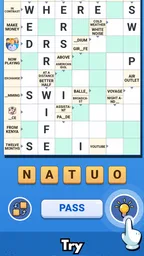
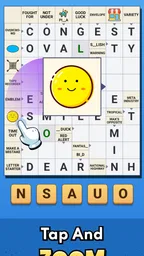
The first thing I like about Crossword Go! is the promise tucked into its simple name: this is a word game meant to be easy to pick up and pleasant to share. Its puzzles are built around clever clues, giving the familiar crossword format a light, sociable feel rather than making it seem like a serious test. I find that a welcoming starting point for anyone who enjoys playing with language, whether they already solve crosswords regularly or simply want a relaxed game to dip into.
Made by PlaySimple Games, Crossword Go! belongs to the word-game corner of mobile gaming, where a good idea matters more than a complicated control scheme. The basic appeal is immediately understandable: read a clue, consider the possible answer, and enjoy the little moment when the words click into place. The game is free to play and rated for Everyone, so its overall presentation is easy to recommend as a casual option for a broad audience. In-app purchases are available, but the central attraction remains the pleasure of solving clues.
A cheerful first impression
The experience starts with an approachable concept rather than a dense explanation of rules. Crosswords already come with a recognizable vocabulary of clues and answers, and Crossword Go! leans into that familiarity. I appreciate games that let me understand the basic activity quickly, and this one has an especially clear invitation: take a clue, think it through, and see whether the answer fits. That straightforward loop gives the game room to feel welcoming without stripping away the satisfaction of a genuine word puzzle.
The store’s description emphasizes easy-to-play crossword puzzles and clever clues designed to be enjoyed together. That pairing is a useful guide to the game’s character. “Easy to play” suggests an accessible entry point, while “clever clues” hints that the challenge is meant to come from interpretation and word knowledge. The result is a premise that can suit both a quick solo session and a relaxed shared conversation. I can imagine one person reading a clue aloud while another offers a guess, turning a small puzzle into a low-pressure bit of teamwork.
Crossword Go! is a mobile game, but its appeal is not tied to spectacle or complicated systems. It asks for attention, curiosity, and a willingness to try an answer. That focus gives it a calm first impression: rather than demanding that I learn a stack of controls, it puts language at the center. For players who want a crossword game that feels approachable from the outset, that is a sensible foundation.
There is also something comforting about the crossword format itself. A clue can be playful, direct, or a little sideways, and each answer offers a small payoff when it finally makes sense. Crossword Go! builds its identity around that familiar rhythm. I find that kind of design particularly effective for short breaks: I can give a clue a moment of thought, pause, and return to the language puzzle when I feel like it. The appeal is not about rushing; it is about enjoying the thought process.
A world made from words
Not every game needs a sprawling setting to create a sense of place. Crossword Go! uses the language of crossword puzzles as its central world: clues set up questions, answers complete the thought, and the relationship between words becomes the main source of discovery. That gives the game a coherent identity without asking it to compete with story-driven adventures. Its atmosphere comes from the act of solving and from the light social framing around the puzzles.
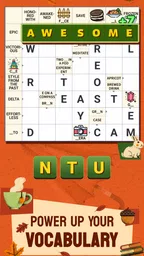
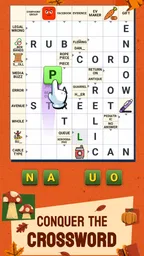
The art direction should support that clarity. In a crossword game, visual presentation works best when it helps the clues and answers stay readable and keeps attention on the puzzle. The concept here naturally favors a clean, friendly mood over visual noise. That is the right instinct for a game whose most important details are words. When a design keeps the activity easy to follow, the player can spend more time considering possibilities and less time working out what the interface wants.
The phrase “enjoy together” gives Crossword Go! a distinctly companionable flavor. Word puzzles can be solitary, but they are also easy to share: one person may spot a synonym while another catches a different meaning in the clue. That little exchange can make even a simple answer feel more satisfying. I like that the game’s premise leaves room for this kind of casual collaboration, rather than presenting crossword solving as an isolated, high-pressure contest.
That social warmth also helps shape the game’s tone. Clever clues can invite discussion, guesses, and the occasional laugh when an answer turns out to be simpler than expected. The setting does not need a fictional landscape when the puzzle itself supplies the interaction. Crossword Go! feels most coherent when it stays close to that idea: words are the scenery, clues provide the prompts, and solving becomes the shared activity.
Quiet sound and a measured rhythm
Sound in a word game has a supporting role. It can make an experience feel polished and responsive, but it should not compete with the reading and thinking that solving requires. Crossword Go!’s strongest mood is therefore one of focus and ease: the puzzle asks for attention, while the overall premise encourages a relaxed pace. I would rather a crossword game leave room for concentration than fill every pause with noise or urgency.
The rhythm of clue solving is naturally variable. Some answers come to mind quickly; others need a little reflection, a fresh angle, or a hint of conversation with someone nearby. That variation is part of what makes crosswords enjoyable. A game built around clever clues can let players move between quick wins and more thoughtful moments without changing the basic activity. I find this stop-and-think cadence a better fit for a casual word game than a relentless push to act quickly.
That slower tempo is also what makes the format easy to revisit. A short session can feel worthwhile even if I only want to focus on a few clues, while a longer spell can become a more immersive exercise in word association. Crossword Go! has an appealingly flexible premise because it does not depend on a particular mood: I can approach it as a quiet solo puzzle or as a shared way to pass the time. The central pleasure remains the same in either case, which gives the experience a consistent identity.
For me, a good atmosphere in a crossword game comes from balance. The clues should be interesting enough to hold attention, the presentation should make the puzzle approachable, and the pace should allow players to think. The game’s emphasis on easy-to-play puzzles and clever prompts points toward that balance. It is a friendly mood, but not an empty one; the words still need to be considered, and the satisfaction comes from finding a fitting answer.
How the mechanics support the mood
At its core, Crossword Go! is about reading clues and working toward answers. That simple structure is the game’s greatest strength because it keeps the mechanics aligned with the theme. The player is not asked to master an unrelated system before getting to the wordplay. Instead, the act of solving is the game. For fans of crossword puzzles, that direct connection between the idea and the activity is exactly what makes the format so appealing.
Clever clues give the familiar mechanics room to feel fresh. A crossword answer is not merely a word to fill in; it is the payoff to a small reasoning process. I might think of a synonym, reconsider how a clue is phrased, or notice that a word could carry more than one meaning. That mental back-and-forth is satisfying precisely because the rules are easy to grasp. Crossword Go! appears designed to make that kind of thinking approachable, so players can focus on solving rather than on learning a complicated control scheme.
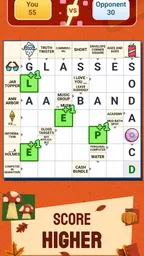
The game’s social angle fits the mechanics especially well. Crosswords are naturally suited to sharing ideas because one clue can spark several plausible answers. When a puzzle is described as something to enjoy together, it suggests a format that welcomes collaboration and conversation. I see that as a meaningful part of the experience, not just a decorative line: the clue-and-answer structure makes it easy for friends or family members to contribute at their own pace.
As a free game, Crossword Go! is easy to try for players curious about casual word games. Optional in-app purchases range from $0.99 to $49.99 per item, so the store’s purchase options cover a broad range. That is worth keeping in mind when browsing the app, while the core appeal remains the crossword activity itself. The game has an average rating of 4.9 from around 75,000 ratings, with about 3,500 written reviews and over one million installs. Those figures point to a substantial audience for its approachable word-puzzle concept.
The practical details are straightforward as well. Crossword Go! was released on April 16, 2025, and its current version is 1.84.0. It requires Android 8.0 or later. These specifics make it easier to check whether the game suits a device before downloading. Since it is rated Everyone, the overall presentation is positioned for a wide audience, including players looking for a family-friendly word game rather than a niche puzzle challenge.
Who will enjoy the experience
I would point Crossword Go! toward anyone who likes clues, word associations, and small moments of discovery. It is especially appealing if you want a game that explains its central activity through the activity itself. Crossword fans will recognize the pleasure of testing an answer against a clue, while newcomers can appreciate the familiar, accessible idea without needing to approach it as a serious hobby. The emphasis on easy-to-play puzzles makes the game sound inviting rather than intimidating.
It also suits players who like sharing a game without needing elaborate coordination. A crossword clue gives everyone a natural way to take part: offer a guess, suggest a synonym, or simply enjoy hearing how another person interprets the wording. That sort of interaction can make a word game feel warm and conversational. Even when played alone, the same quality remains in the playful exchange between clue and answer.
On the other hand, the experience is best approached for what it is: a casual crossword game. Its central appeal is solving words, not exploring a complex story or mastering action-heavy mechanics. That focus is a benefit for the right audience, since it keeps the experience clear and easy to understand. If what you want is a relaxed way to engage with language, Crossword Go! has a strong, consistent premise.
A mood that makes the clues inviting
Crossword Go! brings its art direction, sound, setting, and pacing together through a single guiding idea: make crossword solving feel approachable and enjoyable. The visual mood can serve the words, the audio can stay in support of concentration, and the pace can leave space for thought. Most importantly, the mechanics reinforce the atmosphere instead of pulling attention away from it. That coherence is what gives a small-scale word game its charm.
I like the way the concept leaves room for both quiet concentration and shared play. A clever clue can make me pause, but it can also become the start of a conversation. That is a lovely quality for a casual game: the puzzle is engaging without needing to turn every moment into a competition. The emphasis on enjoying the activity together gives Crossword Go! a welcoming identity, and the familiar crossword format makes that identity easy to understand.
For anyone searching for a free crossword game with an accessible premise, Crossword Go! is an appealing option to consider. Its strength lies in the simple pleasure of interpreting clues and finding answers, wrapped in a mood that feels easygoing and companionable. I would recommend it to word-game fans who want a relaxed puzzle experience and to newcomers curious about crosswords. It keeps the mechanics clear, gives language the spotlight, and lets the satisfaction of solving do the work.
Overall, Crossword Go! feels most successful when it stays true to its central promise: approachable crossword puzzles with clever clues, ready to be enjoyed at an easy pace. It may not need a complicated world to make an impression, because the words themselves provide plenty to explore. If you enjoy thoughtful little challenges and the idea of solving alongside someone else, this game offers a friendly place to start.
What we like
- Quick puzzles make it easy to play in short sessions.
- Clues offer a satisfying challenge for word game fans.
- Simple controls are easy to learn.
- Daily puzzles encourage a regular play habit.
- Progression gives players goals to work toward.
What could be better
- Some clues may feel too difficult for casual players.
- Hints can reduce the satisfaction of solving unaided.
- Repeated puzzle formats may become predictable.
- Ads may interrupt the flow of play.
- A steady internet connection may be needed for some features.







