Bus Go:Traffic Puzzle review
 Analysis by Appsdrops
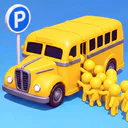
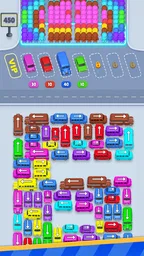
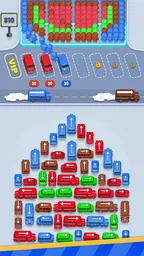
I like puzzle games that make a small decision feel consequential, and Bus Go:Traffic Puzzle has a clear appeal: you tap buses to untangle a traffic snarl, then work out which move will open the way for the others. It is a casual game, but the hook is more about reading a crowded situation than tapping quickly. That makes it an easy fit for a short break, provided you enjoy pausing to think rather than looking for action or a long-form strategy challenge.
Why the traffic puzzle works
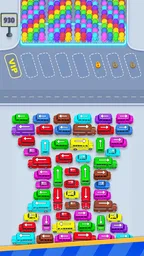
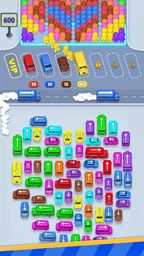
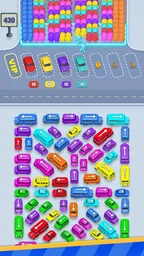
The central idea is easy to understand: buses are caught in congestion, and your taps are meant to help resolve the jam. The fun comes from spotting a useful order of moves. A bus that looks like the obvious choice may not be the one that clears the most space, so I find it helps to scan the whole layout before acting. That small pause is where the game’s puzzle character comes through.
Bus Go:Traffic Puzzle is best approached as a sequence of spatial decisions, not a reflex test. When the board looks crowded, I would first look for the vehicle whose movement could unlock another route, rather than tapping the bus nearest the apparent exit. Thinking one move ahead gives the puzzle more texture and helps avoid the feeling of making random guesses.
That structure suits the casual format well. There is no need to set aside a long session or learn a complicated system before trying a level. The basic premise is understandable at a glance, which makes it handy when I have a few spare minutes. At the same time, a simple premise does not mean every traffic arrangement is automatically satisfying: the layout has to give you enough information to reason through it, and the appeal will depend on whether you enjoy that kind of visual sorting.
A useful way to approach a jam
My practical tip is to treat each tap as a commitment and briefly check what it changes. Ask whether moving that bus creates space, blocks a route, or merely shifts the bottleneck elsewhere. This is a more reliable habit than focusing on one vehicle at a time, because the challenge is the traffic pattern as a whole. It also makes a failed attempt more informative: you can identify which assumption about the layout was wrong and try a different order.
A second useful habit is to separate the puzzle into immediate and follow-up moves. First identify what can move now; then consider what that movement would make possible. If a choice only appears helpful because you have not considered the next obstruction, it may not be the best opening. This sort of deliberate play is a good match for people who like untangling little logic problems, even if they do not think of themselves as puzzle experts.
The game’s identity is tightly focused on buses and traffic, rather than dressing a general logic game in a transport theme. That gives its premise a clear visual purpose: the congestion is the problem you are trying to understand. Compared with familiar casual alternatives built around matching or quick reactions, this is a better pick when you want to inspect a board and plan. If your preferred casual game is one you can play almost automatically while doing something else, the need to look closely may feel less relaxing.
Where the experience may feel limited
The same focus that makes the concept easy to grasp can also narrow its appeal. If you want a broad campaign, a story, or a set of varied activities, a bus-jam puzzle is not the natural choice. The verified description centers on tapping buses and solving congestion, so I would choose it for that specific loop rather than expect a multi-genre package. Players who tire quickly of repeated spatial problems may prefer a casual game with more kinds of interaction.
There is also a difference between a puzzle feeling challenging and a puzzle feeling opaque. When a layout is readable, planning feels rewarding; when it is not immediately clear what a tap will do, experimentation can become trial and error. I recommend slowing down and checking the board before each move, especially if you find yourself tapping repeatedly without a plan. That approach cannot guarantee every puzzle will suit you, but it helps distinguish a genuine reasoning challenge from a rushed guess.
Another point to weigh is spending. The game is free to download, with in-app purchases listed from $1.99 to $99.99 per item. That range is worth knowing before handing the phone to a child or making a purchase decision, even though the game’s age rating is Everyone. I would start by playing without buying anything and decide whether the core traffic puzzles hold your attention before considering optional spending.
The developer is PopStoneGameTechnologyLimited-Shooting. The game has a 4.9 average from around 30,000 ratings and more than 500,000 installs. Those figures suggest that it has found a sizable audience, but they do not tell me whether its particular puzzle style will suit you. I would use them as context, not as a substitute for deciding whether traffic-based logic is the sort of short challenge you enjoy.
Who will get the most from it
I can see this working well for someone who wants a compact brain exercise between errands, during a quiet moment at home, or while waiting for an appointment. For example, if I had a few minutes before a train arrived, I would rather tackle one traffic layout than begin a game that demands a long uninterrupted session. The key is to play when you can give the board a little attention; trying to solve it while distracted may turn a thoughtful puzzle into aimless tapping.
It is also a reasonable option for a family member who enjoys visual puzzles and wants a straightforward premise. Since the content rating is Everyone, the age label is broad, but individual children still differ in patience and ability to plan. I would show them how to inspect the whole traffic jam before tapping, and I would keep in-app purchases in mind if the device is shared. The game may be less suitable for someone who expects every casual title to be effortless or purely about speed.
For a player who likes strategy games, this is a lighter alternative rather than a replacement. It asks for local planning around a visible jam, not the sustained resource management or long-term systems associated with deeper strategy titles. Conversely, if you usually reach for matching games because you want clear, immediate feedback and minimal analysis, those may be a better fit. The choice comes down to whether you want to solve a spatial blockage or simply relax with a more automatic loop.
Compatibility and what to check before installing
Bus Go:Traffic Puzzle is free, runs on Android 6.0 or later, and its current version is 12.0. It was released on May 12, 2026. Those details are useful if you are checking an older device or comparing it with another game before installing. The game is categorized as casual, which is a fair description of its approachable premise, though the amount of thought you want to put into each board is up to you.
If you are deciding whether to try it, I would ask one simple question: do you enjoy looking at a crowded arrangement and figuring out the order that makes it move? If yes, the bus theme gives that familiar logic challenge a concrete goal. If you prefer a game that supplies constant action or a wide range of modes, this focused setup is less likely to become your regular choice. Keeping that distinction in mind is more useful than expecting a small puzzle game to satisfy every kind of player.
My verdict
Bus Go:Traffic Puzzle earns its appeal through a clear, specific idea: use careful taps to make sense of bus congestion. I like that it gives casual play a modest reasoning element and can fit into a short pause without asking for a large time commitment. My main reservation is equally clear: the experience depends heavily on whether you enjoy repeatedly examining traffic layouts, and the free download comes with optional purchases that are worth noticing.
What we like
- Quick levels make it easy to play in short sessions.
- Simple controls are approachable for players of different ages.
- Traffic puzzles encourage planning ahead and careful observation.
- Gradually harder challenges help keep the gameplay engaging.
- A casual theme makes the game suitable for relaxed play.
What could be better
- Some puzzles may feel repetitive after extended play.
- Later levels can require several attempts to solve.
- Frequent interruptions may break the flow of play.
- The challenge may feel limited for experienced puzzle fans.
- Progress can feel slow when a level proves difficult.







