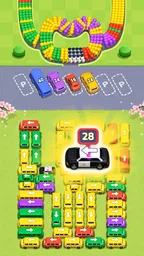



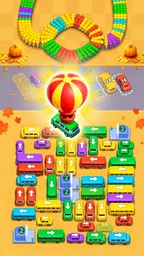
Bus Crowd - Traffic Jam review
 Analysis by Appsdrops
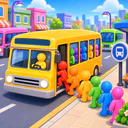
I would approach Bus Crowd as a small, focused puzzle for the moments when I want to think for a minute without committing to a long game. Its premise is easy to grasp: passengers and vehicles are caught in a crowded traffic situation, and the goal is to sort out the jam by matching passengers. That gives the game a more deliberate feel than a simple tap-to-score time killer. The satisfying part is meant to come from spotting a workable order, not from quick reflexes.
It is a casual game from Hyper Surfer Games, and the best fit is someone who enjoys untangling visual puzzles in short sessions. I would try it while waiting for an appointment or taking a break, rather than expecting a deep campaign or a racing experience. The game is free to install, rated for Everyone, and has in-app purchases ranging from $1.99 to $99.99 per item, so it is sensible to keep purchase controls in mind if a child will be playing.
What the puzzle asks you to do
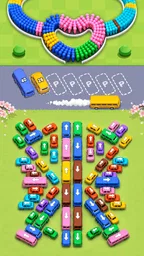
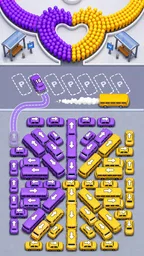
The central idea is traffic congestion seen as a matching problem. You are not being asked to drive a bus through a realistic street; instead, you work through a crowded arrangement and try to match passengers so the blockage can be resolved. That distinction matters. If you want steering, speed, or the feeling of navigating a city, this is the wrong kind of bus game. If you like looking at a busy board and figuring out which move will make room for another, the concept is much closer to your taste.
The appeal of a setup like this is that the goal is understandable before you have learned much. I would expect the first useful moment to be recognizing that a move can do more than complete one match: it can also clear space or make another passenger accessible. That is where a simple-looking puzzle starts to reward planning. A good habit is to pause and scan the whole arrangement before acting, rather than matching the first obvious group and hoping the rest sorts itself out.
That makes Bus Crowd - Traffic Jam a different proposition from the usual casual puzzle built around swapping tiles or launching pieces. Here, the traffic-jam theme gives the board a practical question: what can move, and what is currently in the way? The theme helps the objective feel concrete, though anyone who dislikes sorting or spatial puzzles may find that the same central task becomes repetitive.
Getting started without overthinking it
When I first open a puzzle game, I want to know what the objective is and what a successful move looks like before I start experimenting. With this one, I would treat the opening level as a small tutorial even if the game does not present it as one: inspect the passengers, identify an obvious match, and watch how the board changes after the action. That gives you a practical understanding of the rules instead of relying on assumptions borrowed from other match games.
For a first attempt, do not rush to clear whatever looks easiest. Check whether a match might open a route or expose another useful option. This is a low-risk way to learn how the traffic puzzle behaves, and it helps you tell the difference between a move that merely looks productive and one that makes the next move easier. If you find yourself stuck, take a moment to reread the board rather than tapping several possibilities in a row.
The game is presented as playable offline, which makes it a natural candidate for a commute or a place with an unreliable connection. I would still install and open it before relying on it for a particular trip, simply so the first launch and any initial setup are already out of the way. Once you are in a puzzle, the offline angle is useful precisely because the core activity is self-contained: you can focus on the board instead of needing a live match or another player.
The first satisfying solve
Your first meaningful success is not just completing a match; it is seeing why that match was the right one. Try to notice what becomes possible afterward. Did clearing one group create room? Did it make another passenger easier to pair? That small review of the result turns the opening puzzle into a lesson you can use on the next board. It also makes a win feel earned rather than accidental.
My practical tip is to give each move a quick before-and-after check. Before tapping, ask what you expect to change; after tapping, see whether that happened. This is especially helpful when the board looks crowded, because a chain of impulsive moves can make it harder to understand what caused a blockage. If a choice seems uncertain, favour the move that leaves the board easier to read. In a sorting puzzle, clarity is often more valuable than chasing an immediate-looking match.
A realistic use case is a short wait where you have enough time to focus on one board but not enough to settle into a longer game. I would play one puzzle, stop after a clear result, and return later rather than trying to turn every spare minute into a marathon. That approach suits the compact, casual premise and keeps the game from feeling like an obligation.
Where new players can get confused
The main possible confusion is expecting “match passengers” to mean exactly what it means in a familiar tile-matching game. The traffic-jam framing suggests that order and available space matter, so a move can have consequences beyond the immediate match. I would not assume every visible group is equally useful. Look at the surrounding arrangement and consider whether completing one match could leave a less convenient situation behind.
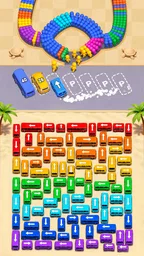
Another source of friction is that a crowded board can make the objective feel less obvious than the short premise suggests. When several passengers appear to be competing for attention, try following one possible match through its likely effect before committing. If the move does not seem to improve access or reduce the jam, inspect another part of the board. This is a better approach than treating the game as a speed test; the value is in choosing deliberately.
There is also a natural limit to the format. A matching puzzle can be relaxing, but repeated versions of the same basic decision may feel familiar once you have learned to scan for useful openings. I would recommend it to someone who enjoys modest, self-contained problems, not to a player looking for elaborate story, social competition, or a steadily expanding set of mechanics. The game’s casual category is a useful expectation-setter: keep the goal simple and judge it on how enjoyable its individual puzzles are.
How it compares with other casual puzzles
Compared with conventional match-three games, this one puts more emphasis on untangling a jam than on building a long cascade of matches. Compared with parking puzzles, the passenger-matching element gives the board a sorting objective rather than making vehicle movement the only thing to consider. That blend is the specific reason I would try it: it offers a familiar casual-puzzle level of commitment with a theme that frames each decision as clearing a crowded situation.
The trade-off is that players who want an instantly obvious action may prefer a basic tile matcher, while players who want precise vehicle manoeuvres may prefer a dedicated parking puzzle. Bus Crowd sits between those expectations. It is most appealing if you are happy to study a layout, make a move, and see whether it has improved your options. If you prefer games that constantly introduce new systems, this may not hold your attention for as long.
It has an average rating of 3.9 from around 4,100 ratings, with 125 written reviews, and has passed 1 million installs. I read those figures as signs of an established casual game with a mixed but sizeable audience, not as a guarantee that its particular puzzle style will suit everyone. The best test is whether you enjoy the first few boards and find yourself thinking through the next move rather than tapping just to finish.
Choosing whether to keep playing
The game is free, which makes trying the basic experience straightforward, but its optional purchases are a reason to be deliberate about spending. The listed items range from $1.99 to $99.99 apiece. I would begin by playing without buying anything and see whether the core puzzles are enjoyable on their own. If you are setting it up for a younger player, check the purchase settings on the device as well; an Everyone age rating does not mean every purchase decision is automatically suitable for every household.
The current version is 1.2.1, and the minimum operating system is Android 8.0. Before installing, I would check that an older device meets that requirement. The release date is June 18, 2026, so anyone deciding based on how long the game has been available should keep that timing in perspective. These details matter less than the actual puzzle fit, but they can save you from an avoidable installation surprise.
My recommendation is to give Bus Crowd a try if you want an offline-friendly casual puzzle whose first challenge is reading a crowded board and making a useful match. Start slowly, study how each move affects what is available, and use the first successful solve to learn the game’s rhythm. I would skip it if you mainly want a driving game, a complex long-term challenge, or fast action. For the right player, though, it offers an approachable little problem to work through whenever a few quiet minutes open up.
What we like
- Easy-to-understand controls make it approachable for new players.
- Short levels suit quick play sessions.
- Sorting passengers adds a satisfying puzzle element.
- Colorful visuals make the crowded scenes easy to read.
- Gradually harder challenges keep the gameplay engaging.
What could be better
- Some levels can feel repetitive after extended play.
- Later puzzles may require trial and error.
- Busy scenes can make it harder to track passenger colors.
- Progress may feel slow for players seeking new mechanics.
- Frequent interruptions can disrupt the flow of play.







